
Infrasound
Can be measured with:
✓ messbar mit dem air-Q Science auf Anfrage.
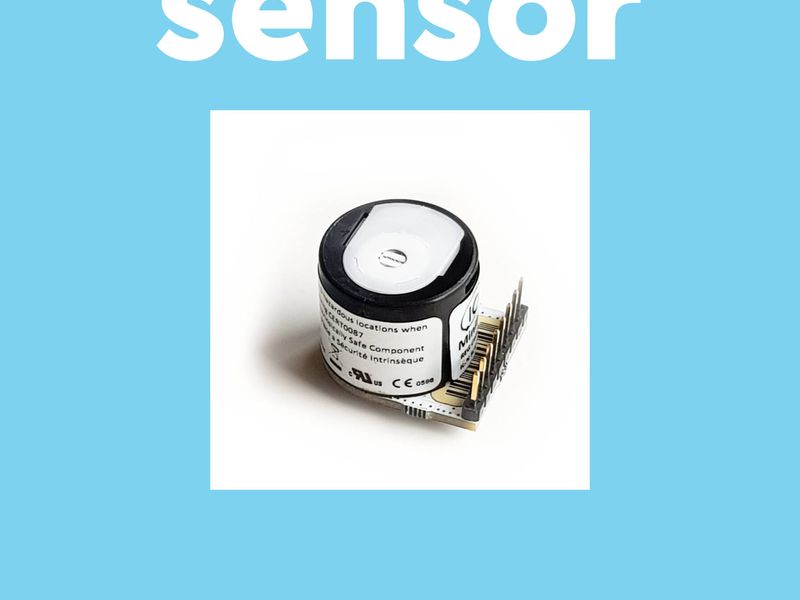
air-Qs with a sensor for Infrasound
Formation/Occurrence:
Infrasound arises both naturally and from technical sources.
Natural triggers include, for example, wind, storms, thunderstorms, ocean surf, waterfalls, earthquakes, or volcanoes.
Technical sources of low-frequency sound and low-frequency noise include large motors, rotors, generators, compressors, transformers, ventilation systems, heat pumps, industrial plants, traffic, aircraft, loudspeaker systems, or blasting.
Machinery, building services, or poorly decoupled installations can also cause humming, oscillations, and vibrations.
Because low frequencies propagate over large distances and can set building components vibrating, infrasound occurs not only outdoors but also indoors, in residential environments, workplaces, and technical facilities.
Limit Values:
There is no simple, universally applicable limit value for infrasound as there is for many chemical air pollutants.
Assessment is usually frequency-dependent and depends, among other things, on sound pressure level, frequency spectrum, measurement location, exposure duration, time of day, and environment.
In Germany, low-frequency noise immissions are assessed via TA Lärm (Technical Instructions on Noise) and DIN 45680, among others. This considers not only loudness but also the frequency range in which the exposure occurs.
A suitable sound measurement is therefore particularly important, since classic dB(A) values often only partially capture low frequencies, low-frequency noise, infrasound, and possible air-pressure fluctuations.
Effects:
Below the perception threshold, no confirmed negative health effects are currently documented.
However, if infrasound or low-frequency sound is perceived, it can be experienced as disturbing, stressful, or unpleasant.
Typical perceptions include a sensation of pressure, humming, a feeling of vibration, oscillations in the room, or a hard-to-localize noise.
At perceptible or very high levels, concentration difficulties, sleep disturbances, fatigue, headaches, malaise, or stress reactions can occur. At extremely high sound pressure levels, pain on hearing or hearing damage is also possible.
Note:
Measurement is important because infrasound and low-frequency noise are often not clearly audible but can still be perceived as a noise burden.
Sensors such as the air-Q sensor help measure infrasound and visualize sound events, level trends, temporal patterns, and possible technical noise sources.
Measurement is especially helpful when complaints occur only at certain times or could be related to installations, traffic, ventilation, heat pumps, or other sources.
This makes it easier to classify anomalies and compare them with environmental factors such as air quality, air pressure, CO₂, VOCs, temperature, or other measurements.
More measured values / sensors