
Hydrogen (H₂)
Can be measured with:
✓ messbar mit dem air-Q Science oder dem Wasserstoff Einzelsensor.
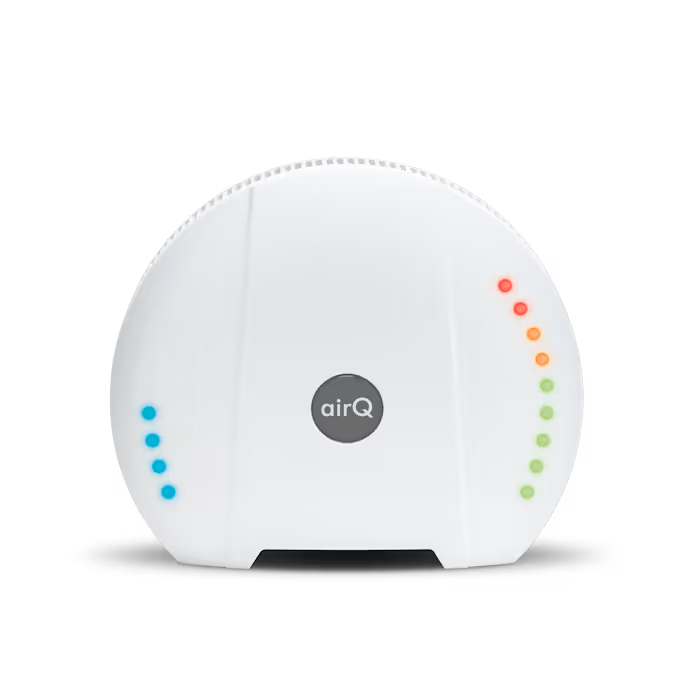
air-Qs with a sensor for Hydrogen

Description:
Most of the hydrogen found on Earth is bound in water. It therefore occurs both in the Earth's atmosphere (here as water vapor) and in seas and other bodies of water, as well as in all living organisms. Without hydrogen, no transport of substances through the body would be possible.
Hydrogen is currently significant to industry mainly as a potential energy carrier for reducing CO2 emissions. In this process, hydrogen is produced using electricity from a (ideally renewable) primary energy source.
Hydrogen is harmless to the human body. There is also little danger outdoors, since it dissipates immediately after escaping from storage containers. Indoors, however, the gas collects near the ceiling, since it is lighter than air. The gas is easily ignited as it escapes — the discharge of electrostatic charge from clothing provides sufficient energy.
Escaping liquefied hydrogen can cause cold burns on contact. Transport containers and storage rooms in particular must therefore be well secured. Adequate room ventilation is generally recommended.
Limit Values for Hydrogen:
Since the gas has no direct effects on human health, no limit values have been set.
However, physical limits do exist. The ignition range of hydrogen in air lies between a volume fraction of 4–76%. From 18% the mixture is explosive (oxyhydrogen). The ignition temperature in air is 560 °C.
| Designation | Hydrogen Limit Values |
| Lower ignition limit | 4 % |
| Upper ignition limit | 76% |
| Lower explosive limit | 18% |
Effects of Excessive Concentration:
At high concentrations there is a risk of explosion. To avoid this, rooms where hydrogen is stored should be well ventilated and equipped with a ceiling extractor.
Formation of H₂:
Gaseous hydrogen occurs on Earth almost nowhere. It exists predominantly in bound form as water.
Hydrogen can be produced industrially by various methods (e.g. electrolysis).
Sensor Used:
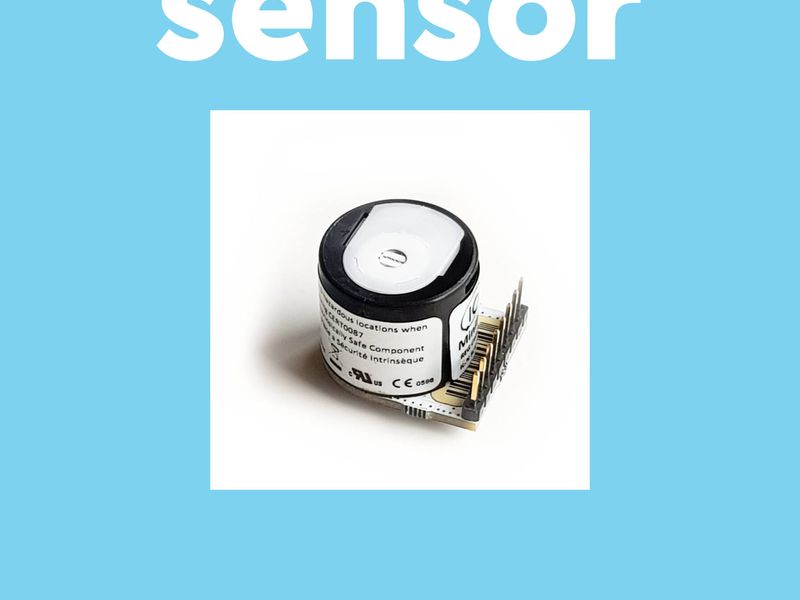
Hydrogen is measured in the air-Q using an electrochemical sensor. H₂ molecules "dock" onto the sensor's surface and cause a measurable current. The sensor offers high accuracy. The disadvantage of all electrochemical sensors is cross-sensitivity. The only known cross-sensitivity of the H₂ sensor is to carbon monoxide. If this gas is present, a small increase in H₂ is also indicated.
Measuring Hydrogen:
Use the air-Q air analyzer to measure hydrogen as well as other gases and pollutants in indoor air in real time. The hydrogen sensor can be ordered in the shop.
More measured values / sensors