

Hydrogen Sulfide (H₂S)
Can be measured with:
✓ messbar mit air‑Q pro sowie air‑Q science
air-Qs with a sensor for Hydrogen Sulfide

Description:
Hydrogen sulfide can be detected even in very small amounts by its smell of rotten eggs. This characteristic odor results from the decomposition of proteins from sulfur-containing amino acids by sulfur and putrefactive bacteria. It is also used to extract sulfur from petroleum.
Hydrogen sulfide is corrosive and forms a weak acid. As an aqueous solution, it reacts with several different heavy-metal salts to form insoluble sulfides. In this way, H₂S can be bound as iron sulfide — this is how biogas and digester-gas plants are cleaned of H₂S. This is necessary because the corrosive properties of hydrogen sulfide would otherwise cause considerable problems in gas engines during the combustion of biogas.
H₂S is a gasotransmitter that can be produced in the human body and acts as a messenger substance, serving intercellular communication and having a vasodilating effect. The substance is also credited with healing properties. It can be found in some spa resorts, where it is present in low, non-hazardous concentrations in the mineral water and is said to have, among other things, a positive effect on skin conditions.
On the other hand, H₂S is a very toxic gas that can cause death within a short time even at high concentrations.
Because it is denser than air, hydrogen sulfide collects near the ground.
Limit Values for Hydrogen Sulfide:
Hydrogen sulfide forms an easily ignitable gas-air mixture. The lower explosive limit (LEL) of the substance is 4.3 vol.-% (approx. 43,000 ppm / 60 g/m³) and the upper explosive limit (UEL) is 45.5 vol.-% (approx. 450,000 ppm / 650 g/m³).
The current workplace exposure limit (AGW) for H₂S is 5 ppm, and the maximum workplace concentration (MAK) is 10 ppm. According to current knowledge, health is not endangered at a concentration of 10 ppm even with prolonged inhalation. However, this value must never be exceeded, even briefly. Asthmatics already react to a concentration of 2 ppm with bronchoconstriction (increased airway resistance).
| Designation | Hydrogen Sulfide Limit Values |
| Workplace Exposure Limit (AGW) | 5 ppm (approx. 7 mg/m³) |
| MAK Value (Maximum Workplace Concentration) | 10 ppm (approx. 14 mg/m³) |
Effects of Excessive Concentration:
Long-term exposure to the substance at low doses can, among other things, cause fatigue, headaches, memory and concentration problems, irritability, and loss of appetite.
From about 200 ppm, the gas numbs the odor receptors through a gradual desensitization. As a result, an elevated hydrogen sulfide concentration is usually barely noticeable by smell.
On contact, H₂S attacks the mucous membranes and tissue fluid in the eyes, nose, throat, and lungs, causing severe irritation. It can also lead to fluid buildup in the lungs.
By destroying the red blood pigment hemoglobin, breathing is impaired. Hydrogen sulfide thus also acts toxically on the central and peripheral nervous system as well as the heart.
From the concentrations listed, the following effects occur:
| Concentration | Effects |
| up to 10 ppm | no signs of poisoning or other indications of a health hazard. |
| > 20 ppm | damage to the cornea of the eyes with prolonged exposure. |
| > 100 ppm | irritation of the mucous membranes of the eyes and airways, coughing, increased salivation. Life-threatening after several hours. |
| > 200 ppm | headaches, breathing difficulties, numbing of the odor receptors |
| > 300 ppm | nausea and vomiting, exhaustion, grogginess and dizziness |
| > 500 ppm | convulsions, fainting. Life-threatening within 30 minutes. |
| > 700 ppm | sudden unconsciousness up to respiratory arrest and death. Life-threatening within a few minutes. |
| from approx. 5,000 ppm | fatal within a few seconds. |
Formation of H₂S:
Hydrogen sulfide occurs in nature in many raw materials, e.g. as a component of both petroleum and natural gas in the form of volcanic gas, as well as in dissolved form in spring water. It is also formed during putrefaction or decomposition processes in any form of biomass breakdown (for example at landfills, in sewer systems, sewage treatment plants, or manure pits), as well as during digestion in the intestines.
Sensor Used:
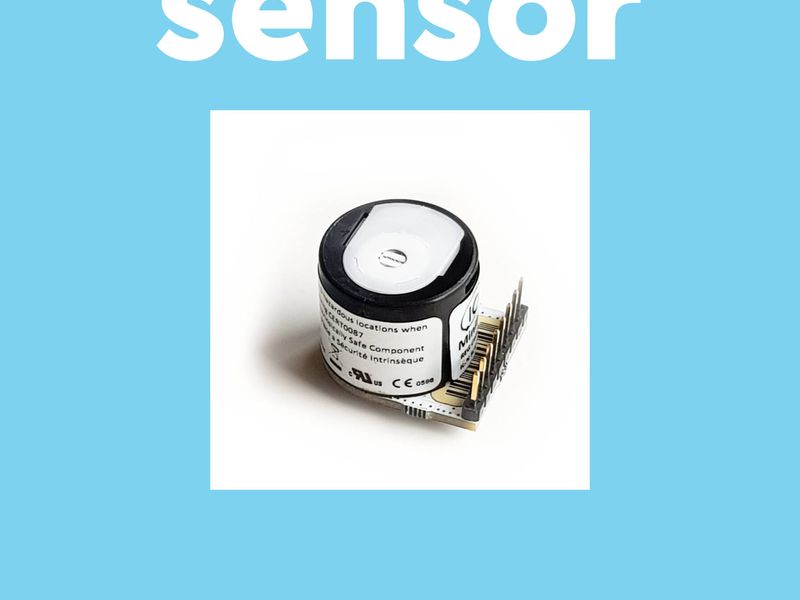
Hydrogen sulfide is measured in the air-Q using an electrochemical sensor. H₂S molecules "dock" onto the sensor's surface and cause a measurable current. The sensor used offers high accuracy and a particularly long service life. The disadvantage of all electrochemical sensors is cross-sensitivity. The sensor also reacts slightly to ozone and chlorine, showing a deflection toward negative values, and slightly to SO₂ and NO, showing a deflection toward positive values.
Measuring Hydrogen Sulfide:
Use the air-Q air analyzer to measure hydrogen sulfide as well as other gases and pollutants in indoor air in real time. The hydrogen sulfide sensor can be ordered in the shop.
More measured values / sensors