Chlorine / Chlorine Gas (Cl₂)
Can be measured with:
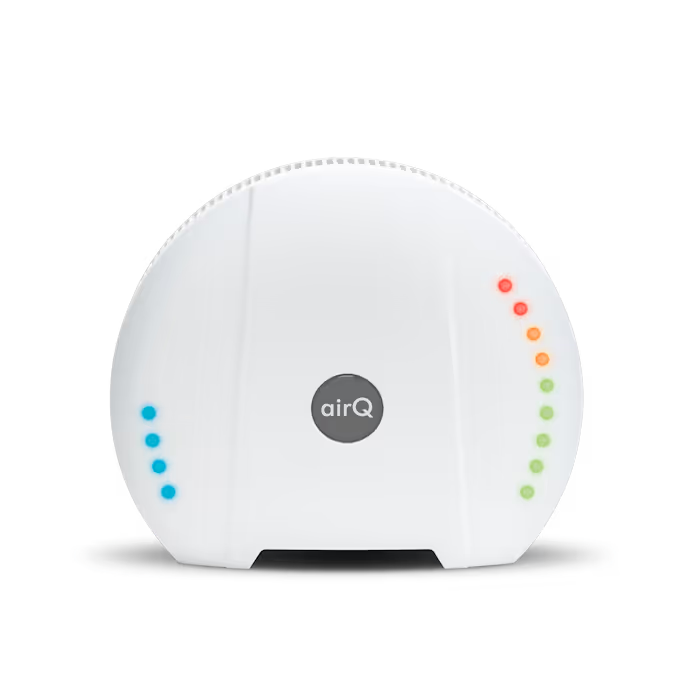
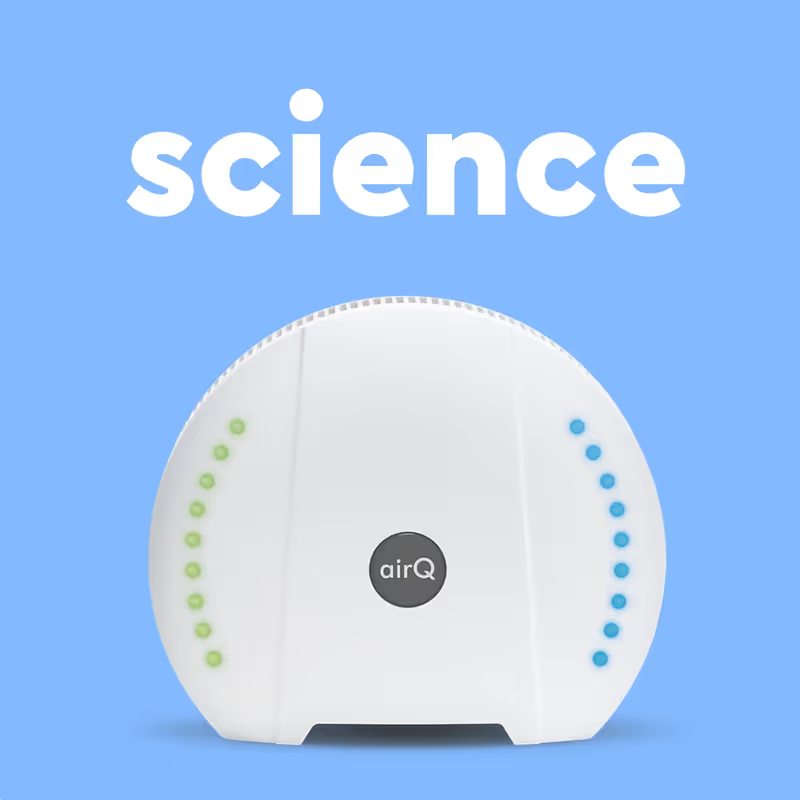
✓ measurable with the air-Q Science or chlorine (Cl₂) single sensor.
air-Qs with a sensor for Chlorine / Chlorine Gas
Description:
Chlorine / chlorine gas (Cl₂) is a gas at room temperature, but in nature it occurs almost exclusively in bound form, since it has a high reactivity with almost all other elements. An exception are volcanic gases and higher layers of the atmosphere, where chlorine gas occurs in molecular form.
Bound chlorine, on the other hand, is very commonly found. It is a component of seawater and the table salt (sodium chloride) obtained from it.
In industry, chlorine in liquid and bound form is used to produce chemicals and medicines. For example, it is a starting product for bleaching and disinfecting agents as well as for the plastic PVC. For this it is obtained chemically by electrolysis.
In everyday life, chlorine enters the air we breathe mainly through the use of cleaning and disinfecting agents. However, there are also workplaces, such as swimming pools, where people are exposed to higher concentrations of chlorine gas. In addition, storage sites for chlorine gas containers are a potential source of danger.
Chlorine damages the respiratory and digestive tract already from a concentration of 0.001%. From around 0.5% chlorine gas is fatal to humans. That is why chlorine gas containers must always be tightly sealed and kept in safe locations. These are rooms that can be well ventilated and are protected from heat, open flame and moisture.
For cleaning and disinfecting agents, the instructions on the packaging should be strictly followed to prevent irritation or chemical burns.
Limit values for chlorine in the air:
Since chlorine has a corrosive effect on mucous membranes and the respiratory tract even at low concentrations, there are legally regulated limit values for handling the gas. The workplace exposure limit (AGW) for chlorine is 0.5 ppm. For drinking water, a chlorine limit value of 0.3 mg/l applies. Chlorinated drinking water loses most of its chlorine in the form of chlorine gas through evaporation. Before drinking, the water can therefore be completely dechlorinated by brief boiling or letting it stand.
| Designation | Chlorine / chlorine gas (Cl₂) limit values |
| Odor threshold | 0.02 ppm - 1 ppm |
| Workplace exposure limit (AGW) | 0.5 ppm (= 1.5 mg/m³ air) |
Effects of excessive concentration:
In water-dissolved form, it is suspected of increasing the risk of bladder cancer. That is why legal limit values apply to its use. Chlorine also off-gasses from water.
In gas form, chlorine (Cl₂) is toxic and has an irritant effect. Inhaling chlorine gas can cause breathing difficulties, dizziness and nausea. Air with a greatly elevated chlorine content causes chemical burns to the mucous membranes and respiratory tract within a few minutes. For this reason, special protective measures apply to workplaces where chlorine is handled.
Formation of chlorine:
Chlorine can be isolated from its naturally bound form by chemical processes. This includes, for example, extraction via chlor-alkali electrolysis. In this process, a sodium chloride solution is separated by electric current into chlorine and caustic soda.
Sensor used:
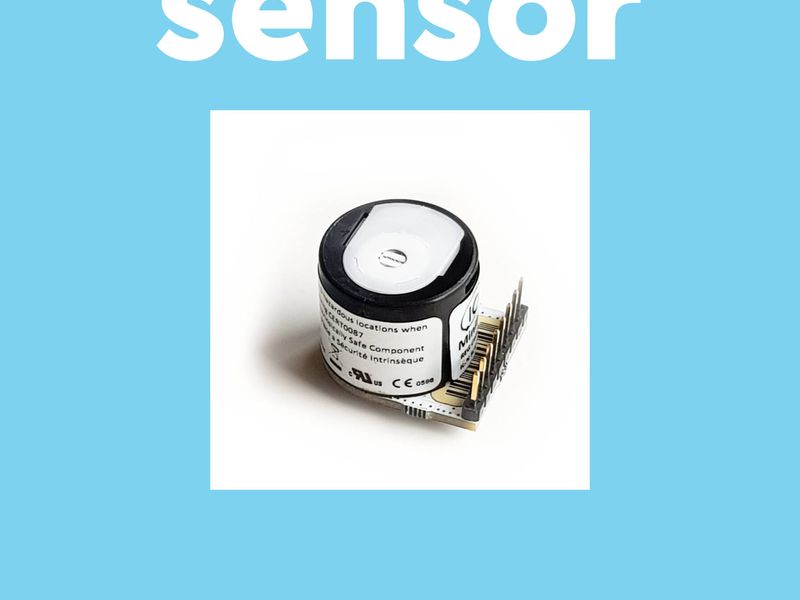
Chlorine is measured in the air-Q by means of an electrochemical sensor. Cl₂ molecules react with the surface of the sensor and cause a measurable current. The sensor used has very high accuracy. The disadvantage of the sensor, as with all electrochemical sensors, is cross-sensitivity - the sensor also reacts strongly to fluorine and bromine, and somewhat to sulfur dioxide, chlorine dioxide and ozone.
Measuring chlorine gas:
Use the air-Q air analyzer to measure chlorine as well as other gases and pollutants in indoor air in real time. The chlorine sensor can be ordered in the shop.
More measured values / sensors