
Ammonia (NH₃)
Can be measured with:
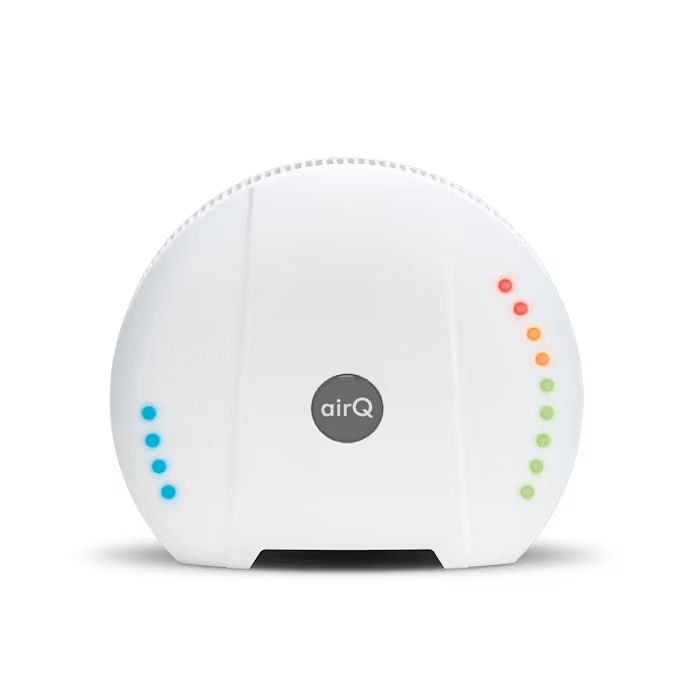
✓ measurable with the air-Q Science or the ammonia single sensor.
air-Qs with a sensor for Ammonia

Description:
Ammonia has an irritant effect on the eyes and respiratory organs even at low concentrations; at high concentrations it is even corrosive and life-threatening.
The irritant effect already begins at a concentration of 200 ppm (parts per million). This manifests as coughing and irritation of the nose and throat.
From 1500 ppm the gas is very harmful to fatal for humans.
At a share of 16-27% in the ambient air there is also a risk of explosion.
The largest quantities of ammonia are released in industrialized countries by agriculture, since ammonia serves as a starting material for many fertilizers. As a result, ammonia spreads through the air and binds to particles and pollutants in the air – this creates particulate matter.
Ammonia also forms the chemical basis for many other substances. For example, for the production of plastics and synthetic fibers, solvents and surface-finishing agents. This is why ammonia off-gassing is also very commonly found indoors.
Limit values for ammonia:
In ambient air, the proportion of ammonia varies depending on proximity to industry and agriculture. On average it lies below the recommended concentration of 1 ppm.
The odor threshold for ammonia in humans is 1 - 5 mg/m³ (= 0.16-0.84 ppm). High concentrations around 100 ppm are perceived as so unpleasant that panic-like reactions are the rule. The workplace exposure limit (AGW) is 14 mg/m³ (= 20 ppm).
| Designation | Ammonia limit values |
| German Federal Environment Agency (UBA) recommendation for outdoor air | <700 µg/m³ (1 ppm) |
| Limit value under the Animal Welfare Livestock Farming Ordinance (TierSchNutztV) | 14,000 µg/m³ (20 ppm) |
| Workplace exposure limit (AGW) | 14,000 µg/m³ (20 ppm) |
Effects of excessive concentration:
Ammonia causes severe chemical burns to the skin, eyes and respiratory tract. Coughing, nausea, headaches, impaired sense of smell and increased salivation can be signs of an excessive ammonia concentration.
With a contact time of over 15 minutes there is already a high risk to the skin. Damage to the eyes, the immune system and the gastrointestinal tract can also occur from prolonged exposure.
As a precaution, it is recommended to regularly ventilate rooms in which ammonia gases are used, so that no oxygen deficiency or dangerous gas concentrations can occur.
%2520(300%2520x%2520250%2520px)%2520(1).jpeg)
Formation of NH₃:
Ammonia occurs as a free gas only in small amounts in nature. It is formed mainly during the decomposition of plants and excrement. Ammonia also occurs on human skin and in the stomach in very small amounts: here as a metabolic product of bacteria.
As a starting material for many chemical compounds, ammonia is produced industrially on a large scale. For this, it is obtained from the elements nitrogen and hydrogen under high pressure and high temperatures (Haber-Bosch process): in 2017, for example, 150 million tonnes worldwide.
Sensor used:
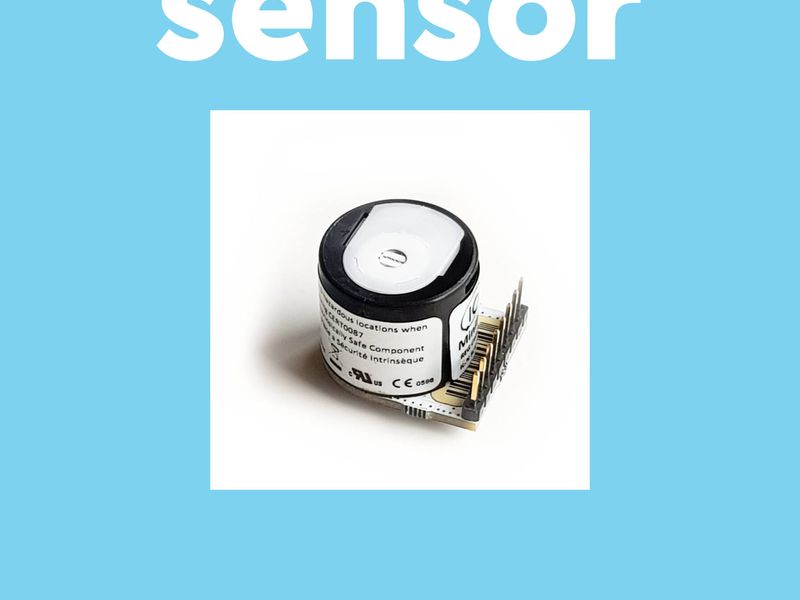
Ammonia is measured in the air-Q by means of an electrochemical sensor. NH₃ molecules "dock" onto the surface of the sensor and cause a measurable current. The ammonia sensor we selected has very high accuracy. The disadvantage of all electrochemical sensors is cross-sensitivity. The only known cross-sensitivity of the NH₃ sensor is hydrogen sulfide: if H₂S is present, an NH₃ increase is also displayed.
Measuring ammonia:
Use the air-Q air analyzer to measure ammonia as well as other gases and pollutants in indoor air in real time. The ammonia sensor can be ordered in the shop.
What does ammonia smell like? An unmistakable odor
Ammonia is a chemical compound often used in cleaning products and industrial processes. But what does ammonia smell like? Many people ask themselves this, especially when they come into contact with this substance for the first time. The smell of ammonia is very characteristic and easy to identify. It is often described as sharp and pungent, similar to the smell of urine or strong sweat. This intense odor perception is due to the volatile ammonia molecules that spread quickly through the air.
The smell of ammonia is not only unpleasant, but can also have health effects. Even at low concentrations, ammonia can irritate the eyes, nose and throat. At higher concentrations it can cause breathing difficulties, coughing and, in extreme cases, lung damage. It is therefore important to ensure adequate ventilation when handling ammonia products and to take protective measures if necessary.
In nature, ammonia occurs in small amounts, for example in the decomposition of organic material. However, the smell is usually only noticeable at higher concentrations, such as those found in household cleaners or industrial applications. If you're wondering what ammonia smells like, imagine an odor that immediately grabs your attention and triggers the urge to get a breath of fresh air.
For those who work with ammonia or use it in their household, it is important to recognize the smell and know how to handle it safely. Understanding the characteristic smell of ammonia can help avoid potential hazards and ensure that one is working or living in a safe environment.
More measured values / sensors