
Methane (CH₄)
Can be measured with:
✓ messbar (über die Stoffgruppe VOC Gase) mit air‑Q light, air‑Q basic und air‑Q pro sowie air‑Q science oder über den Methan Einzelsensor.
air-Qs with a sensor for Methane
Description:
Methane (CH₄) is a flammable, colorless, and odorless gas from the group of hydrocarbons. It is also known as methyl hydride. Methane is the simplest member of the alkanes. With little soot formation, methane burns to form carbon dioxide and water. Alongside carbon dioxide (CO₂), methane is one of the most significant greenhouse gases, contributing decisively to climate change. As a natural chemical compound, methane is the main component of natural gas and serves, among other things, as an energy source and starting material for technical syntheses.
Limit Values for Methane:
Since methane is practically non-toxic to humans, neither national nor international limit values have been set for this gas.
Even though methane has only comparatively mild health effects on humans, an excessive concentration is not without danger. In particular, the high flammability of methane poses a significant risk. The lower explosion limit (LEL) is a methane content of 29 g/m³. This means that from a methane proportion of 4.4 vol.-% (percent by volume) in the air, flame propagation through the gas mixture occurs entirely on its own once ignited, triggering explosions.
| Designation | Methane limit values |
| Lower Explosion Limit (LEL) | 29 g/m³ (equivalent to 4.4 vol.-%) |
Effects of Excessively High or Low Concentration:
Methane is, first of all, a non-toxic, only mildly narcotic gas. At higher concentrations, however, it can cause breathing difficulties, increase respiratory and heart rate, and result in low blood pressure with dizziness and drowsiness. The resulting oxygen deficiency can also affect the central nervous system, leading to sleepiness, numbness in the arms and legs, mental confusion, and memory loss. These effects normally do not cause lasting damage, but they significantly impair health and performance, for instance in work environments. Due to oxygen displacement, there is nonetheless a risk of suffocation at very high concentrations.
If the methane concentration in the air rises to between 5 and 15 percent, an explosive mixture forms. If ignition sources are then present, such as open flames, sparks, hot surfaces, electricity, or electrostatic charge, there is an elevated risk of explosion. In addition to severe burns, heating methane also produces dangerous gases such as carbon monoxide.
Formation of CH₄:
Methane is constantly being newly formed through biological and geological processes. It is formed, for instance, by the high temperatures and high pressure in deeper layers of the earth and is often released into the atmosphere through volcanic activity.
During the decomposition of organic matter in the absence of air, microorganisms emit, among other things, methane. Plants and animals also produce methane, which they release into their surroundings.
Of the 500 million tons of methane emitted every year, 70 percent are attributable to human activity. Livestock farming and agricultural cultivation in particular contribute to increasing the proportion of methane in the air we breathe. Cattle farming alone accounts for 39 percent, and wet rice cultivation for 17 percent, of emissions.
In addition, the transport sector, the extraction and production of fuels (such as coal and gas), petroleum processing, the production of iron, steel, and malleable cast iron, as well as waste, wastewater, and sewage sludge treatment, all contribute significantly.
Sensor Used:
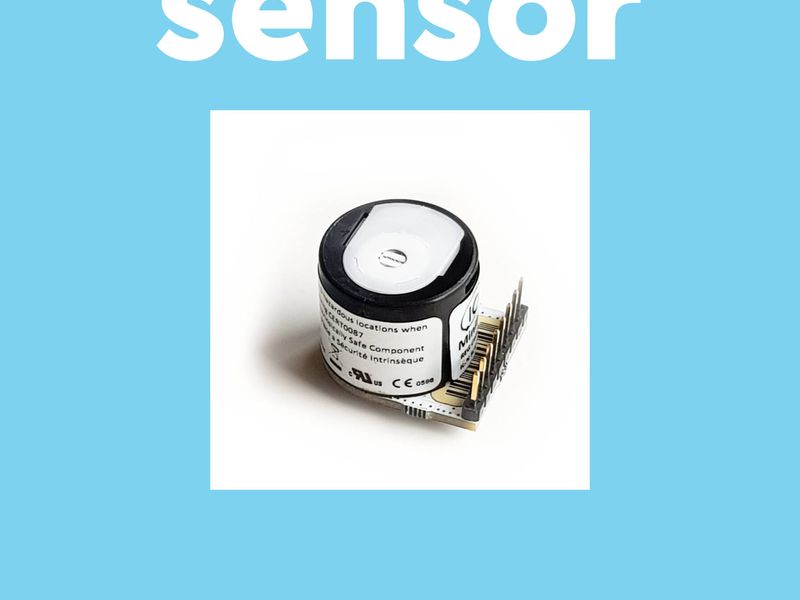
Methane is measured using a sensor based on infrared absorption. The advantage of this principle is its very long lifespan compared to an electrochemical sensor, and virtually no cross-sensitivities. The disadvantage is a somewhat higher price.
Measuring Methane:
Measure the methane concentration, components, and pollutants of indoor air in real time to improve your health and performance. Here you can order the air-Q as an air quality measuring device.
More measured values / sensors