
Sulfur Dioxide (SO₂)
Can be measured with:
✓ messbar mit Schwefeldioxid-Zusatzsensor.
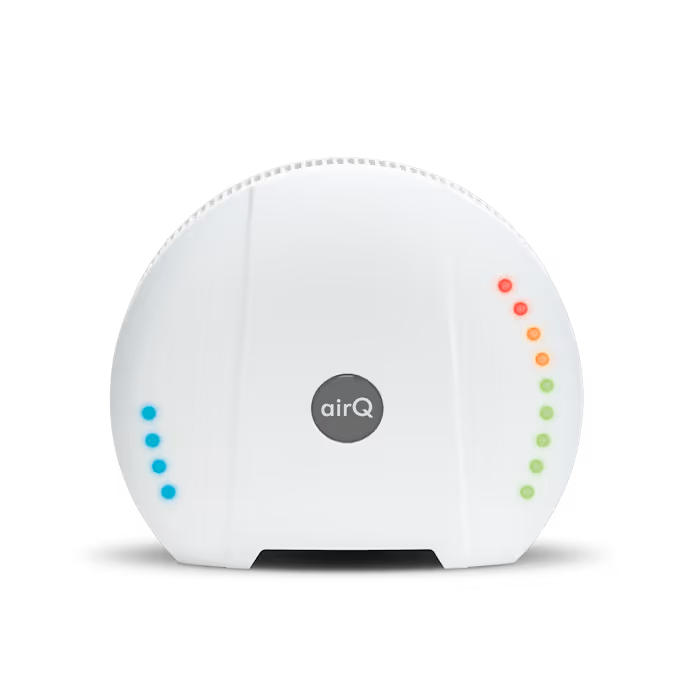
air-Qs with a sensor for Sulfur Dioxide
Description:
The irritant gas with the chemical formula SO₂ is non-flammable and has the property of solidifying into a colorless liquid at -10 °C. It is also readily water-soluble (forming sulfurous acid) and is two to three times heavier than air.
Under the designation E 220, sulfur dioxide is used in the food industry as a preservative, disinfectant, and antioxidant, for example in wine, fruit juices, dried fruits, and jams. Since SO₂ has the property of destroying vitamin B12, it may not be used, or only to a limited extent, in the production of meat products, dairy, or grain products.
In addition, sulfur dioxide is used to manufacture various chemicals, pharmaceuticals, cosmetics, and dyes. It is also used as a solvent as well as in the bleaching of paper and textiles, and serves as a protective gas, for example in metal smelting at foundries.
Limit Values for Sulfur Dioxide:
To protect public health, EU-wide binding limit values for sulfur dioxide were established in 2005. The now-applicable one-hour limit value of 350 µg/m³ may be exceeded no more than 24 times a year. The daily limit value is an SO₂ concentration of 125 µg/m³, which may be exceeded no more than three times a year. In addition, an alert threshold of 500 µg/m³ applies for sulfur dioxide. If this value is measured for three consecutive hours at several locations representative of the area, the respective member state is obliged to take suitable measures immediately.
According to the German Hazardous Substances Ordinance, a workplace exposure limit of 2.5 mg/m³ (1 ppm) has been established for sulfur dioxide. This is derived from the value for the maximum workplace concentration (MAK value), which is 1 ml/m³, or 2.7 mg/m³.
It should also be noted that SO₂ exposure increases at low temperatures, and the associated increase in emissions caused by heating-related combustion processes. Sulfur dioxide levels also rise during temperature inversion weather conditions due to restricted air exchange.
| Designation | Sulfur dioxide limit values |
| 1h limit value | 350 µg/m³ |
| Daily limit value | 125 µg/m³ |
| Annual/winter limit value | 20 µg/m³ |
Effects of Excessive Concentration:
If sulfur dioxide oxidizes in the atmosphere, it can lead to "acid rain" — precipitation with a pH value between 4.2 and 4.8. This can cause lasting damage to ecosystems, buildings, and materials.
As a potent respiratory poison, SO₂ can cause coughing, shortness of breath, or inflammation of the airways and mucous membranes, as well as eye irritation, at a concentration in the air as low as 0.04 %. Sulfur dioxide dissolved in water can also chemically burn the stomach walls if ingested orally.
If the MAK value for sulfur dioxide is exceeded, headaches, nausea, and drowsiness can result. If a person is exposed to high SO₂ concentrations over an extended period, the destruction of vitamin B12 impairs blood formation, which can lead to anemia.
High sulfur dioxide exposure also damages the lungs and bronchi. Asthmatics and patients with other chronic lung conditions are therefore especially affected by high SO₂ levels.
Formation of SO₂:
Some fossil fuels, such as coal or various petroleum products, contain up to 4 % sulfur. When these are burned, sulfur dioxide, among other things, is produced. Active volcanoes also produce SO₂.
In addition, sulfur dioxide is emitted by various modes of transport, with international shipping ranking among the largest SO₂ emitters. Other sources of sulfur dioxide emissions include industrial energy and heat generation plants, as well as residential heating. Sulfur dioxide is also released during the production of cement and pulp, as well as the processing of ores and petroleum.
Sensor Used:
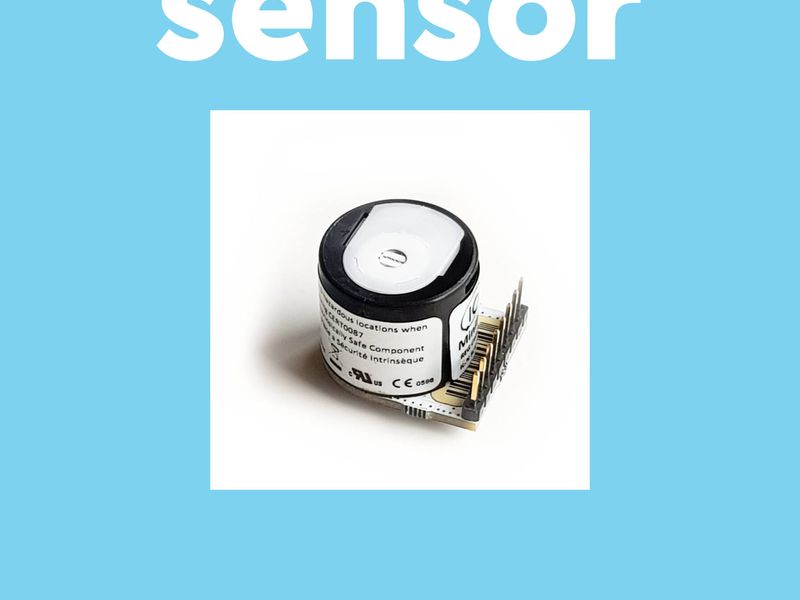
Sulfur dioxide is measured using an electrochemical sensor. SO₂ molecules that "dock" onto the surface of the sensor cause a small current within it. The advantage of our sensor is the manufacturer's individual sensitivity calibration and its especially long service life. The disadvantage of electrochemical SO₂ sensors is strong cross-sensitivities.
The sensor we use has a strong cross-sensitivity to hydrogen sulfide (H₂S) and nitrogen monoxide (NO), as well as to ozone (O₃) and alcohols. It therefore also reacts to H₂S and NO, showing a reading even when no SO₂ is present. It reacts negatively to O₃ and alcohols. When O₃ or alcohols increase, the measured SO₂ value decreases. These cross-sensitivities can also be evaluated and used to improve the measurement results.
Measuring Sulfur Dioxide:
The air-Q is a measuring device for sulfur dioxide and indoor air and can be ordered in our store.
More measured values / sensors