
Our blog covers indoor air and air quality
Our blog is a guide, a reference, and an information source all in one. Here you’ll find well-grounded knowledge, practical tips and current studies about air quality and a healthy indoor climate.

VOCs: Definition, Sources, and Health Effects
Efforts to reduce traffic-caused particulate matter pollution in cities are paying off nationwide in Germany: reports of declining particulate matter concentrations are becoming more frequent. Despite this good news, there is no all-clear when it comes to air pollution. The reason: volatile organic compounds, or VOCs for short.
→ Learn more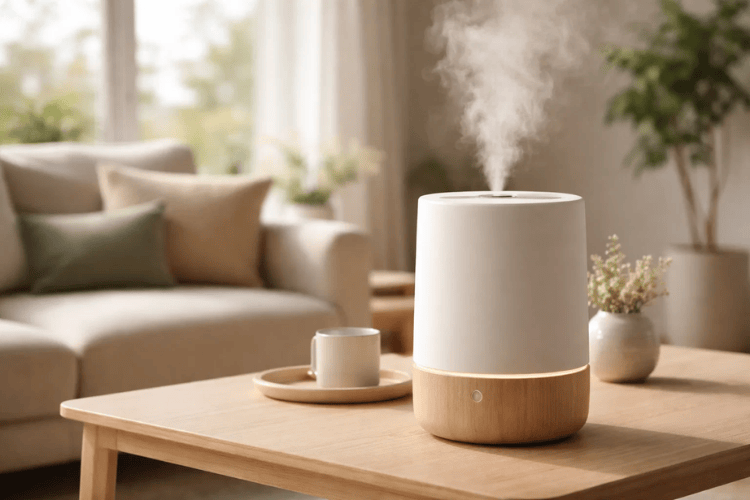
Minimum Humidity 40 Percent: Establishing Healthy Humidity Levels
Dry air is a particular problem during the winter heating season: on one hand, too-low room humidity worsens the important sense of comfort. On the other hand, it leads to an increased risk of infection – for example from flu viruses. That's why a trade association launched the Minimum Humidity 40 Percent campaign.
→ Learn more
"Laser Printers and Copiers Should Be Mandatorily Placed in Separate Rooms"
Laser printers and copiers are an often underestimated factor for healthy indoor air in the office – they emit fine dust, nanoparticles and pollutants. In an interview with Heike Krüger from the nano-Control Foundation, we discuss health risks, awareness-raising and a current campaign.
→ Learn more
Allergic Asthma – Definition, Symptoms, Causes, Therapy
Millions of people worldwide suffer from allergic asthma and know the oppressive feeling of struggling to catch their breath. But how exactly is bronchial asthma defined, what symptoms and causes are typical, and what can help provide relief besides medically prescribed therapy?
→ Learn more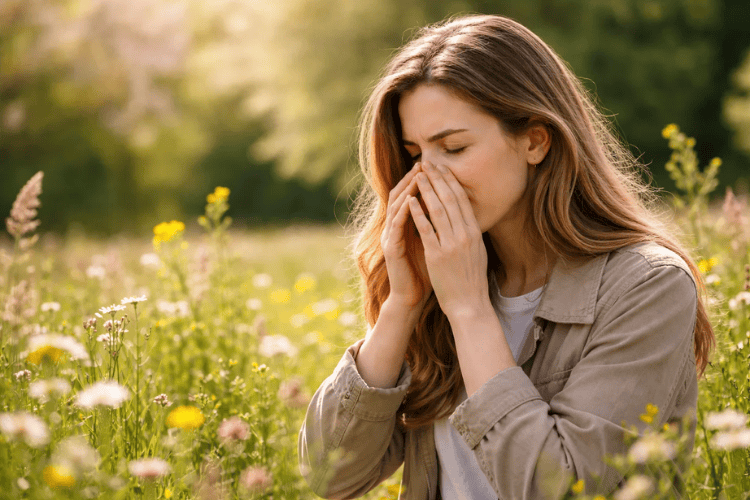
Allergies: How Much Does Ambient Air Influence Them?
Pollutants in the air can affect our health and trigger or worsen allergies. Our lungs are among the most obvious victims. But nerves, and not least the skin, also suffer under air pollution. What types of allergies exist, what is anaphylaxis, and what role do histamines play?
→ Learn more
Stuffy Office Air – How a Good Indoor Climate Safeguards Performance
In Germany, workplace air quality is governed by the Workplace Ordinance — specifically the Technical Rules for Workplaces. Yet "health-friendly air to breathe" is often in short supply in offices. Instead, stuffy air prevails, especially in open-plan offices. How can good indoor climate still safeguard performance?
→ Learn more
How Heating with Wood Pollutes the Air You Breathe
How can pollutant emissions in cities be sustainably reduced? The public debate focuses too much on the transportation transition. But the air we breathe, especially in residential areas, isn't only polluted by traffic: in the winter months, heating with wood, coal, and pellets contributes to increased particulate matter and pollutant exposure.
→ Learn more
How Noise Affects People's Health
Everyone knows it: sounds like loud music, an airplane, or a train trigger different reactions. That's because noise is perceived subjectively by everyone. What's clear, though: noise affects our health, since you can't get used to it. But which noise sources are especially harmful, and how is noise actually measured?
→ Learn more
Air Pollution in Europe: Despite Small Progress, Enormous Pressure to Act
The European Environment Agency (EEA) examined air pollution in Europe in its annual report. The evaluation of 4,000 monitoring stations found: air pollution from particulate matter, nitrogen dioxide, and ground-level ozone endangers the health of most city dwellers. What can be done about it?
→ Learn more
Solar Yield: How Air Pollution and Particulate Matter Reduce Power Generation From Solar Panels
Many of the dangers posed by air pollutants like particulate matter are undisputed and well known. But besides these health reasons for doing more toward good air quality, there are also economic reasons: solar yield can be significantly reduced by air pollution and particulate matter — and in two ways at once.
→ Learn more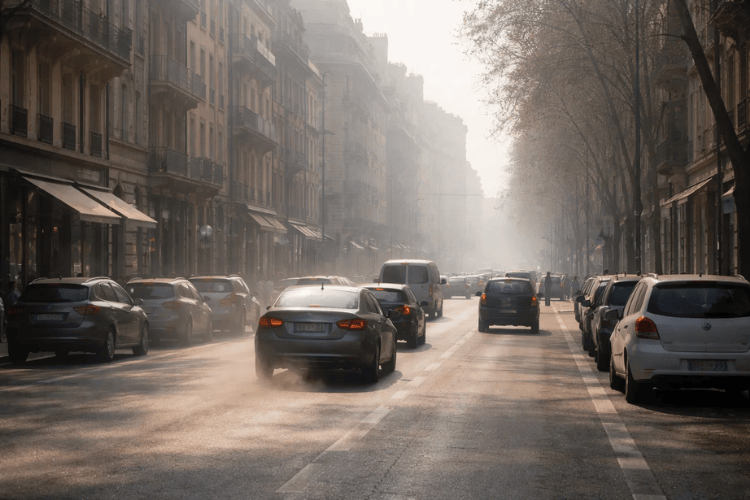
NO₂ Limit Values Explained Briefly: What Applies in Which Situation?
The debate about air quality and appropriate pollutant limit values never stops. Alongside CO₂ and particulate matter, nitrogen dioxide (NO₂) is especially in focus. But the existing limit values confuse citizens and experts alike — what limit values exist, and what applies in which situation?
→ Learn more
How a Wildfire Can Trigger Asthma
Rising temperatures as a result of climate change favor the risk of wildfires and make containing them harder. The resulting particulate matter exposure is especially a problem for people who are already at risk of asthma. What connection is there between asthma and wildfire particulate matter?
→ Learn more