
Air Pollution in Europe: Despite Small Progress, Enormous Pressure to Act
The European Environment Agency (EEA) examined air pollution in Europe in its annual report. The evaluation of 4,000 monitoring stations found: air pollution from particulate matter, nitrogen dioxide, and ground-level ozone endangers the health of most city dwellers. What can be done about it?
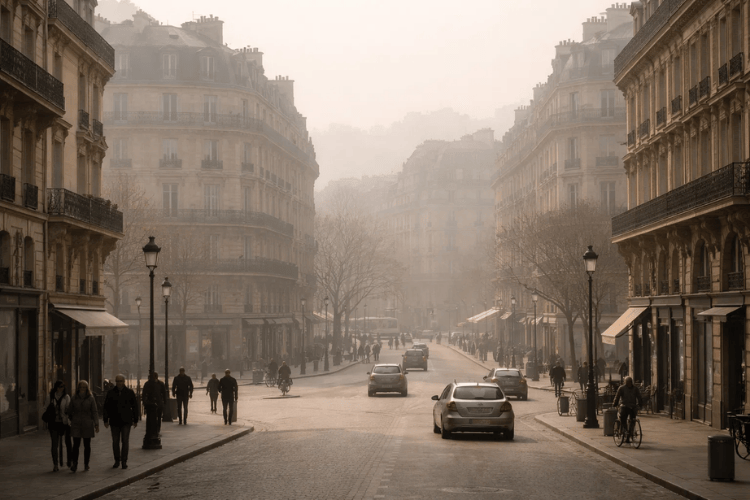
Europe now has a unique opportunity to establish an ambitious agenda that addresses the systemic causes of environmental pollution and air pollution, said Hans Bruyninckx, Executive Director of the Environment Agency.
In particular, particulate matter, nitrogen dioxide, and ground-level ozone are responsible for this air pollution in Europe. According to the report, particulate matter (PM2.5) caused more than 410,000 premature deaths in 41 European countries in 2016, while nitrogen oxides were largely responsible for 71,000 and ozone exposure for 15,100 deaths. Despite these alarming figures: these are significantly fewer premature deaths than a few years earlier.
"We're making progress, but it's time to accelerate the changes in our energy, food, and mobility systems to put us on a path toward sustainability and a healthy environment," said Hans Bruyninckx, Executive Director of the European Environment Agency.
But the negative consequences of air pollution also have economic effects: poor air quality leads to economic losses through higher healthcare costs, lower yields from agriculture and forestry, and reduced labor productivity. Overall, it's air and noise pollution, but also extreme temperatures, that particularly affect the lives of city dwellers living in Europe.
Small combustion plants cause the most particulate matter
The main source of primary particulate matter in the 28 EU states is the operation of small combustion plants in commerce and households. People find heating with wood particularly cozy and climate-friendly, because it causes comparatively low CO₂ emissions. However, outdated fireplaces, missing particulate filters, and improper operation cause significant particulate matter pollution, which, both in Germany and across the EU, far exceeds particulate matter pollution from traffic.
The result is that 44 percent of people living in European cities and suburbs are exposed to particulate matter concentrations (PM10) that exceed the World Health Organization's recommendation of an annual average of 20 micrograms per cubic meter. For the even finer, more dangerous particles, the WHO sets a limit value of 10 micrograms per cubic meter – 77 percent of the population breathes air that doesn't meet this standard and harms health.
From the perspective of environmental epidemiologist Barbara Hoffmann of Heinrich Heine University Düsseldorf, it's good news that the health consequences of particulate matter pollution have overall decreased slightly: "Unfortunately, this decrease is very slow," she told the Frankfurter Allgemeine Zeitung, "and in some regions of Europe, especially in the east and south, there continue to be quite significant levels of particulate matter pollution."
Pollution in northern Europe, for example in Iceland or Finland, is significantly lower than in eastern Europe, northern Italy, or Turkey. Germany is in the lower third and thus has lower pollution than most EU countries.
Air pollution: traffic, power plants, industry, agriculture
Other causes of pollutant emissions are road traffic, power plants, industry, and agriculture. Traffic in particular is responsible for elevated nitrogen oxide levels: both in Germany and across Europe. The share of total nitrogen oxide emissions is just under 40 percent.
The British newspaper The Guardian reported on another issue earlier this year: ammonia levels in the air are also rising, driven by agriculture. It's especially problematic that ammonia can combine with other pollutants in the air and harm human health. In the UK alone, according to The Guardian, 3,000 deaths per year could be avoided if ammonia emissions from farms were halved.
Ultimately, the sources described are closely linked to production and consumption in Europe and are also important drivers of greenhouse gas emissions and the loss of biodiversity.
EEA figures are from 2016, ultrafine particulate matter missing
The European Environment Agency's study shows that every effort to improve air quality in Europe and thus reduce air pollution is worthwhile. The fact that air quality has developed at least somewhat positively in some countries is a good, if small, trend. But: the EEA's figures from the 4,000 monitoring stations across Europe are from 2016, meaning they're already three years old.
Furthermore: the study lacks coverage of the particularly dangerous particles known as ultrafine particulate matter. In Germany, particulate matter of size PM1 isn't measured comprehensively – for the even smaller, ultrafine particles, there aren't even limit values from the WHO, the EU, or the Federal Environment Agency, because there simply aren't enough studies on this yet. Specialists warn especially about these particles, because they can penetrate much deeper into the cardiovascular system than the larger particulate matter particles.
European Green Deal as a path to less air pollution?
The incoming President of the European Commission, Ursula von der Leyen, wants to address climate neutrality and air pollution with a European Green Deal. To this end, she wants to launch a cross-cutting strategy to protect citizens' health from, among other things, environmental pollution and to improve air and water quality. Given the European Environment Agency's report on air quality in Europe, this is a sensible undertaking. Despite small progress: enormous pressure to act remains on policymakers.
The free download of the Air Quality in Europe report is available here.