
Our blog covers indoor air and air quality
Our blog is a guide, a reference, and an information source all in one. Here you’ll find well-grounded knowledge, practical tips and current studies about air quality and a healthy indoor climate.
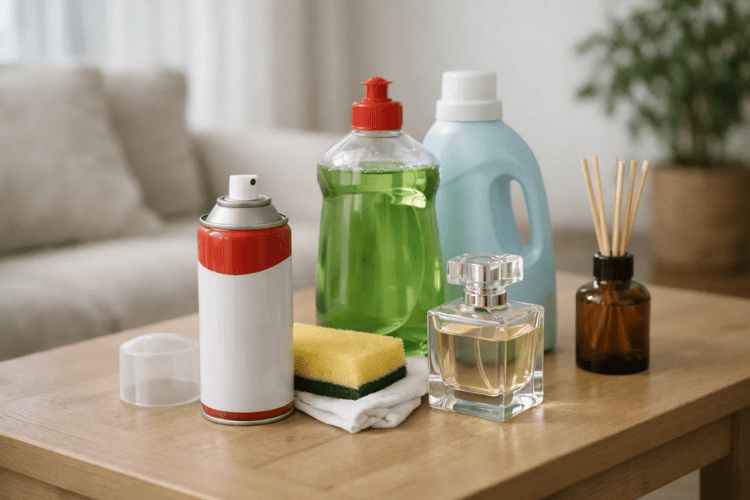
VOC Sources in the Household
It's not always easy to fully grasp everything covered by the term VOCs. This is because many different substances fall under this broad umbrella term, which trace back to a wide range of sources. So what can VOC sources in the household be?
→ Learn more
The air-Q on Trial: Particulate Matter and Aerosols in the Crosshairs
Indoor air quality is currently of particular importance, since aerosols that can carry, for example, the COVID-19 virus or other colds quickly build up there. In public spaces with many people, this plays a big role. The air-Q was summoned — to be put on trial in court.
→ Learn more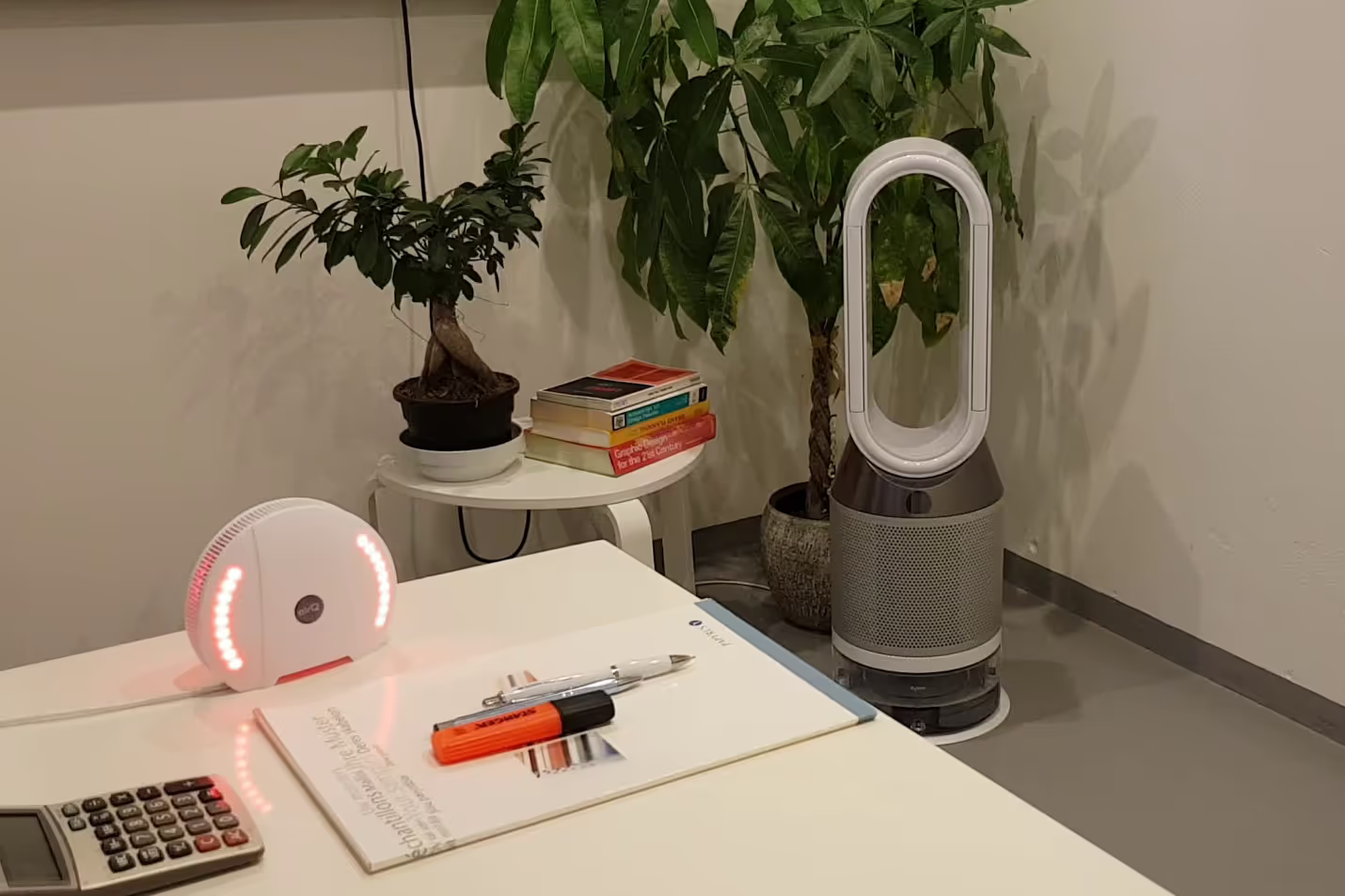
Put to the air-Q Test: The Dyson Pure Humidify + Cool Air Purifier & Humidifier
We tested the stylish humidifier, air purifier, and fan Dyson Pure Humidify + Cool. The device is large, heavy, and promises pure performance. We primarily examined the device's air purification function in relation to aerosols, using two air-Q Pro units with 14 sensors each. Among other things, we measured particulate matter, VOCs, and humidity.
→ Learn more
Air Quality by the Sea: air-Q Measures Elevated Particulate Matter on the Baltic Coast
What comes to mind with a Baltic Sea vacation? Sun, sea, beach, and maybe fresh, good sea air? We brought the air-Q along on vacation and measured surprisingly high particulate matter readings on the coast.
→ Learn more
Air Purifier: air-Q Measures Florafilt
With the development of the air-Q, we're fully dedicated to the fight for healthy room air. To lead this fight even more effectively, we're always on the lookout for promising allies. We keep an eye out for innovations like air purifier technology that help us improve the quality of the air we breathe.
→ Learn more
The Corona Effect: Lockdown Significantly Reduces NO₂ Pollution
How is air quality developing during the Corona pandemic? Data is often picked out and interpreted in isolation these days. But such analyses don't do justice to the complex relationships surrounding pollutants. Now researchers have presented a more in-depth analysis showing that the lockdown significantly reduces NO₂ pollution.
→ Learn more
Measuring Temperature: What Distinguishes Room Temperature From Air Temperature
The temperature level in rooms is often simply referred to as temperature. In recommendations for optimal temperatures, for example, it therefore remains vague whether air temperature or the far more meaningful room temperature is meant. Technical devices for monitoring room air are still mostly one-sidedly focused on air temperature today.
→ Learn more
Air Pollution Raises Coronavirus Death Rate
Is there a higher Covid-19 death rate in districts with high air pollution? A new study by Harvard University scientists suggests this is the case in the US — and should lead to both short-term and general consequences regarding air quality and particulate matter measurement.
→ Learn more
Indoor Air Quality in a House and Apartment - What to Watch Out For
The pandemic leads to quarantine, contact, and stay-at-home restrictions. Despite approaching spring, we spend more time in apartments and houses — and need to carefully watch out to stay productive and healthy. This post gives information on what pollutant sources exist and how to improve indoor air quality.
→ Learn more
Coronavirus: How Particulate Matter Accelerated Its Spread in Northern Italy
Can air pollution accelerate the spread of viruses like the coronavirus? Analyses by Italian researchers suggest it can. They found correlations between particulate matter (PM2.5, PM10) and the spread of COVID-19 in Northern Italy, and are therefore calling for restrictive measures to combat environmental pollution.
→ Learn more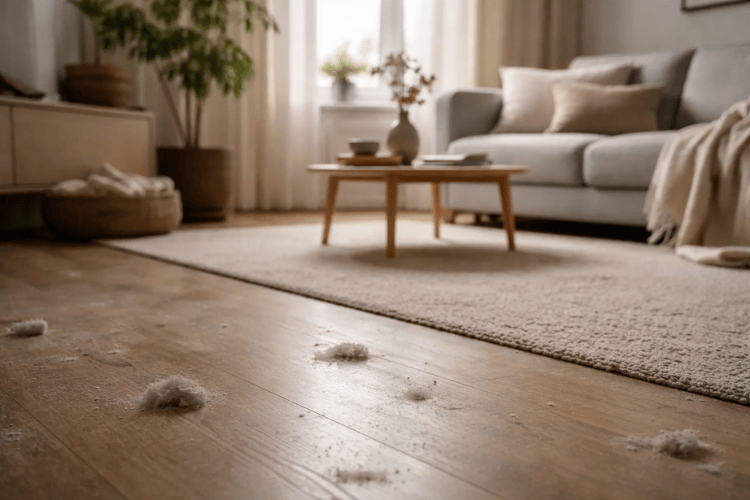
Household Dust: How Do Dust Bunnies Form and How Do We Protect Our Health?
Household dust, a mix of various organic and inorganic particles, can seriously harm our health. Causes can be natural or human-made. This blog article provides information on what household dust is, what effects the particles have — and how we can protect ourselves from the consequences.
→ Learn more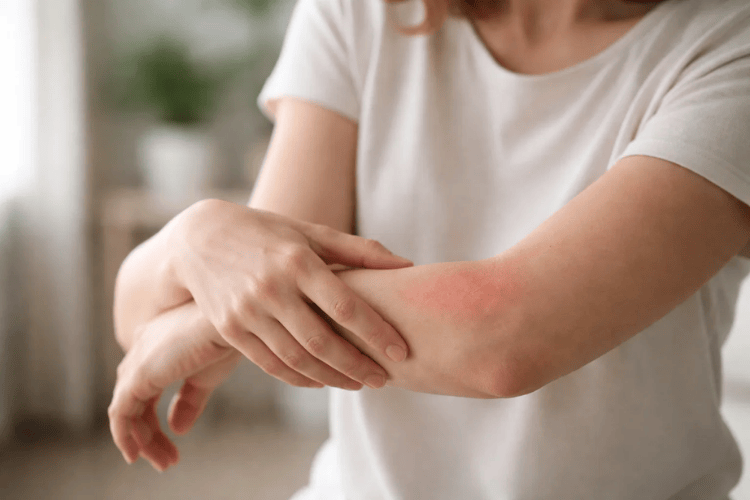
Atopic Dermatitis and the Risk Factor of Air Pollution
Air pollution is a risk factor for allergic diseases. Poor air burdens the respiratory tract and can trigger allergic asthma and hay fever. But the skin, the largest human organ and the only barrier against environmental influences, also suffers: air pollution is also a risk factor for atopic dermatitis.
→ Learn more