
Allergic Asthma – Definition, Symptoms, Causes, Therapy
Millions of people worldwide suffer from allergic asthma and know the oppressive feeling of struggling to catch their breath. But how exactly is bronchial asthma defined, what symptoms and causes are typical, and what can help provide relief besides medically prescribed therapy?

This article covers the following topics:
- Allergic vs. non-allergic asthma
- Symptoms of chronic airway inflammation
- Allergic asthma symptoms: recognizing and understanding
- Air quality: crucial for the well-being of those affected
- High humidity and asthma: effects and measures
- Allergy-related asthma: causes, symptoms, and treatment
- Asthma therapy: relieving and preventing
Allergic asthma is a particularly common chronic, meaning persistent, condition. The disease typically occurs in acute flare-ups and comes with airway inflammation. The term is Greek and translates to "oppression" or "tightness."
Although global case numbers are stagnating, between 235 (WHO) and 339 million (The Global Asthma Network) people worldwide suffer from bronchial asthma. Deaths per year total 250,000. This makes the disease not only one of the biggest health challenges, but also a major source of global economic burden.
Allergic vs. non-allergic asthma
By definition, bronchial asthma is a chronic inflammation of the lower airways. A basic distinction is made between allergic and non-allergic asthma. In most cases, those affected have an increased sensitivity of the bronchi to certain stimuli, accompanied by chronic inflammation of the airway mucous membranes.
30 percent of cases are non-allergic asthma — this particularly affects middle-aged or older people. Extrinsic asthma (also known as: allergic asthma), on the other hand, is the most common form at 70 percent, and mostly occurs in childhood and adolescence. Initially allergic asthma can also develop into mixed-form asthma over time.
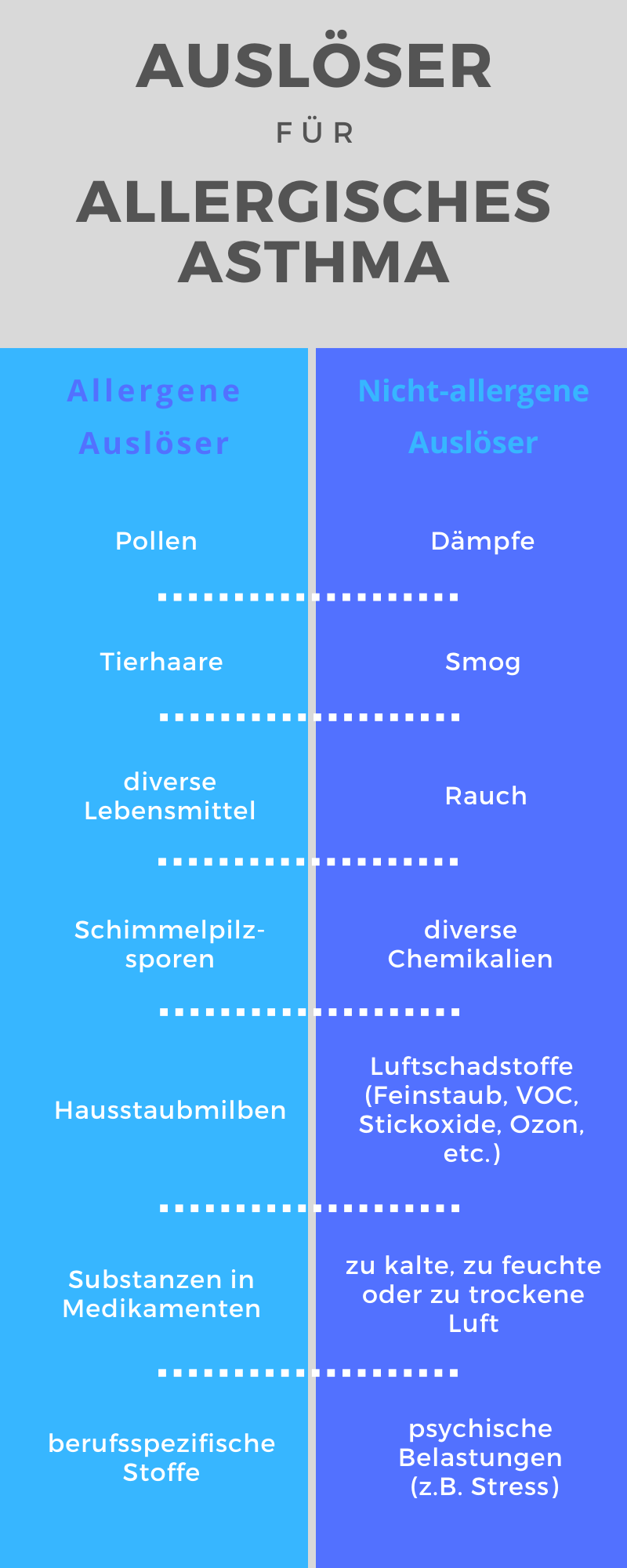
As one of the so-called atopic diseases, the allergic form involves a genetically determined tendency toward hypersensitivity reactions (bronchial hyperreactivity). These reactions can have both allergenic and non-allergenic triggers.
Symptoms of chronic airway inflammation
The chronically inflamed lower airways and the hypersensitivity reaction lead to sudden narrowing of the bronchi, causing acute symptoms of allergic asthma:
- Labored breathing
- Acute shortness of breath
- Wheezing sounds, especially when exhaling
- Tightness in the chest
- Coughing or coughing fits
- Fear of suffocation caused by shortness of breath
Coughing is especially common in children — as a result, the allergic asthma responsible for it may not be recognized early.
Allergic asthma symptoms: recognizing and understanding
Allergic asthma is a common form of asthma caused by allergic reactions to specific triggers such as pollen, dust mites, pet hair, or mold. Understanding the symptoms of allergic asthma is crucial for taking appropriate action in time and improving the quality of life of those affected.
The symptoms of allergic asthma are often variable and can range from mild to severe. The most common symptoms include shortness of breath, which can worsen especially during physical exertion or at night. Those affected often report a feeling of tightness in the chest, experienced as an unpleasant pressure.
Another typical symptom is a persistent cough, occurring mainly at night or early in the morning. This cough can be dry or accompanied by mucus. Wheezing or a whistling sound while breathing is also a characteristic sign of allergic asthma, indicating narrowed airways.
Besides these classic symptoms, allergic reactions such as sneezing, a runny or blocked nose, and itchy, watery eyes can also occur, since allergic asthma is often accompanied by other allergic conditions such as hay fever.
Recognizing these symptoms early is important for starting appropriate treatment. An accurate diagnosis by a doctor, ideally an allergist or pulmonologist, is essential to identify the triggers and create an individual treatment plan.
Treatment for allergic asthma generally involves avoiding known allergens, using inhaled medications to relieve symptoms, and, where appropriate, immunotherapy to reduce sensitivity to allergens.
By raising awareness of allergic asthma symptoms and intervening medically in time, those affected can better control their symptoms and lead an active, fulfilling life.
Air quality: crucial for the well-being of those affected
Since asthma forms in the airways, air quality is important for the well-being of asthma sufferers.
Whether pollen, mold spores, or mite droppings — most inhalant allergens attach to particulate matter. This can intensify the causes and effects in the airways, worsening the symptoms of allergic asthma.
In general, particulate matter is suspected of triggering allergies. Studies show that childhood asthma could often be prevented by reducing thresholds. Particulate matter doesn't just irritate the mucous membranes and airways and often provoke attacks — experimental studies have also demonstrated effects on the formation of the antibodies responsible for allergies, immunoglobulin E (IgE), on top of impaired lung function and effects on medication efficacy.
Other air pollutants also negatively affect this kind of condition. Toxins from combustion processes in particular, such as nitrogen oxides and sulfur dioxide, cause problems for asthma sufferers. These often irritate the airways and mucous membranes and can even trigger inflammation.
The mucous membranes can also dry out if the air you breathe is too dry, increasing infection risk, which in turn can provoke asthma attacks. Excessively high humidity, on the other hand, can also have serious consequences. Damp, warm air is a perfect condition both for mold growth and for dust mites to multiply. Mold spores and dust mite droppings act as allergens, worsening the symptoms of allergic asthma.

High humidity and asthma: effects and measures
High humidity can pose a significant challenge for people with asthma. Damp air can irritate the airways and worsen asthma symptoms, leading to more frequent asthma attacks. Understanding the effects of high humidity on asthma and taking appropriate measures can help relieve symptoms and improve quality of life.
In high humidity, air is heavier and denser, which can make breathing harder. These conditions can impair lung function and lead to shortness of breath, wheezing, and chest tightness. Damp air also promotes the growth of mold and dust mites, both common triggers of asthma attacks.
To minimize the effects of high humidity on asthma, it's important to control the indoor climate. Using dehumidifiers can help keep indoor humidity at an optimal level, ideally between 30 and 50 percent. Regular ventilation and using air conditioners with a dehumidifying function can also help reduce humidity.
Beyond that, asthma sufferers should make sure to take their medications regularly and follow an asthma action plan tailored to their individual needs. If symptoms persist or worsen, it's advisable to see a doctor to adjust treatment.
Outdoor activities should be avoided on days with particularly high humidity, especially when temperatures are also high. If being outdoors is unavoidable, those affected should try to stay in shaded areas and minimize physical exertion.
By raising awareness of the effects of high humidity on asthma and taking preventive measures, asthma sufferers can better control their symptoms and avoid a worsening of their condition.
Allergy-related asthma: causes, symptoms, and treatment
Allergy-related asthma is a common form of asthma triggered by allergic reactions to specific environmental allergens. This form of asthma occurs when the immune system overreacts to normally harmless substances such as pollen, pet hair, dust mites, or mold spores. This hypersensitivity leads to inflammation and narrowing of the airways, causing the typical asthma symptoms.
The most common symptoms of allergy-related asthma include shortness of breath, a whistling sound while breathing (wheezing), coughing, and chest tightness. These symptoms can worsen on contact with the triggering allergens and often occur seasonally, especially when pollen is in the air.
Allergy-related asthma is usually diagnosed via an allergy test, which helps identify the specific triggers. A lung function test can also be performed to determine asthma severity.
Treatment for allergy-related asthma focuses on avoiding known allergens and controlling symptoms. Inhaled corticosteroids and bronchodilators are common medications that help open the airways and reduce inflammation. Beyond that, specific immunotherapy (desensitization) may be considered to reduce sensitivity to certain allergens long-term.
Besides medication-based treatment, it's important to take preventive measures to minimize allergen contact. These include regular vacuuming with a HEPA filter, using allergen-proof bedding covers, and keeping windows closed when pollen levels are high.
Through targeted treatment and allergen management, people with allergy-related asthma can effectively control their symptoms and lead an active life. An individual treatment plan, created in collaboration with an allergist or pulmonologist, is crucial for achieving the best possible results.
Asthma therapy: relieving and preventing
To prevent asthma attacks or at least relieve asthma symptoms, you first need to regularly consult a doctor to determine which allergens your body reacts to. Besides this therapy, the following simple steps can provide additional relief:
- Keep a diary and — after consulting your treating doctor — document your condition's progress and lung performance with a peak flow meter
- Monitor the quality of the air you breathe (for example with the air-Q air analyzer), to immediately detect possible health risks and identify and ultimately avoid recurring peaks of certain pollutant concentrations
- Besides any medication-based therapy with special inhalers, discuss further treatment methods and aids with your doctor. Example: desensitization or special bedding and covers
- Limit the consumption of histamine-rich foods and check foods for whether and when they trigger cross-reactions with identified allergens
Even though allergic asthma can cause considerable suffering for those affected, the diagnosis doesn't necessarily have to lead to massive restrictions on quality of life. To be able to live as unburdened as possible, it's especially important to know what's on your plate and what's floating in the air you breathe.