
Allergies: How Much Does Ambient Air Influence Them?
Pollutants in the air can affect our health and trigger or worsen allergies. Our lungs are among the most obvious victims. But nerves, and not least the skin, also suffer under air pollution. What types of allergies exist, what is anaphylaxis, and what role do histamines play?
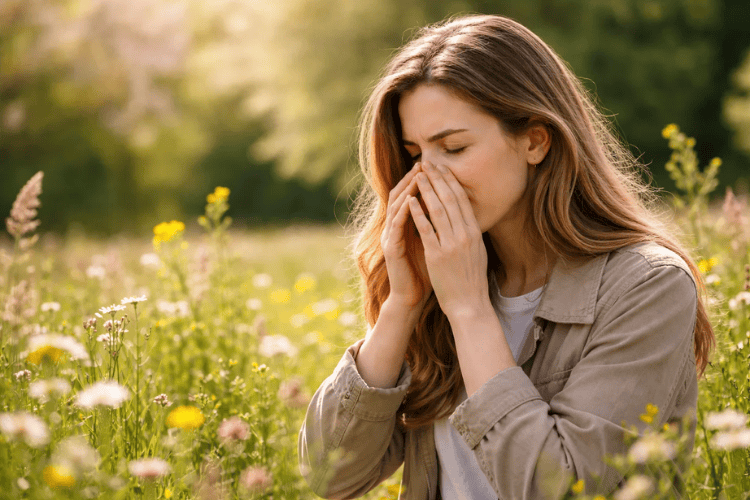
Population groups already burdened by pre-existing conditions are especially affected by the effects of poor air. This includes people with allergies — allergy sufferers. In them, the immune system misfires. It defends against substances that are actually harmless to the human body. On first contact with an allergen, the immune system produces so-called antibodies to fight the substances it classifies as dangerous. On subsequent contact, these antibodies trigger an allergic reaction. This allergic reaction can manifest in a wide range of symptoms:
- Itching, up to skin rashes
- Irritation of the mucous membranes and eyes
- Gastrointestinal complaints
- Breathing problems
- Runny nose
In the worst case, contact with the allergen can trigger a life-threatening allergic shock (anaphylaxis) in someone with allergies — a severe hypersensitivity reaction of the body.
Allergies: what types of allergies are there?
An overreaction of the immune system occurs at those points where our body comes into contact with the environment, letting supposedly harmful substances enter the human body. Which substances come into contact with the body, and how, also determines the specific type of allergy:
- Pollen (hay fever)
- Dust mites
- Pet hair
- Food
- Medications
- Contact with certain substances (perfume, nickel, cleaning products…)
- Insect venom
- Mold
How the air you breathe affects allergies
We're in constant contact with the ambient air around us, both through breathing and through our skin. Good air quality is therefore crucial for the health and well-being of most people who suffer from allergies. That's because the air can bring us into contact with substances that intensify or trigger allergic reactions, and can even manifest as chronic conditions.
Particularly common — and thus best known — in this context are the so-called atopic diseases, partly caused by genetic factors and partly triggered by environmental influences such as air pollutants. These conditions are known as asthma (allergic bronchial asthma), hay fever (allergic rhinitis), or atopic dermatitis (eczema).
If children suffer from one of the atopic conditions, their risk of developing one of the others also rises. Since this involves an overreaction of the immune system, the messenger and defense substance histamine plays a central role. To reduce the symptoms of atopic conditions — especially under high allergen exposure — it's worth paying attention to a healthy, low-histamine diet. A list of low-histamine foods can be found, for example, on Utopia.
Beyond that, people with allergies should continuously monitor air quality at home or in the office — for example with the air-Q air analyzer (order the air-Q directly in the shop). This lets you detect pollutant exposure early and avoid stress situations caused by reduced performance. Measuring pollutants in your home always helps.
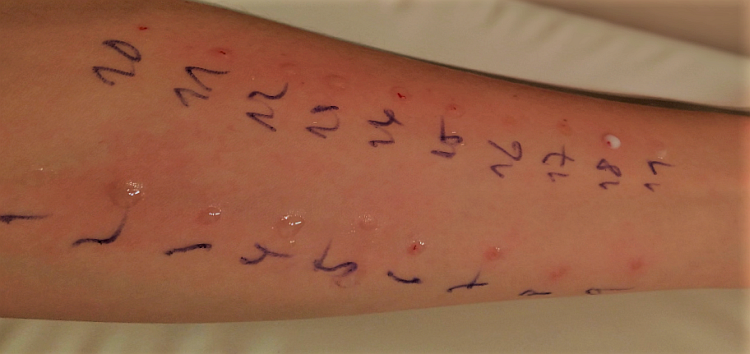
(Prick test image: Maria Heß)