
How Heating with Wood Pollutes the Air You Breathe
How can pollutant emissions in cities be sustainably reduced? The public debate focuses too much on the transportation transition. But the air we breathe, especially in residential areas, isn't only polluted by traffic: in the winter months, heating with wood, coal, and pellets contributes to increased particulate matter and pollutant exposure.
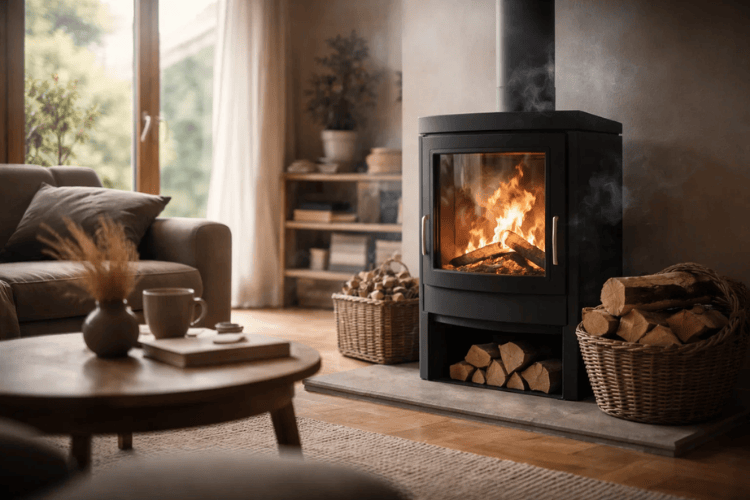
Pollutants from heating with wood
The Federal Environment Agency (UBA) estimates that nearly 12 million so-called single-room combustion units are currently used for heating with wood in Germany. Although the use of traditional coal stoves is declining, the number of modern fireplaces and tiled stoves, often used as a secondary heat source, is rising.
The carbon dioxide emissions (more on the CO₂ reading) from the increasingly popular burning of wood for heating can often be put into perspective by the fact that the trees grown for the wood previously absorbed a similar amount of CO₂ — provided the firewood didn't travel long distances.
However, this calculation often overlooks the fact that burning organic materials releases additional pollutants. It can therefore make sense to measure pollutants in the air. Wood burning in particular shows a greater burden on the air compared to other energy sources like oil and natural gas. The following pollutants are especially significant here:
- particulate matter (more on particulate matter here)
- polycyclic aromatic hydrocarbons (PAHs)
- carbon monoxide (more on carbon monoxide poisoning here)
- nitrogen oxides (more on the nitrogen dioxide reading)
- sulfur dioxide (more on sulfur dioxide)
- chlorine-containing compounds (more on VOC)
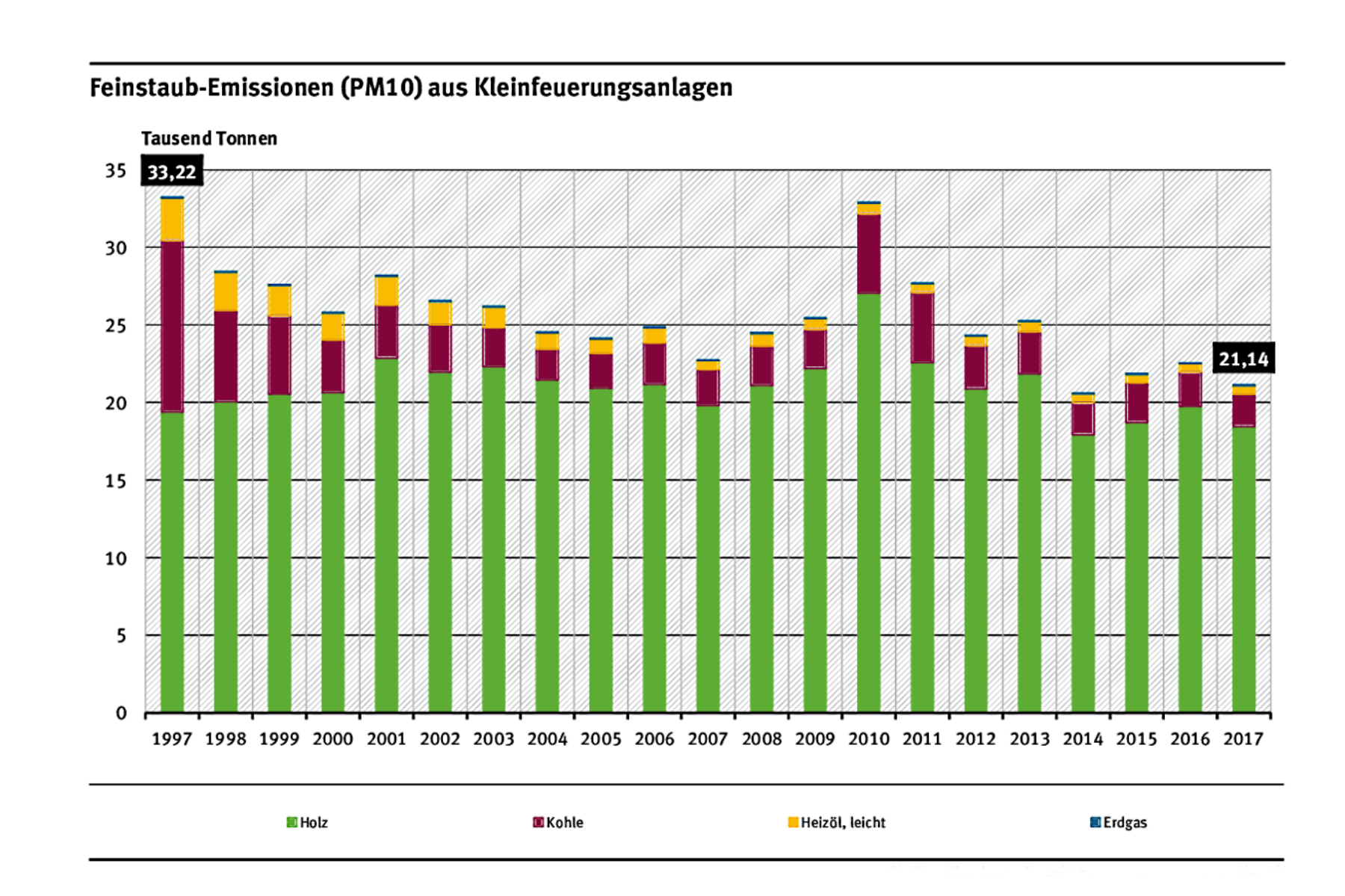
Danger from incomplete combustion
The greatest dangers come from incomplete combustion of the wood. This produces, besides toxic carbon monoxide (more on carbon monoxide poisoning here), also methane (methane reading), which contributes 21 times more to global warming than CO₂.
Organic compounds in the ash and exhaust air, such as polycyclic aromatic hydrocarbons, can also be carcinogenic. The emitted particulate matter additionally burdens the airways, irritates mucous membranes, and increases plaque buildup in blood vessels, which can lead to strokes and cancer. Links between elevated particulate matter exposure and neurological diseases (e.g. dementia and Parkinson's) are also suspected.
Reducing the burden on the air you breathe
If avoiding wood-burning units isn't possible, the following aspects should be considered to reduce the burden on the air you breathe from heating with wood:
- Make sure you have a low-emission and energy-efficient unit. Open fireplaces aren't just inefficient heat sources and pose a particular fire hazard. They also burden indoor air especially strongly due to very high, uncontrollable emissions. Excessive use of closed fireplace stoves should also be avoided, to reduce the health burden — also for neighbors.
- Follow the manufacturer's and chimney sweep's instructions to ensure proper handling of your unit. This includes both properly lighting the stove and correctly disposing of the ash, as well as regular maintenance and inspection of the unit by professionals.
- Consider the use and proper storage of the fuel. Burning treated or painted wood, as well as fiberboard, particleboard, and plywood, is prohibited or unsuitable.
This means that only untreated, dry wood is suitable as fuel. To avoid excessive smoke and too much ash with low energy yield, the residual moisture in the wood shouldn't exceed 25%. To be safe, use a wood moisture meter.
- Note that burning unsuitable fuels endangers the health of everyone in the direct and indirect vicinity. Accordingly, burning unsuitable substances — depending on type and extent — is considered a regulatory offense or even a criminal offense. To protect the public, anyone burning treated or damp wood, paper or cardboard, garden waste, plastics, or other waste should be informed of the ban. If the misconduct is repeated or no understanding is shown, the local regulatory office or environmental office, as the responsible authorities, should be notified.
- If you feel disturbed by a small combustion unit and the effects of heating with wood in your neighborhood, you should first have an open conversation with the respective neighbors to reach an amicable agreement. The responsible chimney sweep can help identify sources that are hard to locate. The regulatory office can also mediate in such cases.
A precise air quality monitor, like air-Q, can help you understand the pollutant exposure in detail.
- Pay attention to the origin of the wood when ordering firewood or pellets, for example online. Firewood from Eastern European old-growth forests, which is often illegally logged and imported, isn't a sensible alternative.
Heating with wood is an interesting alternative to heating with oil or gas from a comfort standpoint. However, it's only truly in line with climate protection if the details described above are observed.