
How a Wildfire Can Trigger Asthma
Rising temperatures as a result of climate change favor the risk of wildfires and make containing them harder. The resulting particulate matter exposure is especially a problem for people who are already at risk of asthma. What connection is there between asthma and wildfire particulate matter?
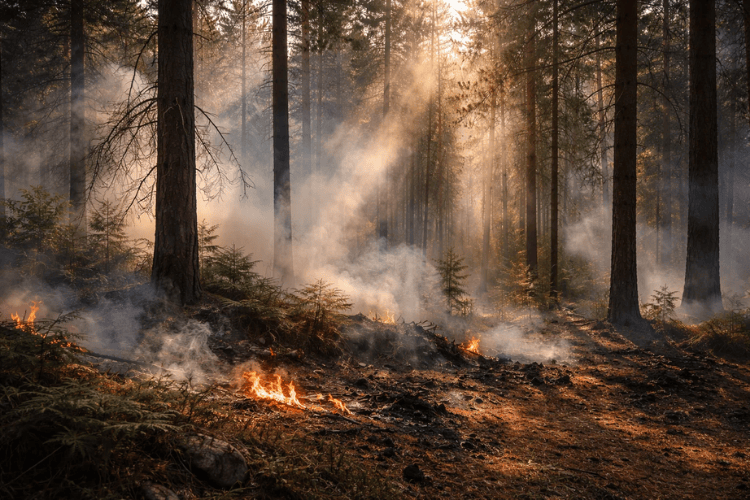
A new study shows that many new asthma cases in children can be traced back to PM2.5 particulate matter exposure, and that, for example, the particulate matter from a wildfire can trigger asthma. If the limit values recommended by the World Health Organization (WHO) were met, more than one in ten asthma cases could be prevented. With truly "clean air," even one in three cases. More on allergic asthma in general and on childhood asthma.
Since PM2.5-sized particulate matter particles, with a diameter of less than 2.5 micrometers, are very small and very light, they stay in the air longer and can be easily inhaled. Children are especially susceptible in this regard, since their immune system and airways are still developing. They also usually spend significantly more time outdoors, exposing them to particulate matter for longer. In addition, physical activity outdoors causes up to five times more pollutants to be inhaled.
If particulate matter concentration rises to a health-harming level — for example due to wildfires — asthmatics experience more symptoms and need more medication. The risk of needing hospitalization due to an asthma attack also rises on such days.
How far the wind carries air laden with particulate matter was shown at the end of June 2019, when a fire broke out on a former military training area in Lübtheen (Mecklenburg-Vorpommern). Of the total 6,200 hectares of forest area, between 1,200 and 1,300 hectares were affected by the fire. Overgrown forest paths and contamination from old munitions massively delayed firefighting efforts. For many days, firefighters were busy containing this devastating wildfire. During this time, the particulate matter concentration in the surrounding area rose exorbitantly due to the fire.
Exceeding particulate matter limit values due to wildfire
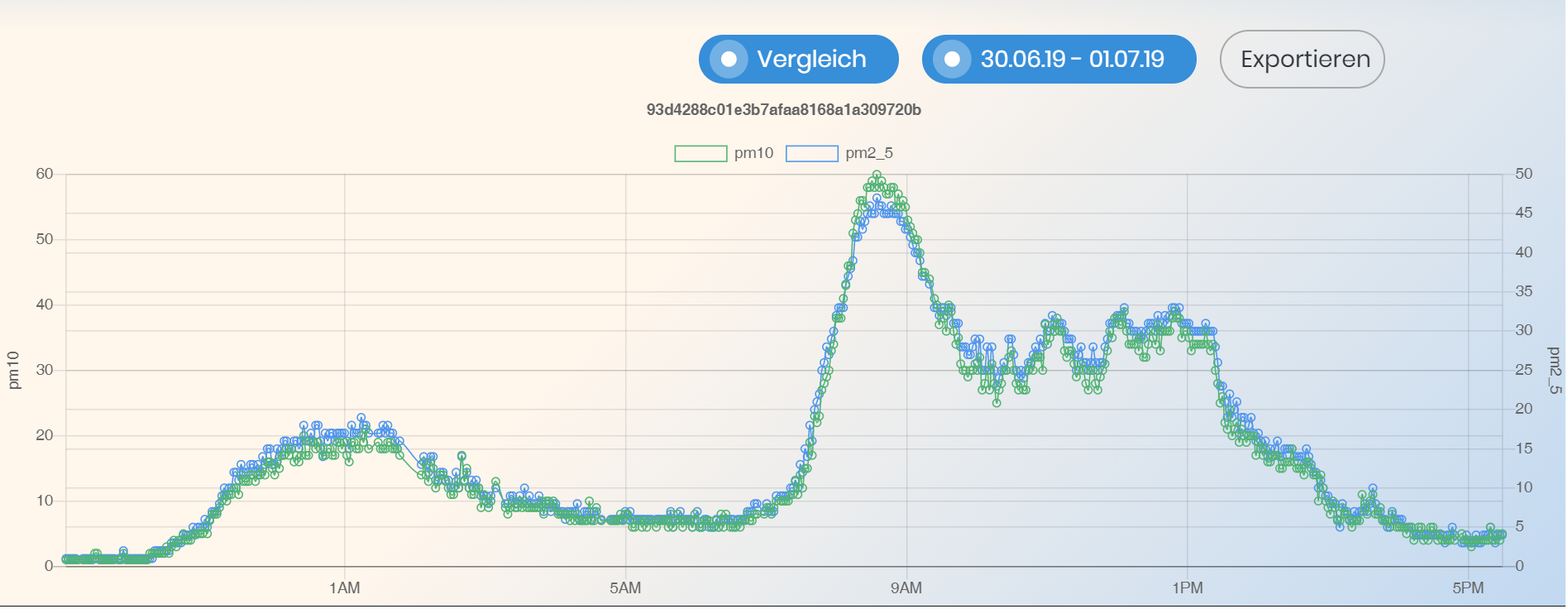
On some days, the north wind carried wildfire particulate matter from the fire area far into the interior of the country. Even in Leipzig — about 300 kilometers from Lübtheen — the smell of smoke was clearly noticeable and caused many worried calls to the fire department. The high particulate matter exposure was also clearly recorded by air-Q: as early as the early morning hours of July 1, air-Q recorded values in the PM10 and PM2.5 particle sizes that far exceeded the daily limit values of 50 μm/m³ and 25 μm/m³ set by the Federal Environment Agency (UBA) and the WHO respectively.
The dry year 2018 was also the year in which the most wildfires since records began were recorded. The loss of ecosystems leads to further degradation of landscapes as well as a dramatic reduction in CO₂ conversion through photosynthesis. This further intensifies climate change. And so, ultimately, a fatal cycle arises, to which our lungs also fall victim through additional asthma cases.
(Image: unsplash/ Matt Howard)