
Air Quality by the Sea: air-Q Measures Elevated Particulate Matter on the Baltic Coast
What comes to mind with a Baltic Sea vacation? Sun, sea, beach, and maybe fresh, good sea air? We brought the air-Q along on vacation and measured surprisingly high particulate matter readings on the coast.

The vacation spot was the Brook district in the municipality of Kalkhorst, in Mecklenburg-Vorpommern. There, the air-Q was set up in the apartment; thanks to pleasant temperatures averaging around 23 degrees, the door and windows were often open, keeping the rooms well ventilated. Given consistently very high humidity of almost 80 percent, that was also necessary.
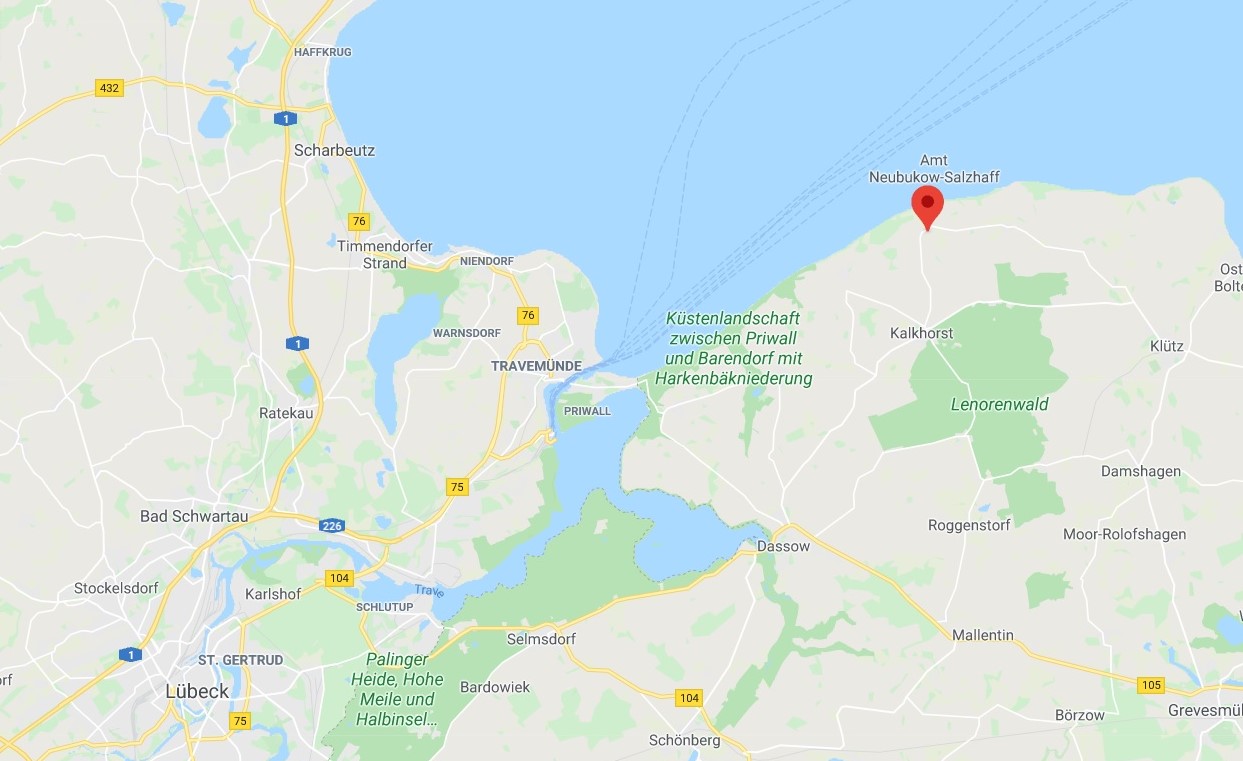
Particulate matter on the Baltic Sea
Over the period from August 10–15, an air-Q Pro recorded 14 different readings — including particulate matter in the various sizes PM₁, PM₂.₅, and PM₁₀. With particulate matter, the rule is: the finer the particles, the deeper they can penetrate into the bloodstream and thus reach the lungs, the heart, and, according to recent studies, the brain, causing lasting damage there.
As an example, PM₂.₅ particulate matter readings were selected and analyzed. Since particulate matter PM₂.₅ can penetrate even deeper into the body and airways, the German Federal Environment Agency sets an annual threshold of 25 μg/m³. For comparison — for the larger PM₁₀, an annual average of 40 μg/m³ and a daily threshold of 50 μg/m³ apply.
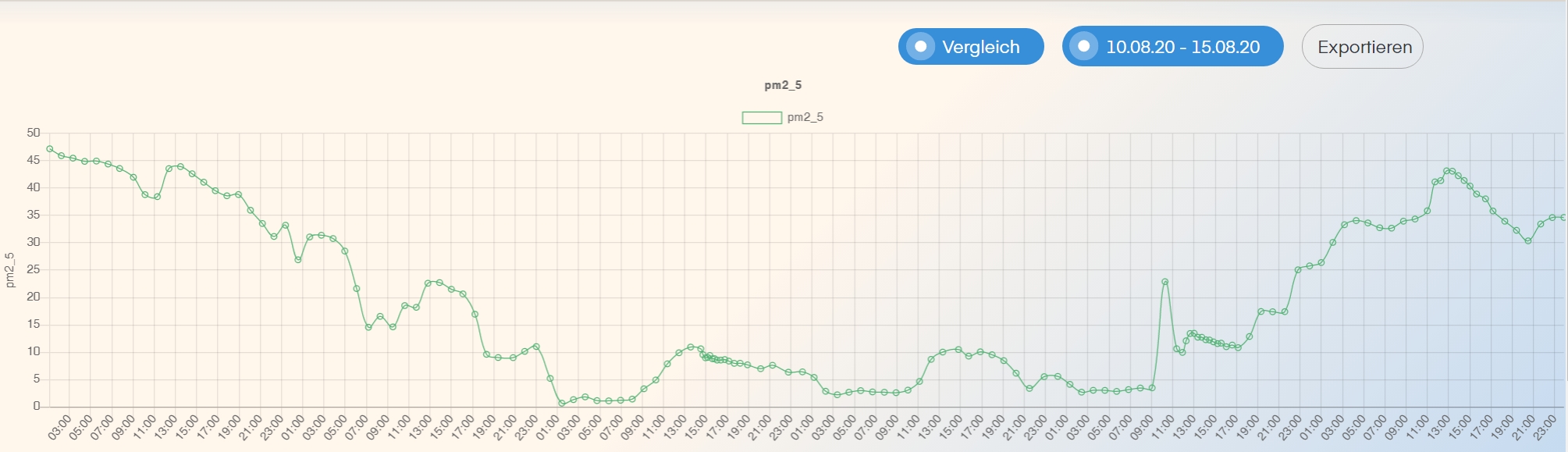
The measurement results show that particulate matter readings were initially very high, especially on the first day, reaching up to 47 μg/m³. Over the course of the second day, the values slowly dropped to less concerning levels, until finally reaching an absolute low on August 12th, the third day there. With only minor fluctuations, particulate matter readings on August 12th and 13th averaged below 10 μg/m³, before rising steadily again from August 14th, reaching their peak of 43 μg/m³ a day later, then dropping slightly again. However, they still didn't reach the low values of the previous days, instead settling at around 35 μg/m³.
Conclusion: significantly elevated particulate matter readings
The readings show that air quality regarding particulate matter in Brook on the Baltic Sea wasn't ideal. Without deeper analysis, only hypotheses can be formed about the cause of these high readings. The port of Lübeck is located near the measurement site, and ships entering via Travemünde, along with their combustion exhaust, are visible from far away. The wind mostly blew from a northwesterly direction at the start of the measurement, but later shifted to northeast. It's plausible that the wind blowing from the direction of the ships' entry channel carried the largely unfiltered ship emissions toward the vacation spot at the start of the measurement. The improvement in particulate matter readings over the period correlated with the wind shifting toward the northeast, which the air-Q immediately recorded. Further analyses along coastlines and near ports are definitely warranted. We'd be happy to receive submissions of air-Q measurement logs for a joint evaluation on this topic.
Want to measure particulate matter readings or your own room air too? You can order the air analyzer in our online shop.