
Atopic Dermatitis and the Risk Factor of Air Pollution
Air pollution is a risk factor for allergic diseases. Poor air burdens the respiratory tract and can trigger allergic asthma and hay fever. But the skin, the largest human organ and the only barrier against environmental influences, also suffers: air pollution is also a risk factor for atopic dermatitis.
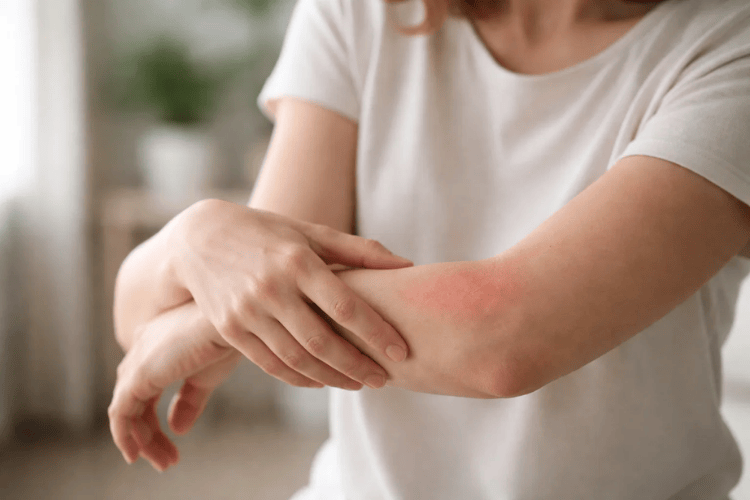
Atopic dermatitis (atopic eczema) is a chronic, inflammatory skin disease that occurs in flare-ups, meaning it's chronically relapsing. A typical feature of an atopic dermatitis flare-up is agonizing itching, in adults especially on the scalp, face, and hands.
About 15 percent of children in Germany and two to four percent of adults have to deal with atopic dermatitis in everyday life. Over the course of a lifetime, the eczema's presentation changes and varies in appearance. Most of those affected develop atopic dermatitis within their first year of life.
Atopic dermatitis: symptoms of atopic eczema
Along with allergic bronchial asthma and allergic rhinitis, atopic dermatitis is part of the medical spectrum of atopic diseases. Atopy refers to the genetically determined tendency toward physical hypersensitivity reactions to normally harmless substances. Here, the pathologically elevated formation of the antibody immunoglobulin E (IgE) upon first contact with environmental substances leads to allergic reactions upon later, renewed contact.
The skin is the largest human organ. It offers a particularly large surface for allergens to come into contact with the body. The skin of those affected by atopic dermatitis can no longer serve as a barrier against air pollution and other environmental influences. This barrier function is disrupted, and the skin is particularly sensitive.
Symptoms of atopic eczema include:
- Dry skin -> the skin feels tight, rough, and can appear flaky.
- Itching -> even minor irritation can trigger intense itching, which often intensifies in the evening and at night. The reflex to scratch intensifies the itching and injures the skin.
- Inflammation, redness, and changes to the skin -> eczema that appears can show up as redness, swelling, blisters, as well as weeping skin changes and crust formation. Dryness and itching, along with inflammation, lead over time to changes in the skin layer (thickening of the epidermis, enlarged furrows up to deep fissures, formation of darker or lighter skin patches).
People affected by atopic dermatitis also have to reckon with further complications. Skin damaged by scratching can lead to so-called superinfections, in which viruses, bacteria, or fungi enter through the wounds and worsen the symptoms. Bacterial infections can cause pain and fever. Herpes viruses, harmless to most people, can lead to herpes eczema in people with atopic dermatitis and, in the worst case, even cause inflammation of the brain (herpes encephalitis).
The psychological burden as a result of acute atopic dermatitis also shouldn't be underestimated. The intense itching often leads to sleep deprivation. This in turn leads to concentration problems and reduced performance. The fatigue weakens the immune system, which in children can also impair physical development and overall intensify the symptoms of atopic eczema even further.
Since most people can't tell whether someone affected is suffering from atopic dermatitis, a non-contagious disease, or is instead contagious, those affected with visible redness and eczema often feel excluded. They withdraw and, in the worst case, can develop depression.
Ozone, VOCs, or particulate matter affect the skin
The skin serves as a protective shield against harmful chemical substances like ozone or volatile organic compounds as well as physical pollutants, such as particulate matter. But these substances can still cause various problems for the skin. Effects like brown spots or an uneven complexion, dryness, or wrinkle formation are relatively harmless. However, air pollution can also cause or even trigger serious skin conditions like acne, acute and chronic eczema, psoriasis and rosacea, or even skin cancer.
Since the skin is constantly exposed to air pollutants, its defensive capability is weakened. As a result, it loses its ability to form natural antioxidants. These are responsible for neutralizing free radicals, which would otherwise strip oxygen from body cells. If the skin forms too few antioxidants, so-called oxidative stress occurs. This impairs skin regeneration.
Nitrogen oxides and sulfur dioxide (SO₂) have the property of scattering UV radiation, thereby increasing the intensity of UV exposure. In addition, nitrogen dioxide (NO₂) destroys the protective moisture film, which irritates the skin and increases its sensitivity. Nitrogen dioxide also combines with volatile organic substances to form ground-level ozone (O₃). This is suspected of accelerating skin aging and being responsible for wrinkle formation, discoloration, and sagging. Volatile organic compounds can also cause skin irritation and inflammation.
Particulate matter floating in the air can clog pores. This leads to restrictions in skin function, which in turn intensifies aging processes and reduces elasticity. In addition, various allergens attach to particulate matter particles and can thus trigger allergic skin reactions.
%2520(300%2520x%2520250%2520px)%2520(1500%2520x%25201300%2520px).jpeg)
Risk factor air pollution: how can the skin be protected?
Fundamentally, trying to protect the skin from the risk factor of air pollution is practically impossible. That's why, for people with atopic dermatitis, the focus must especially be on easing the effects of the condition.
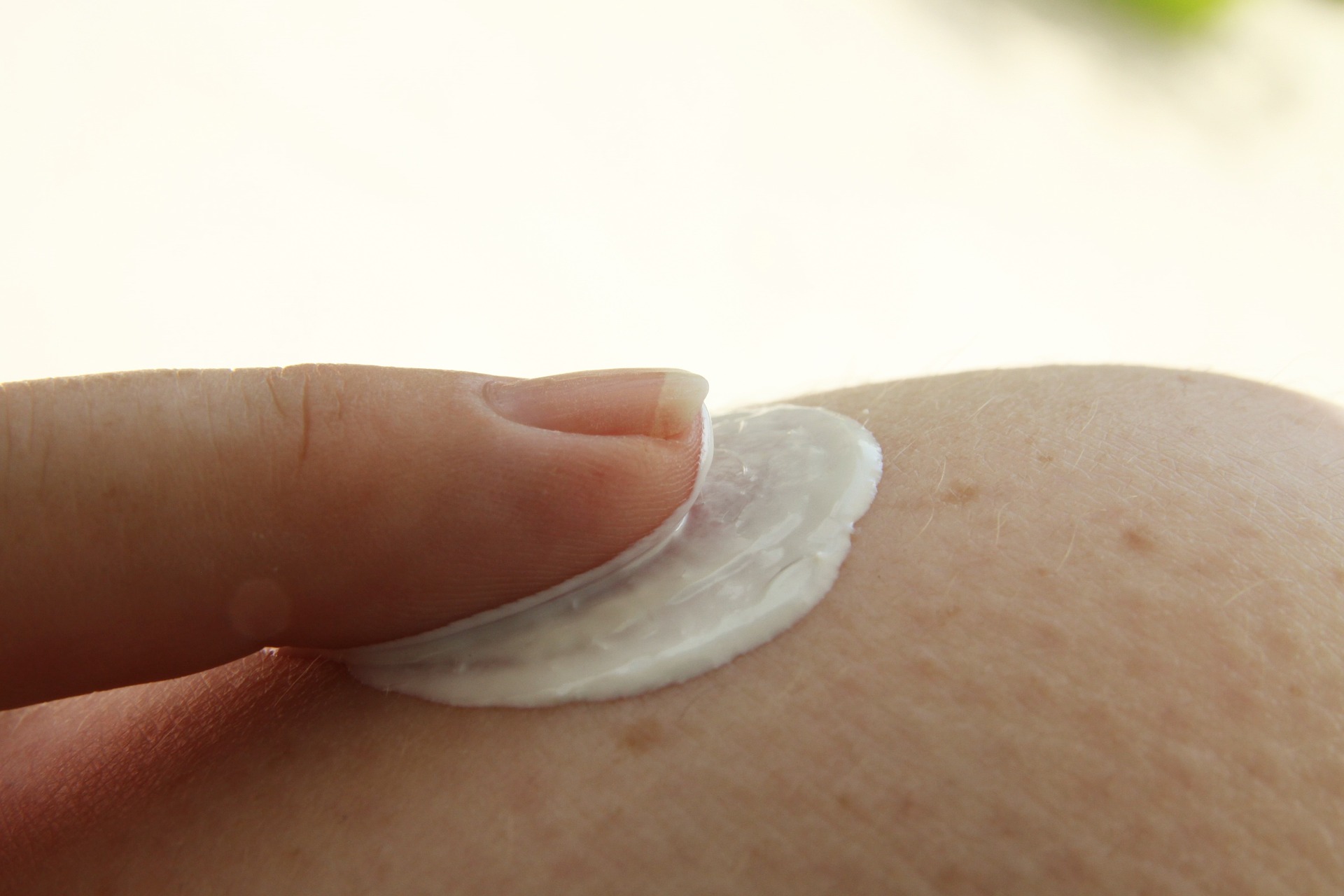
Cosmetics can contribute to this at various stages of the condition and counteract worsening. For dry skin, moisturizing creams, ointments, or lotions with a fat-replenishing component help — they support the skin's own protective mechanisms. Substances that further enhance the supportive effect are often added. Among the best known are urea, St. John's wort, hemp oil, zinc, dexpanthenol, and evening primrose oil.
To prevent infections at open areas, chlorine-containing ointments as well as antibiotic or antifungal active ingredients help. Preparations with tanning agents are used to treat weeping eczema. There's also a large number of anti-inflammatory ointments intended to reduce itching and heal inflammation.
Which preparations actually help in an individual case usually has to be tested by those affected themselves.
To prevent atopic dermatitis flare-ups or at least ease the effects of the eczema, so-called provocation factors should be avoided. Reducing external irritants plays an important role here. It's therefore recommended to avoid irritating or scratchy textiles, such as wool, as well as fabric softener and strongly scented detergents where possible. As with other atopic diseases, a low-histamine diet is also recommended.
Controlling air quality - avoiding air pollution
A low-allergen environment plays a special role. Special covers as well as regular cleaning of living spaces reduce exposure to dust mites and thus the risk factor of air pollution.
Monitoring air quality can also help detect allergen-laden air (e.g. from pollen dispersal) early on and thereby reduce its effects. But non-allergenic pollutants too, like particulate matter, nitrogen oxides, ozone, sulfur dioxide, and carbon monoxide, can irritate the skin and thus trigger flare-ups. Their concentration should therefore also be constantly monitored and, if necessary, reduced to a healthy level.
Furthermore, temperature and humidity also affect skin health. Dry air also dries out the skin, thereby promoting the development of eczema. Excessive humidity, on the other hand, increases the spread of dust mites as well as the risk of mold growth, which the body can perceive as allergens.
Heat, and thus sweat, are additional factors that can unnecessarily irritate the skin. In addition, heat and noise represent a psychological burden that can negatively affect the immune system and thereby promote overreactions of the skin.