
What Is Radon and How Does It Form?
Radon is an invisible, odorless radioactive gas produced by uranium decay in the soil and rises to the surface. It can enter houses through fine cracks or gaps in foundations. Due to its physical properties, it often accumulates in basements or on the ground floor. However, it can also penetrate to higher floors through gaps and air ducts (e.g. outlets or heating pipes).
Where Does It Occur Especially Frequently?
Radon can occur anywhere, but is more common in regions with uranium-containing bedrock. In Germany, parts of Saxony, Thuringia, Bavaria and Baden-Württemberg are particularly affected. Other countries also have risk areas near mountain ranges, e.g. in parts of the Alps, the Rocky Mountains, or in granite-rich regions. Outdoors, there’s usually no danger from radon, since it’s quickly dispersed and diluted by the wind.
The Danger of Radon
The WHO ranks radon as the second-leading cause of lung cancer (only smoking is worse). This underscores how important it is to monitor this health risk. In our radon meter test, we compare three devices: air-Q radon, Airthings Wave Plus and RadonEye. These devices let you check radon levels in your home or workplace and track them over time, to identify potential radon sources and respond.
1. Comparing Sensor Equipment
Our three radon meters are equipped with different sensors. Depending on the model, the meters offer other sensors besides radon to measure various air parameters. We’ve summarized the devices’ readings in the following table.
RadonEye — Sensor: pulsed ionization chamber; measurement intervals: 10 min; resolution: 0.1 Bq/m³; sensitivity: 100 Bq/m³; operating range: 10 °C – 40 °C, humidity < 90%; measurement range: 1 – 3,700 Bq/m³; measurement deviation: < ±10% (reached after 1 h). Sensors: radon (Rn) only.
Airthings Wave Plus — Sensor: passive diffusion chamber; measurement intervals: radon 1 h, other values 5 min; resolution: 0.1 Bq/m³; operating range: 4 °C – 40 °C, humidity < 85%; measurement range: 1 – 20,000 Bq/m³; measurement deviation: after 7 days ~10%, after 2 months ~5%. Sensors: radon, CO₂, VOC, temperature and relative humidity.
air-Q radon science — Sensor: continuous pulse counting; measurement intervals: mathematical evaluation via Kalman filter at 2-second intervals; resolution: 0.1 Bq/m³; sensitivity: 50 Bq/m³; operating range: 0 °C – 50 °C, humidity < 95%; measurement range: 0 – 1,000,000 Bq/m³; measurement deviation: < ±10% (reached after 1 h). Sensors: radon, CO₂, VOC, temperature, relative and absolute humidity, air pressure, dew point, particulate matter (PM₁, PM₂.₅, PM₄, PM₁₀) and particulate matter particle size.
2. Connectivity and Handling of the Meters
When buying a radon meter, design and handling matter as much as accuracy. That’s why we compared connectivity options and outward appearance.
RadonEye
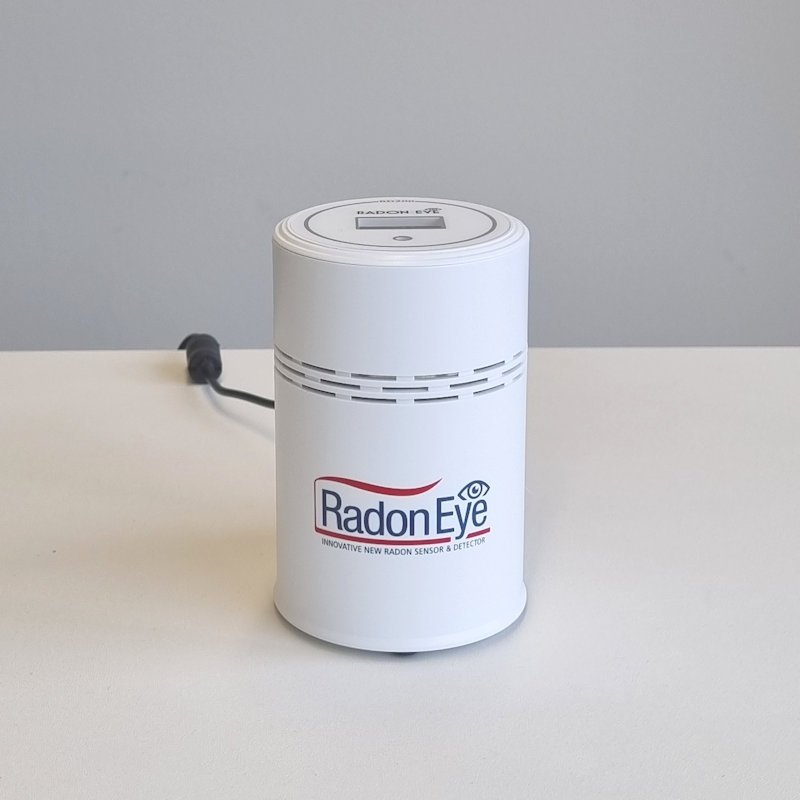
Notable is the RadonEye’s display, which lets you read the readings without a smartphone app. However, the display is very small, so you have to stand right in front of the device. Data is stored for a year at 1-hour intervals. The device has a proprietary power supply and can only be operated with the included power adapter and plug.
Plastic packaging · stable stand · built-in display for radon data · connection status indicator.
Airthings Wave Plus
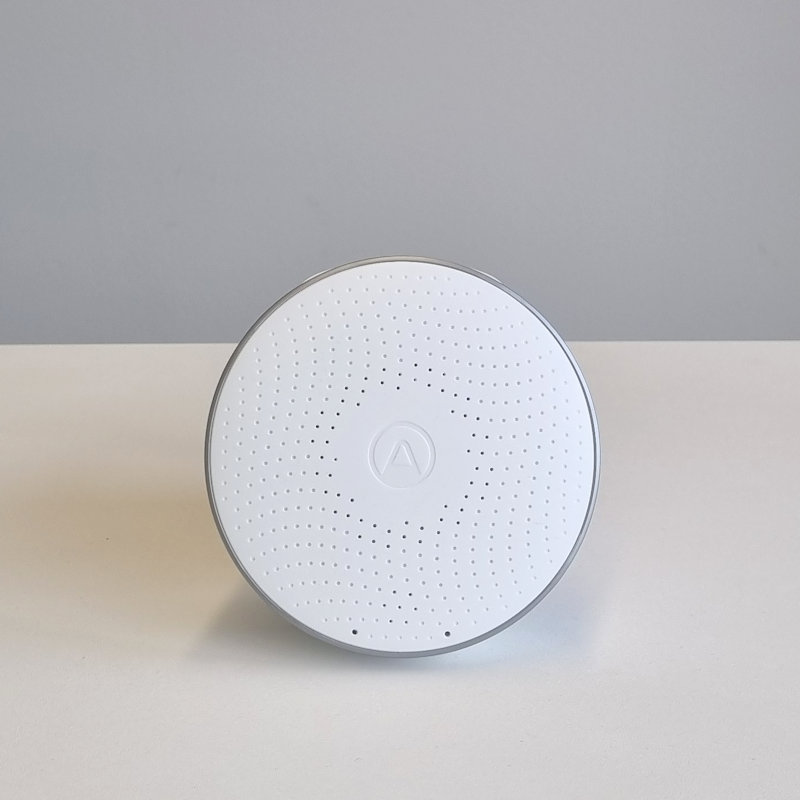
The Airthings Wave Plus is battery-powered and can be mounted on a wall. It also has a gesture-activated LED color display that signals air quality (green, yellow, red). For the gesture to work, you have to move your hand directly above the device.
Packaging with a small plastic tab · freestanding or wall-mountable · color-coded display (hand-activated) · intuitive color display: green (good), orange (moderate), red (poor).
air-Q radon science
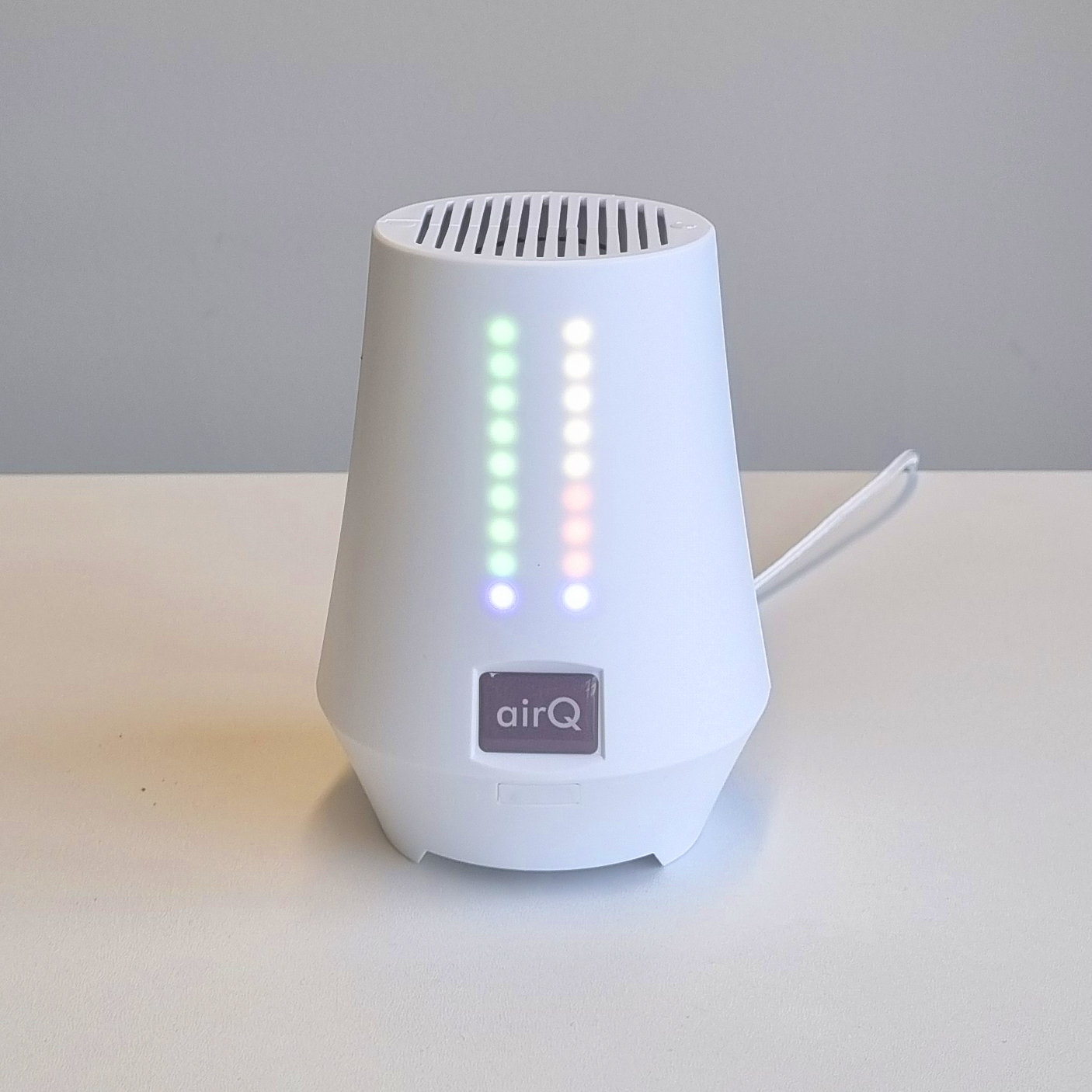
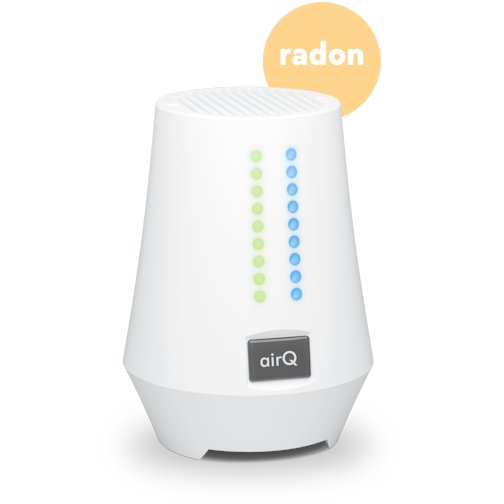
The air-Q radon science has a higher-resolution LED display that can be freely configured. Readings from individual sensors can also be read from a distance. The device is powered via a USB-C port, so standard power adapters can be used. The air-Q radon science also has a removable SD card containing the recorded measurement data in CSV format. The storage is sufficient for more than 10 years of data at 2-minute intervals. Furthermore, the USB port on the air-Q radon science is active — meaning the device can be connected directly to a computer. This feature exists in the hardware but will only be activated later via a firmware update.
Plastic-free packaging · permanently visible LEDs · 1 reading per LED display side · intuitive color display: blue (good), orange (moderate), red (poor).
3. Setup and Network Configuration
RadonEye: After a brief self-test, the RadonEye is ready for use immediately after switching on — meaning it shows radon readings on its own display, which should reach the stated accuracy after an hour. The RadonEye can be connected via Bluetooth to the EcoSense app. Setup takes about two minutes, during which the device code must be entered manually. After that, measurement data can always be retrieved when you’re near the device with your smartphone. Retrieving measurement data over the internet isn’t possible.
Airthings Wave Plus: Setup is quick and requires no manual input. After inserting the batteries, the device is found via Bluetooth and shown in the app. Exactly one Airthings device can be integrated into a user account. A name and location can be assigned. The process takes about 3–4 minutes. However, reliable measurement data is only available after several days. Measurement data can be retrieved when you’re near the device with your smartphone. Retrieving measurement data over the internet is possible, but it must first be uploaded via the smartphone after manually connecting to the Airthings device via Bluetooth. The Airthings Wave Plus can’t send data to the internet itself if the user/smartphone isn’t connected via Bluetooth — a manual process.
air-Q radon science: The air-Q radon science boots within 30 seconds of plugging in the power adapter. After starting, a WiFi network can be found that a PC or smartphone/tablet can join. The air-Q app or a PC can then be used to configure the WiFi, device name, location and a device password. Setup takes about 2–4 minutes and is somewhat more error-prone than Bluetooth configuration, since there are more potential sources of error (e.g. typos in the WiFi key, repeaters, blocked ports, etc.). The air-Q can be integrated into multiple user accounts. This is important, since each user can use their own settings (e.g. push alarms). There’s no internet requirement. The air-Q can also be operated solely on the local network, or even without one — i.e. mobile. If the air-Q is connected to WiFi and the free air-Q Cloud is used, data can be retrieved from anywhere, since the air-Q automatically transmits data to the air-Q Cloud every two minutes.
4. Charts, Data & Measurement Results — RadonEye
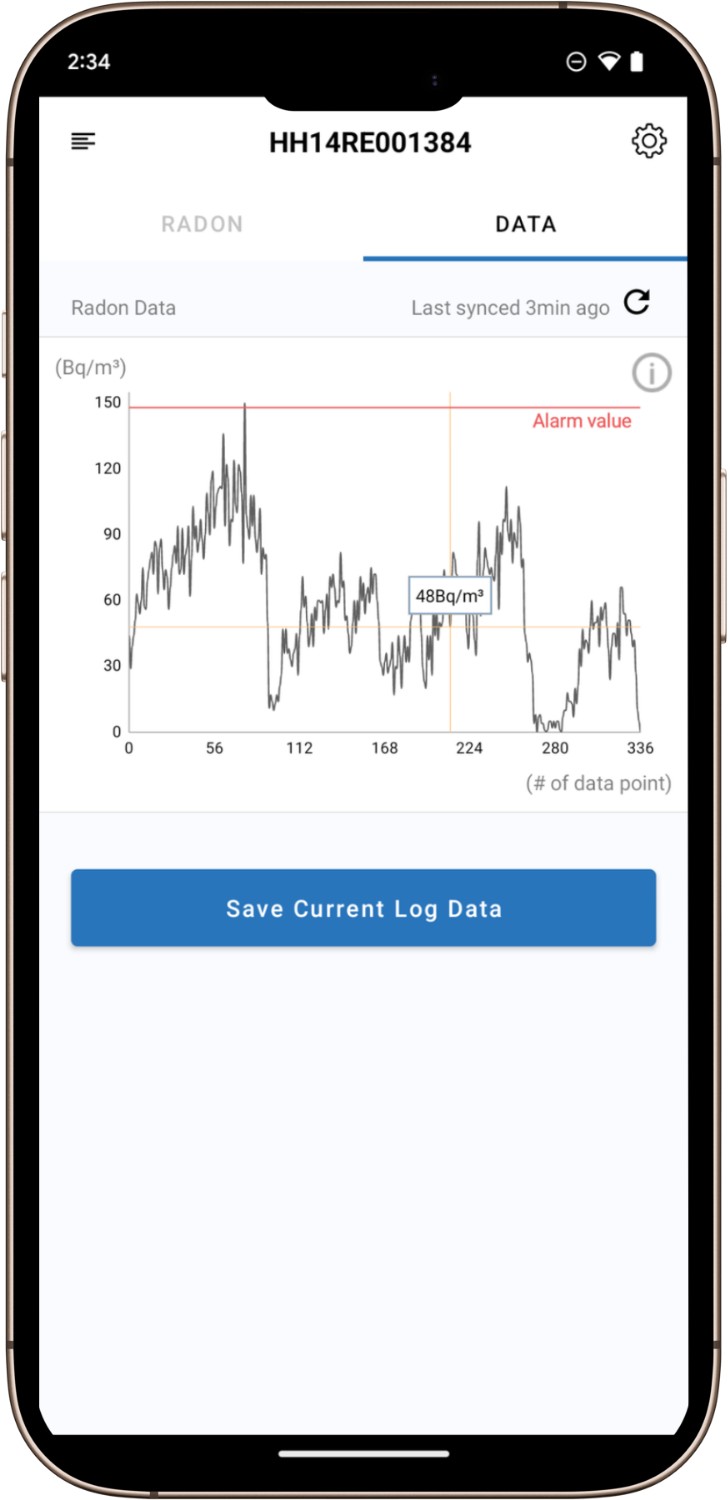
The RadonEye outputs current readings every minute and provides basic chart features, such as displaying individual values as well as average, maximum and minimum values. However, it lacks time and date information, and the chart options are very limited. For example, a time period can’t be selected. It remains unclear which time period is even displayed. Data can only be exported as a plain text file without timestamps.
The RadonEye focuses on its core function as a measuring device and forgoes built-in tips or additional guidance. It offers pure measurement functionality without supplementary advice or support.
Airthings Wave Plus — Different Time Periods
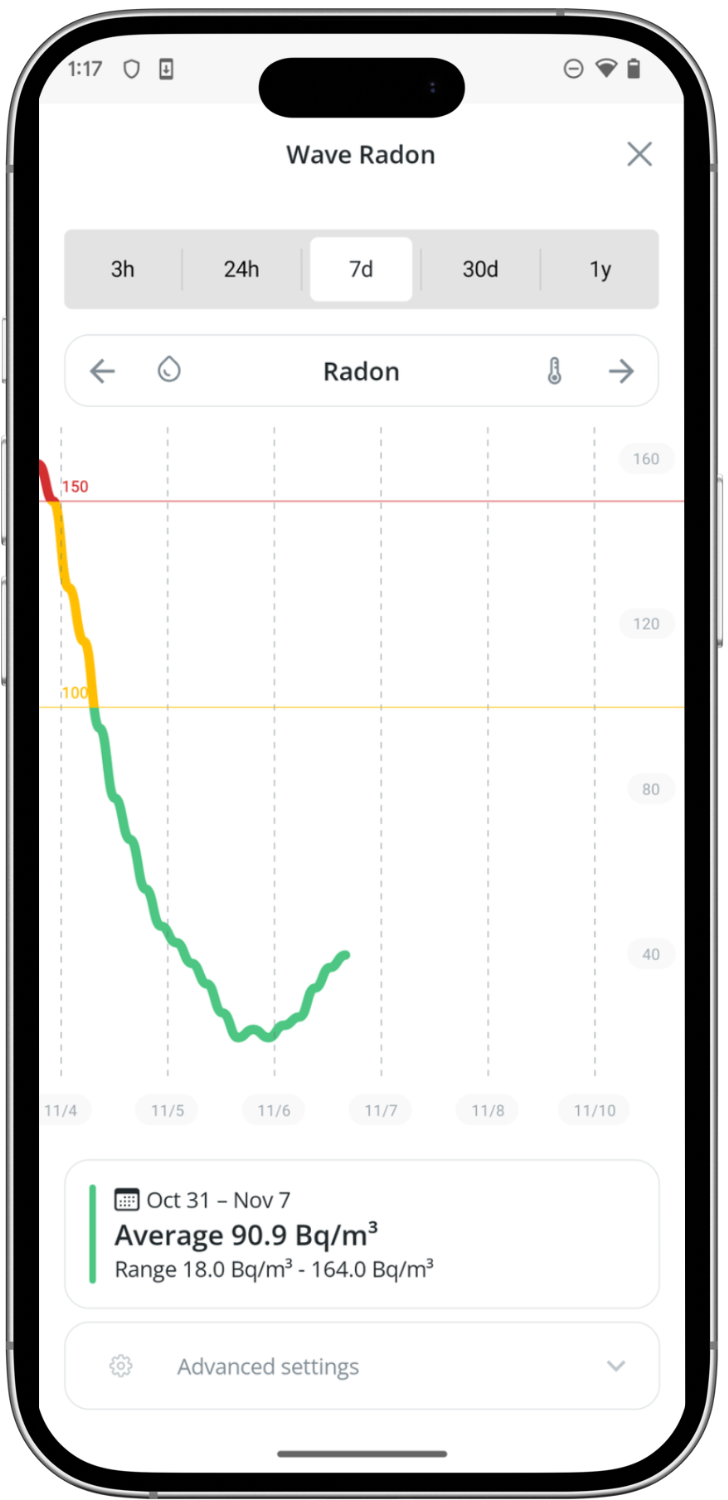
The Airthings Wave Plus outputs current measurement data within a few minutes. The device offers data visualization in the form of charts for periods of three hours, one day, seven days, 30 days and one year — custom periods, e.g. a specific day in the past, can’t be set. However, only one value at a time can be shown in the chart. Current values and average values can also be displayed.
The Airthings app provides structured guidance. Tips are divided into time phases, with users receiving support directly after installation as well as after 7 and 30 days. Users also have access to a comprehensive help center for further information and assistance.
air-Q radon science — Detailed Analyses
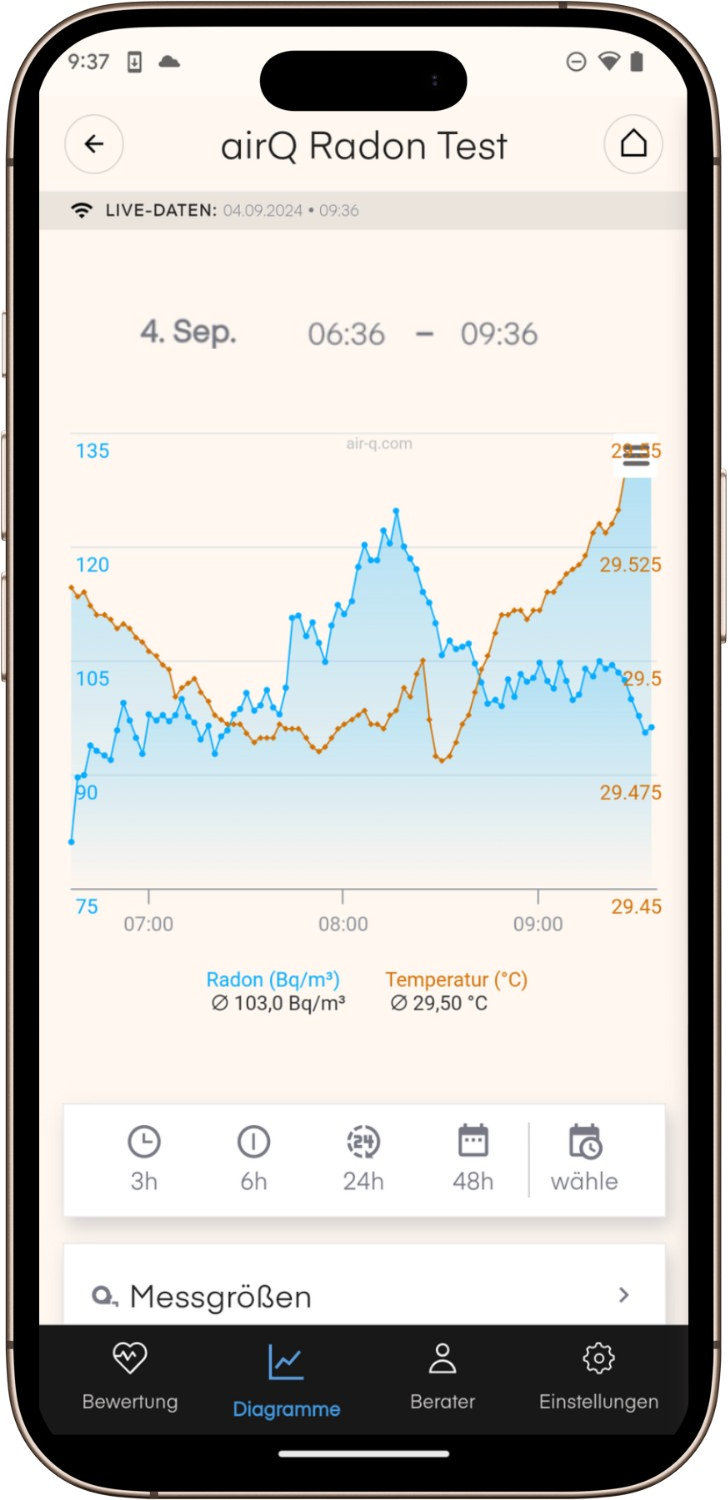
The air-Q radon offers a wide range of analysis options. Current readings are output every second — i.e. truly in real time. Users can use a quick picker, or freely set custom time periods for evaluating historical data. There’s no time limit — theoretically, the air-Q offers enough storage for well over 10 years of data at a 2-minute data resolution. The display allows comparison of up to two values simultaneously — either two sensors from one air-Q device, or the same sensor from two devices (via the web app). Limit values and custom thresholds can optionally be displayed. For further analysis, versatile export options are available, including image, CSV and Excel formats (web app).
The air-Q app provides comprehensive information about readings and data, and informs about causes and possible health effects. Particularly useful are the individual solution suggestions and personalized tips for poor air quality. Brand new is an AI advisor that evaluates the measured readings individually and live at the push of a button.
Measurement Results Compared
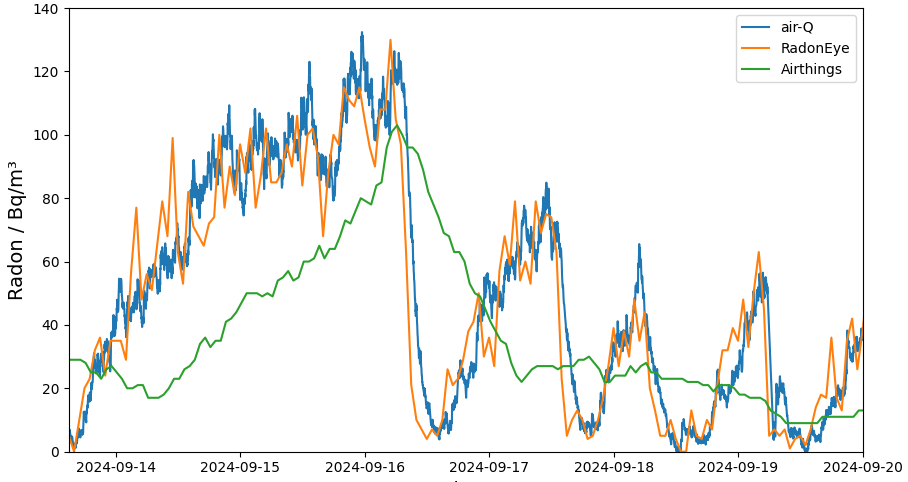
As part of our investigation, the three radon meters were subjected to a comparison test over a period of one week. To directly compare the measurement data, it was combined into a single chart.
While the RadonEye and the air-Q radon show a similar, very dynamic trend, the Airthings Wave Plus curve deviates significantly. In particular, the Airthings data shows markedly less dynamism, while the maximum value of the other two devices is roughly reached. Nonetheless, typical patterns created by air exchange (ventilation) in the room are only visible with a strong time delay, or not at all, with the Airthings Wave Plus. This significantly reduced sensitivity may be attributable to the passive measurement method.
It should be emphasized, however, that this assumption is merely a hypothesis. In several independent tests involving additional devices, the Airthings meter nonetheless consistently showed deviating and significantly lower radon concentrations compared to the other measurement systems.
5. Configuration Options
Individual configuration options are crucial for usability and adaptability. They let you tailor the measuring device to your individual needs — from LED brightness and units of measurement to alarm thresholds. We compared the three radon meters.
RadonEye — Rudimentary Configuration Options
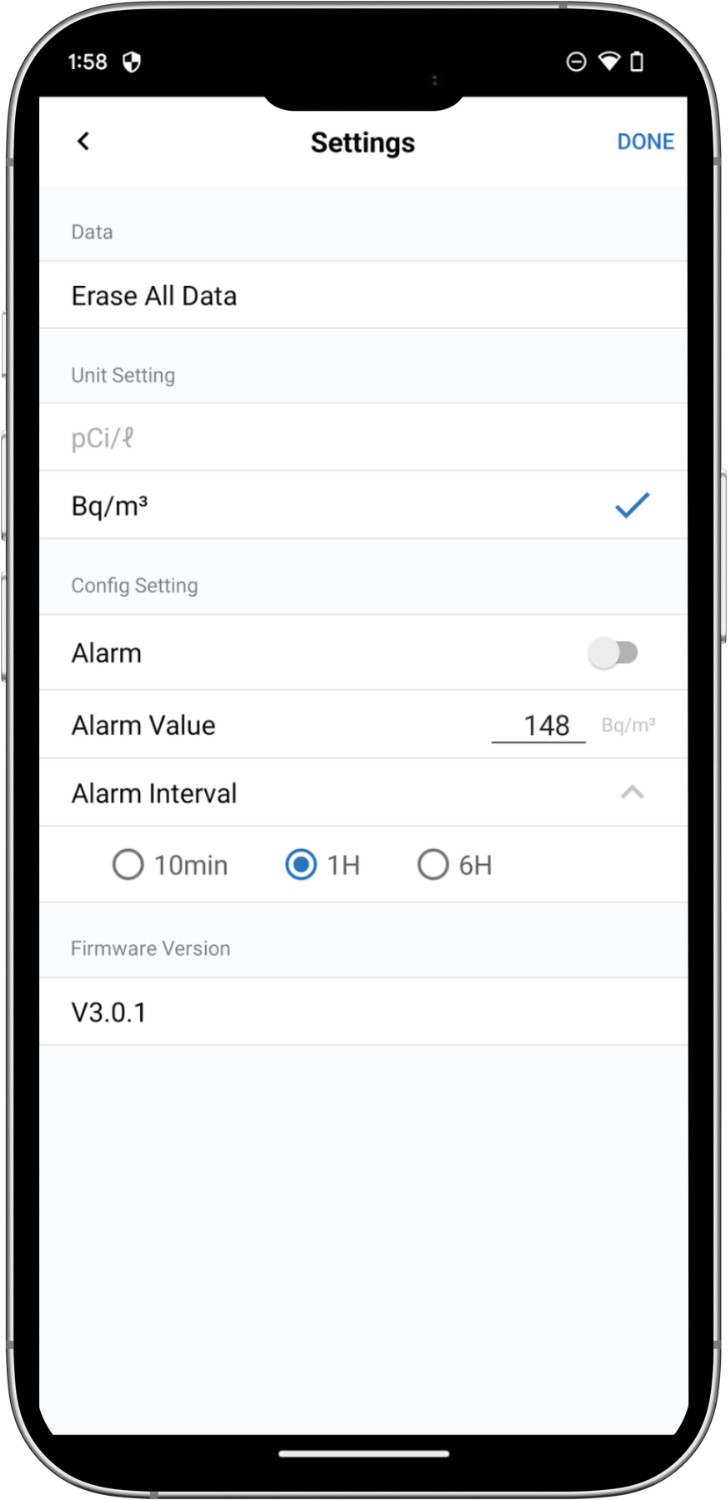
The RadonEye offers only a few settings, presented in one category: users can delete stored data, adjust the unit of measurement, and set an alarm threshold at which the device beeps.
Airthings Wave Plus — Basic Settings
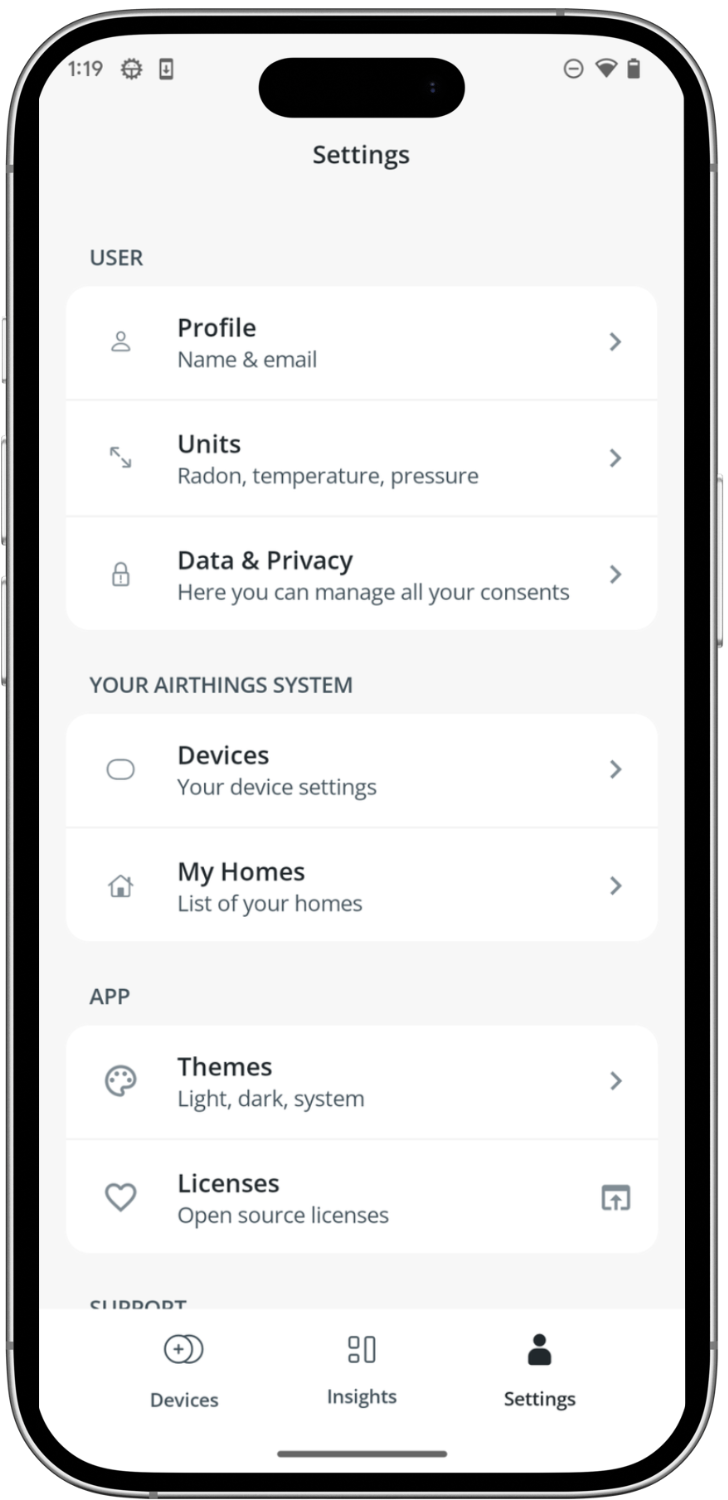
The Airthings device allows for somewhat more customization and is also designed for multiple devices. Thanks to more sensors, more can also be configured. Units of measurement and various notifications can be configured, as well as a dark mode. It also offers a built-in help and support section.
air-Q radon science — Customizability and Many Additional Features
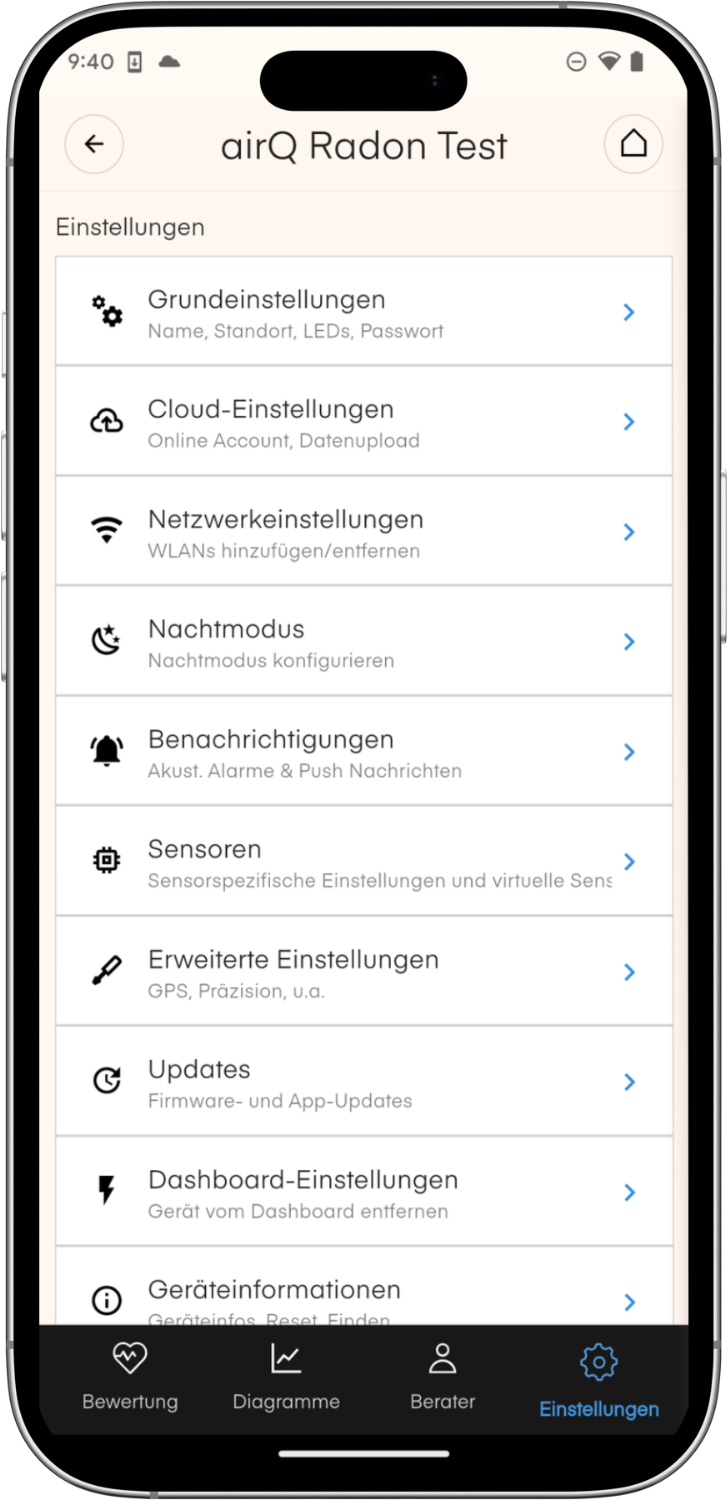
With ten setting categories, the air-Q radon offers many settings and customization options. These include options for adjusting the LED display with various themes, night mode, configurable cloud data storage, alarms/push messages, calibration features, a dark mode, and other settings for customizing the app interface. In addition, there are many professional settings and device information.
6. International Availability / Language Settings
Not all three test devices are set up internationally. The smartphone app and instruction manual language are partly only available in English. Due to the technical terminology used, usability and accessibility can be somewhat limited.
RadonEye: The RadonEye’s app "EcoSense" is only available in English. The instruction manual, however, is offered in seven different languages.
Airthings Wave Plus: The Airthings app is likewise only available in English. However, the instruction manual is offered in nine different languages.
air-Q radon science: The air-Q app is available in three languages: German, English and French. The instruction manual is offered in two languages: German and English. We know from a reliable source that a Spanish version is planned soon.
7. Alarm Functions / Push Notifications
Among the most important features of monitoring devices are alarms for critical situations. Especially with radioactive radon, alarm functions are important to quickly respond to critical readings and stay healthy and safe.
RadonEye
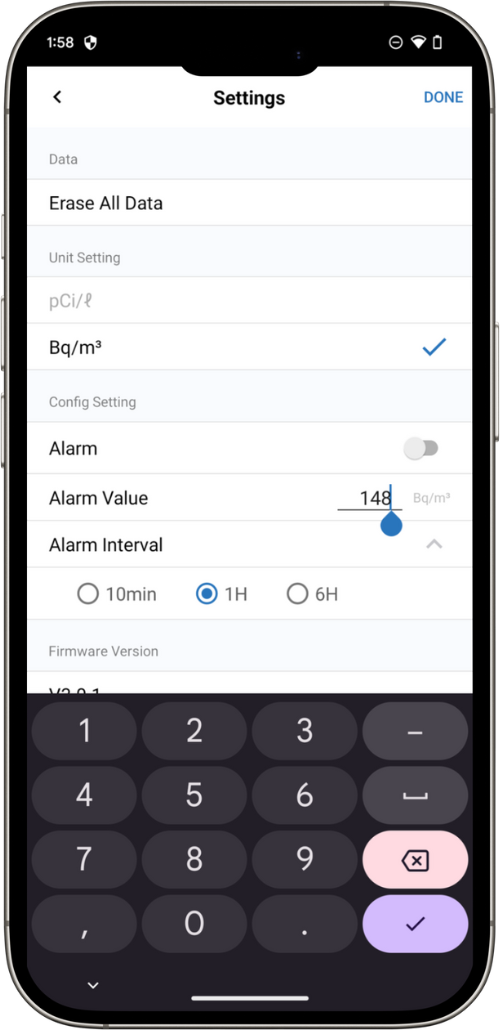
RadonEye offers email notifications and app alarms that inform users when defined limit values are exceeded. However, these features are only available within Bluetooth range, which limits remote monitoring.
Airthings Wave Plus
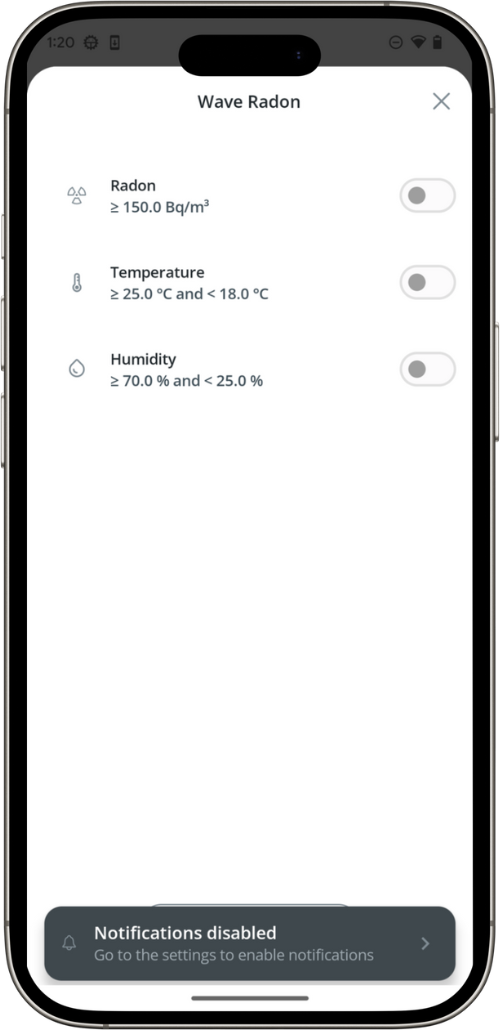
In the Airthings Wave Plus app, various preset push notifications can be activated. The app sends push notifications for various air quality parameters. Users can individually determine for which readings and thresholds these notifications should be sent.
air-Q radon science
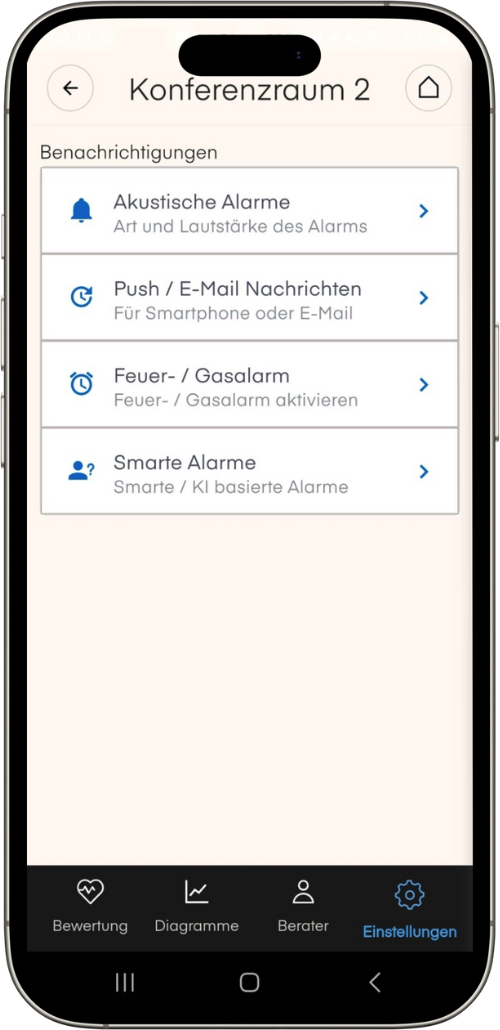
air-Q radon offers several alarm types: visual alarms via the configured LED theme, push or email notifications for remote monitoring, gas alarm and fire alarm, as well as AI-based alarms for smart detection of various situations and air quality changes.
8. Remote Monitoring
RadonEye only allows access to measurement data within Bluetooth range. Users can receive warnings, but only when nearby.
Airthings Wave Plus enables remote monitoring, but requires an additional device, the SmartLink Hub, which isn’t included. With this hub, users can retrieve real-time data and receive notifications when limit values are exceeded.
air-Q radon offers comprehensive remote access. Users can read device data from anywhere and receive individually configured notifications. This enables efficient air quality monitoring, even when not on-site.
9. Conclusion: Which Radon Meter Is Right for You?
Each of the devices presented has its strengths and suits different needs:
RadonEye: A good solution for users who need straightforward, spot-check radon measurement. The device focuses on its core function without extra features, making it especially user-friendly for beginners. It simply has a display where you can read the current value. This works without a smartphone app, but also offers no guidance whatsoever.
Airthings: Recommended for users who value customizable data visualization. The Airthings Wave Plus captures additional important air quality parameters besides radon. With its good app, the device offers more features than the RadonEye, though it can’t be used without the app.
air-Q radon science: The air-Q offers the most comprehensive analysis options, along with many configuration and alarm options. It also has the most additional sensors besides radon. The built-in remote access enables remote monitoring and control, ideal for smart home enthusiasts or people who want to keep an eye on multiple locations and many different air readings. Even without the app, the air-Q radon science offers readability in 30 Bq/m³ increments up to about 500 Bq/m³ via its color scale. The app provides additional information, charts and limit values, as well as a health advisor.
The Right air-Q for Your Radon Measurement
The air-Q radon and the air-Q radon science measure radon continuously in real time and offer numerous additional sensors, comprehensive analyses and remote access.
air-Q radon science - Detect the Radioactive Noble Gas Radon and Measure Air Quality
Optional sensors
air-Q radon science buy in the webshop – from 559 €