
Which Plants Are Suitable for the Bedroom? – The Big air-Q Test!
For good sleep, we also need good indoor air. However, many furnishings emit pollutants, and this affects air quality. Houseplants offer relief through their air-purifying effect. But are they also suitable for the bedroom? We put them to the test and introduce three suitable candidates.
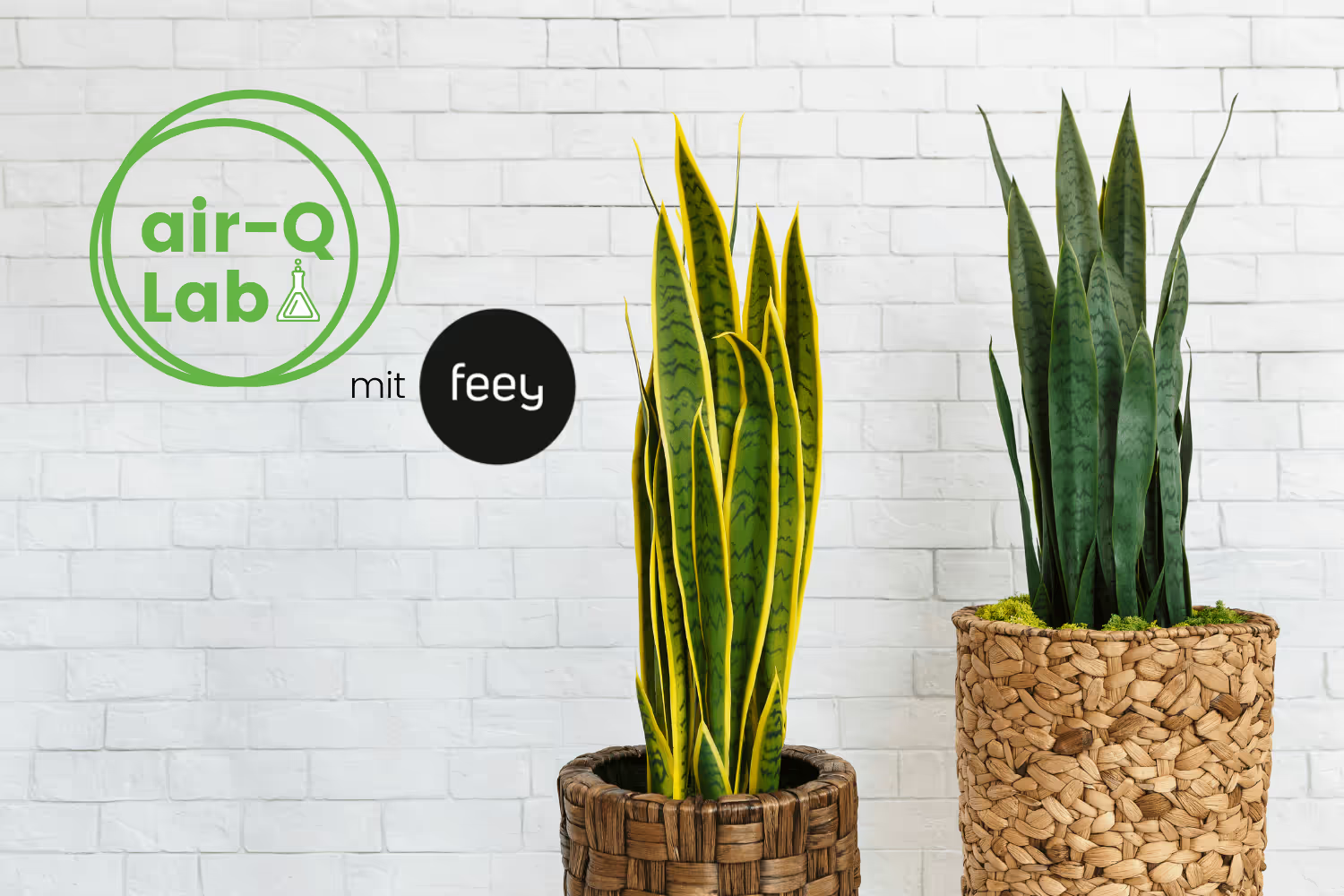
Choosing the right plant for the bedroom can have a significant impact on your sleep quality and overall well-being. While many people view plants primarily as decorative elements, they actually offer a variety of health benefits that are especially significant in bedrooms. From improving air quality to promoting more restful sleep – plants can support your nighttime rest naturally.
In this article, we explore which plants are best suited for the bedroom, how they purify the air, and what additional benefits they can offer for your health and well-being. Let's discover together how a bit of green in your bedroom can make a big difference.
Houseplants affect the indoor climate
Materials like paints, flooring, or furniture can off-gas pollutants that enter our lungs through the air we breathe, harming our health. Of course, ventilating helps carry these pollutants away.
But plants can also help us purify the air. Some plant species are especially useful here, since they absorb toxins like benzene, carcinogenic formaldehyde, or trichloroethylene through their leaves. In their cells, they neutralize the pollutants and convert them into harmless components.
But it's not just the filtering function that improves indoor air. Thanks to photosynthesis, plants convert the carbon dioxide (CO₂) contained in indoor air into oxygen and biomass. Plants are also subject to a day-night rhythm here. That's because they can only "produce" oxygen in sunlight. As a result, the air-improving processes slow down at night.
Many plants even release CO₂ at night. For years, this led to the assumption that plants are unsuitable for the bedroom. But plants can indeed be healthy in the bedroom too — if you choose the right green plant. Some species need very little oxygen, so they don't compete with us. In addition, some species even release oxygen at night. These are usually succulent varieties.
We received three plants suitable for the bedroom from our partner Feey – the online shop for houseplants : dragon tree, snake plant, and spider plant. We take a closer look at these air-improvers in our air-Q Lab: first up, the snake plant. We show the further plant tests and their results in separate articles.
The low-maintenance snake plant, briefly introduced
The snake plant is extremely low-maintenance – nearly indestructible. This quirky-looking trend plant, with its upward-growing, rolled shoots, produces oxygen even at night and also purifies the air of pollutants. It's also said to be good against headaches and high blood pressure. The uncomplicated snake plant likes bright light, but also tolerates low-light and cooler spots. Depending on how bright the location is, the plant's color changes, showing lighter or darker shades.
Snake plant in the air-Q Lab: our test results
In our test, we examined how the snake plant affects air quality. To do this, we placed the houseplant together with our air quality monitor in an approximately 50 cm tall, airtight, transparent box.
We placed this box in our conference room in the morning, near a window, so the plant got sunlight and could carry out photosynthesis. Our experiment ran over the entire day and night, until the next morning. During the 24 hours, the air-Q measured the air components and tracked their development. The following metrics were examined:
At the start of our test, all readings were at a normal level. In the morning, sunlight increased and the temperature rose noticeably. Around noon, the day's peak temperature of almost 22 degrees was reached. After that, the temperature dropped steadily and leveled off between midnight and six in the morning at just under 20 degrees. The average temperature in our test box was 20.36 degrees.
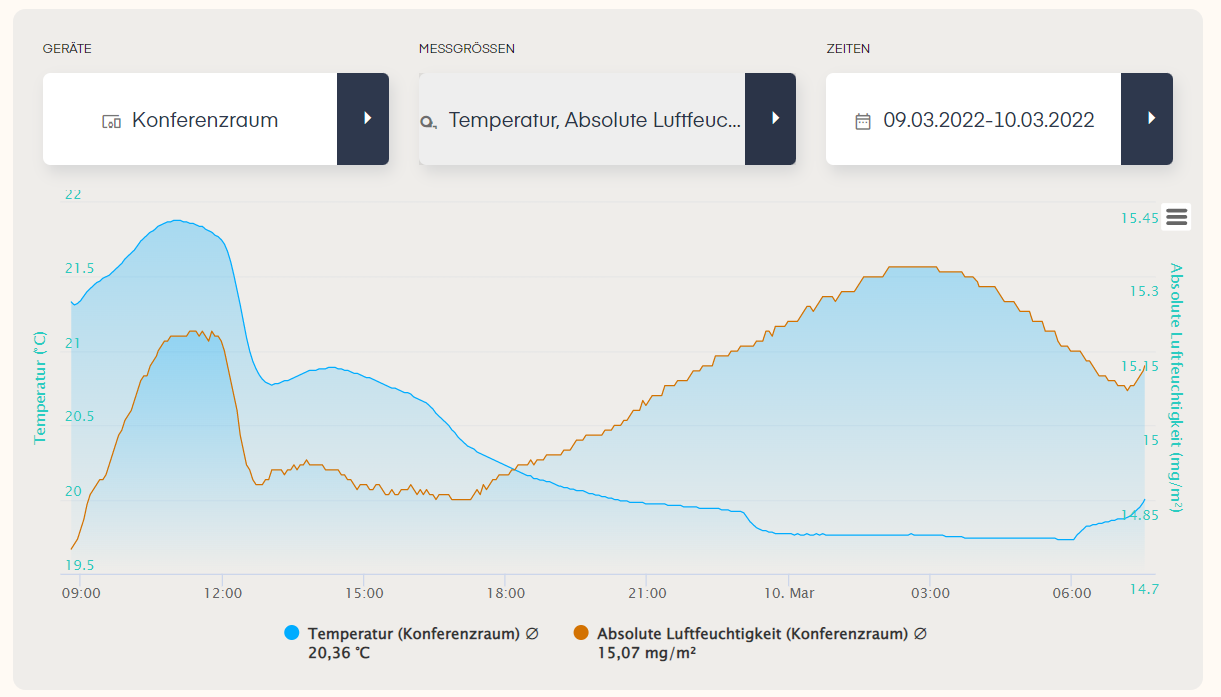
Humidity levels also rose in the morning. Absolute humidity reached its peak around noon with a first high of just under 15 mg/m³. This value dropped briefly in the early afternoon, then rose again toward evening, reaching its second peak of over 15.3 mg/m³ around three in the morning. Average absolute humidity was 15.07 mg/m³.
The experiment also shows that the carbon dioxide level in the box rose steadily during the day. Peak values of nearly 560 ppm (parts per million) were measured around 6 pm. At night, however, the value dropped noticeably. By around three in the morning, the carbon dioxide level had already fallen below 430 ppm. We believe this is a clear indication that the plant metabolizes less oxygen at night and is therefore well suited for the bedroom.
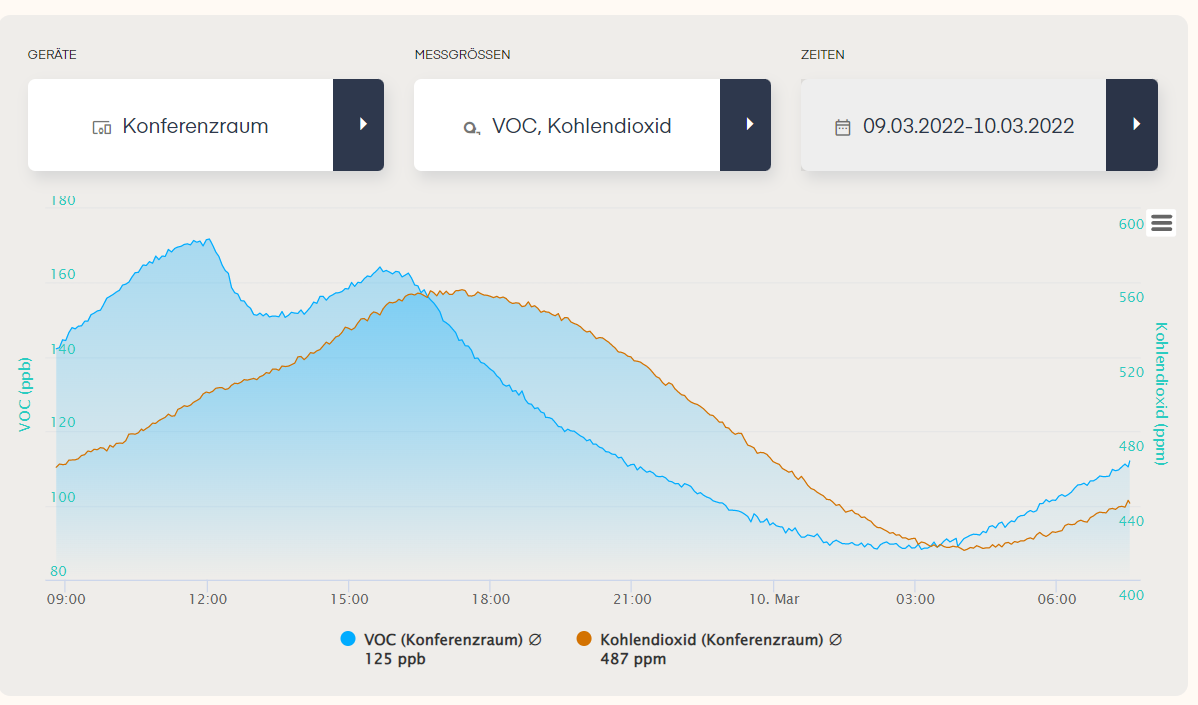
As a final metric, we observed VOC concentration. In our experiment, this started at 140 ppb and rose noticeably by noon. In two peaks, highs of about 170 ppb, and after a brief dip, 160 ppb, were measured. From the afternoon on, however, the values dropped. At night, the VOC concentration was almost cut in half. Accordingly, our results confirm the widespread characterization of the snake plant as having a strong air-purifying effect. We're curious what test results the other houseplants will bring in terms of VOC levels.
You can find a quick rundown of our results in our video.
Conclusion
Houseplants like the snake plant contribute to better air – especially by positively influencing absolute humidity levels. Our test also confirms a noticeable reduction of pollutants in the indoor air. So the plant demonstrably contributes to better air quality and brings a fresh green boost to the room.
(Cover image: Prostock-Studio from Getty Images/ Canva edit)