
Pollen Allergy & Hay Fever: Definition, Diagnosis, Symptoms, Treatment
When nature awakens to new life and everything starts blooming, that's not a pleasant experience for everyone. For many people with a pollen allergy, this is when hay fever season begins. But what exactly is hay fever? How does it develop and how can it be avoided?
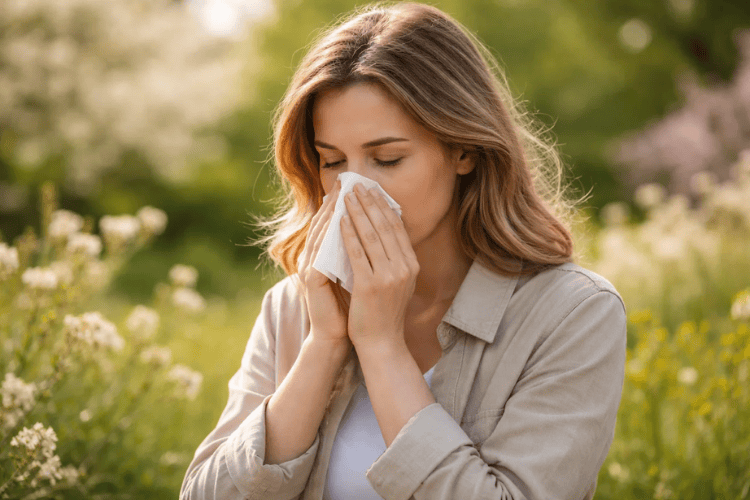
Polluted air doesn't just contribute to climate change and thus to shifts in flowering times. It also leads to an increase in allergic diseases in general, and hay fever – i.e. the allergy to pollen – in particular. The reason: coarse and ultrafine particles as well as nitrogen oxides attach themselves to pollen. A devastating combination. Because it can not only worsen allergies, but also trigger them.
Air Pollutants Burden the Body & Promote Pollen Allergies
Many air pollutants, including sulfur dioxide, fine dust, ozone, put a strain on the airways and the cardiovascular system and can intensify allergy symptoms. Air that is too dry and too hot, but also volatile organic compounds (VOCs), dry out the mucous membranes, making them more susceptible to allergens.
In the mucous membranes, pollutant-laden breathing air also releases oxygen radicals, allowing inflammation-promoting particles to enter the body. Poor air quality also affects the eyes.
To reduce the symptoms of allergic rhinitis or hay fever, it is important for allergy sufferers not only to know about the allergic condition, but also to always stay informed about the components of the air they breathe.
Definition of Hay Fever: An Allergy to Pollen
Hay fever is the commonly used term for an allergy to pollen, so-called pollinosis. The trigger for hay fever is the male genetic material of plants – pollen – which is spread through the air by insects or the wind during the flowering season. From the air we breathe, pollen also reaches the airways and the eyes. In allergy sufferers, this contact can lead to an overreaction of the immune system, triggering hay fever anew each year.
Which Plants Trigger a Pollen Allergy?
Plants pollinated by insects are generally more tolerable. This is because their pollen is comparatively heavy and sticky. As a result, it is relatively rarely found in the air we breathe. Wind-pollinated plants, on the other hand, release large amounts of pollen that are significantly smaller and lighter. This makes them particularly capable of flight. As a result, they remain in the air for long periods and over greater distances. On windy, warm and dry days, pollen exposure is at its highest – and so are the effects of the hay fever plague.
A Look at the Pollen Calendar: How Is Pollen Actually Measured?
With the pollen calendar, allergy sufferers can always stay informed about current pollen exposure. But how do experts find out how strong or weak the pollen count is and which pollen is currently circulating in the air? Quite simply: with so-called pollen traps. An electrical device uses a motor to draw in air, which is then guided past a drum with a plastic strip inside the device. Pollen sticks to this strip. This is then evaluated under a microscope. This is how experts know when which pollen is present in the air and in what concentration.
Which Pollen Flies When?
How and how long a person suffers from hay fever depends, besides the weather, on the geographic location as well. The pollen of the first early-blooming trees, such as alder, hazel and birch, is already spread by the wind in our latitudes from the end of January. Various grasses and cereal crops follow later. Finally, herbs such as nettles, mugwort and plantain bloom into the autumn.
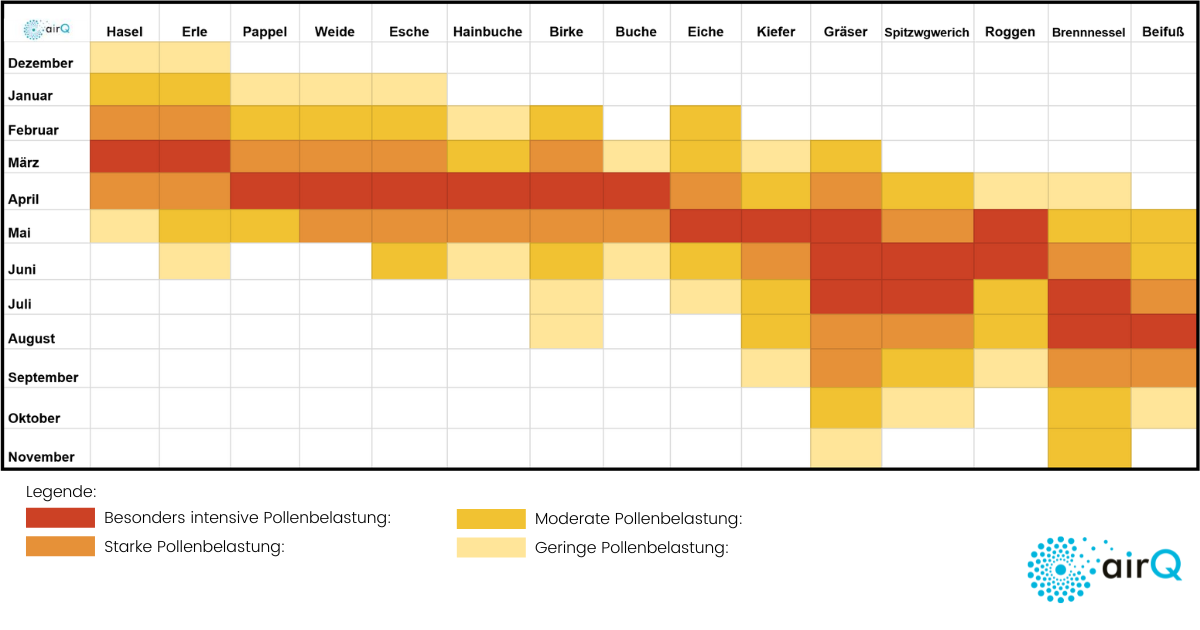
Allergies to pollen often begin in childhood already. In some cases, however, a pollen allergy also occurs only in adulthood. The intensity of the reaction can vary from year to year and can even remain dormant for a certain period. Many affected people react to several different plants. As a result, the period during which symptoms occur can last for several months and, in the worst case, even from January to October.
If no diagnosis is made and no appropriate treatment is given, hay fever can develop into allergic asthma. This so-called "floor change" ("Etagenwechsel") affects around 30 percent of hay fever patients within ten years.
Symptoms of Hay Fever, Allergic Rhinitis & Pollen Allergy
Like allergic asthma and atopic dermatitis, hay fever is also one of the so-called atopic diseases. Characteristically, those affected have an increased risk of developing allergies due to a hereditary predisposition. The symptoms of hay fever as seasonal allergic rhinitis and year-round (perennial) allergic rhinitis, which is triggered by house dust mites, for example, are identical.
Generally, allergens present in the air are inhaled and recognized and fought by the body as supposed pollutants. This results in numerous symptoms:
- Urge to sneeze and hypersensitivity of the nose (up to sneezing fits)
- Runny nose (i.e. increased discharge of clear, watery nasal secretion)
- Itching in the nose, mouth and throat as well as eyes and ears
- Burning and redness in the eyes as well as increased tear production (conjunctivitis)
- Difficult or wheezing breathing, dry cough
- Accompanying symptoms, such as: loss of appetite, fatigue, daytime tiredness, headaches, head pressure, fever, general feeling of illness
- Possibly sleep disturbances
Depending on when the symptoms occur, a distinction is made, based on a recommendation from the World Health Organization WHO, between persistent and intermittent allergic rhinitis. The former means that symptoms occur over a longer period of at least four weeks and are sometimes noticeable throughout the entire year. This includes house dust mite allergy, animal allergy, as well as various occupational allergies triggered by inhaling chemical substances or specific dusts.
Intermittent rhinitis, on the other hand, occurs either with interruptions or recurs at certain intervals. This mostly seasonally occurring form of allergic rhinitis is colloquially also referred to as hay fever or pollen allergy.
Allergic Rhinitis Due to Pollen Exposure: Diagnosis & Treatment
When diagnosing allergic rhinitis, it is particularly important to differentiate hay fever from other diseases. Similar symptoms can also have the following causes:
- acute or chronic inflammation of the nasal mucous membranes triggered by viruses or bacteria → usually caused by the flu or a common cold
- toxic-irritant rhinitis → runny nose triggered by environmental pollutants that irritate the nasal mucous membrane, e.g. tobacco smoke, occupational pollutants
- Intolerances (non-allergic) to foods or medications, or as a side effect of drugs
- Rhinitis triggered by hormonal changes → e.g. due to hypothyroidism, during pregnancy or menopause
- Internal diseases → e.g. vascular or circulatory diseases
- Structural triggers → for example anatomical causes (e.g. deviated nasal septum, enlarged nasal turbinate, polyps), tumors or foreign bodies
If the relevant specialist, usually an ENT physician, can rule out all these diseases, a prick test usually follows. In this test, allergens are applied to the arm and introduced directly into the skin through small pricks. If an allergy is present, it can be detected through a reaction at the respective spot. In most cases, such a prick test is sufficient as a reliable allergy test. However, in some cases, such as unclear test results or for medical reasons, the doctor may additionally or alternatively order a blood test.
Allergen Avoidance as a Treatment Method
If the doctor makes a diagnosis of allergy, the best of all treatments is so-called allergen avoidance, i.e. avoiding the triggering allergens. For contact allergies, especially those where the allergens enter the body through the air, this treatment method is often difficult to apply.
Of course, it helps, after checking the pollen calendar, to keep the window closed at certain times and to avoid athletic activities on warm and dry days. Regular cleaning of skin, hair and textiles, and regular nasal rinses can also provide a little relief.
For most hay fever patients, however, allergen avoidance is not a particularly promising therapy, since pollen are inhalation allergens that are difficult to avoid. Therefore, drug treatment of symptoms is often recommended in many cases, applied either locally (topically) or internally (systemically).
Helpful options include, for example, cromones and antihistamines, as well as decongestant, anti-inflammatory or moisturizing nasal sprays and eye drops with anti-allergic active ingredients.
A meanwhile quite promising treatment method is specific immunotherapy (SIT). Also known as hyposensitization, this therapy usually lasts between one and three years. In around 80 percent of pollen allergy sufferers, the treatment shows an effect.
This treatment method is intended to gradually reduce the body's overreaction to the respective allergens. For this purpose, these allergens are administered to the body in a controlled manner and in increasing concentration via tablets, drops or injections. This is intended to strengthen the immune system's tolerance to the allergy triggers.
Monitor Air Quality – Prevent Pollen Allergy
To reduce symptoms and prevent other allergic diseases besides hay fever, all treatment methods should be considered. As already described above, allergens often enter our airways as fine dust and can thus trigger pollen allergies. Also, too low humidity in the air you breathe can lead to irritation of the mucous membranes and thus promote allergic reactions.
Air pollution also affects air quality and thus the effects of pollen on the body. For instance, nitrogen oxides such as nitrogen dioxide are recognized by the body as pollutants and trigger a defense reaction. Pollen attaches itself to nitrogen oxides or to fine dust particles and thus enters our body, which then learns to react not only to the nitrogen oxides, but also to the pollen. As a result, the body can either develop an allergy for the first time, or an existing allergy is further intensified by air pollutants. It is therefore important to check air components such as nitrogen dioxide or fine dust using an air quality monitor such as the air-Q. Through monitoring, elevated readings as well as sources of pollution can be identified and eliminated. You will also recognize allergy-promoting indoor air and can act more quickly to reduce flare-ups of your pollen allergy. Depending on individual air quality, air purifiers or humidifiers can also help minimize the symptoms of your pollen allergy.
Tip: You can find out how to relieve and avoid allergies in our separate article.
.jpeg)