
Heating Safely With a Gas Heater & Gas Boiler
Gas heaters unfortunately keep causing devastating gas accidents with significant property damage and even injuries. Under certain conditions, the gas ignites and causes an explosion. In fall 2024 alone, explosions in Memmingen and Bochum claimed victims. We explain how a gas explosion happens and how you can prevent one.
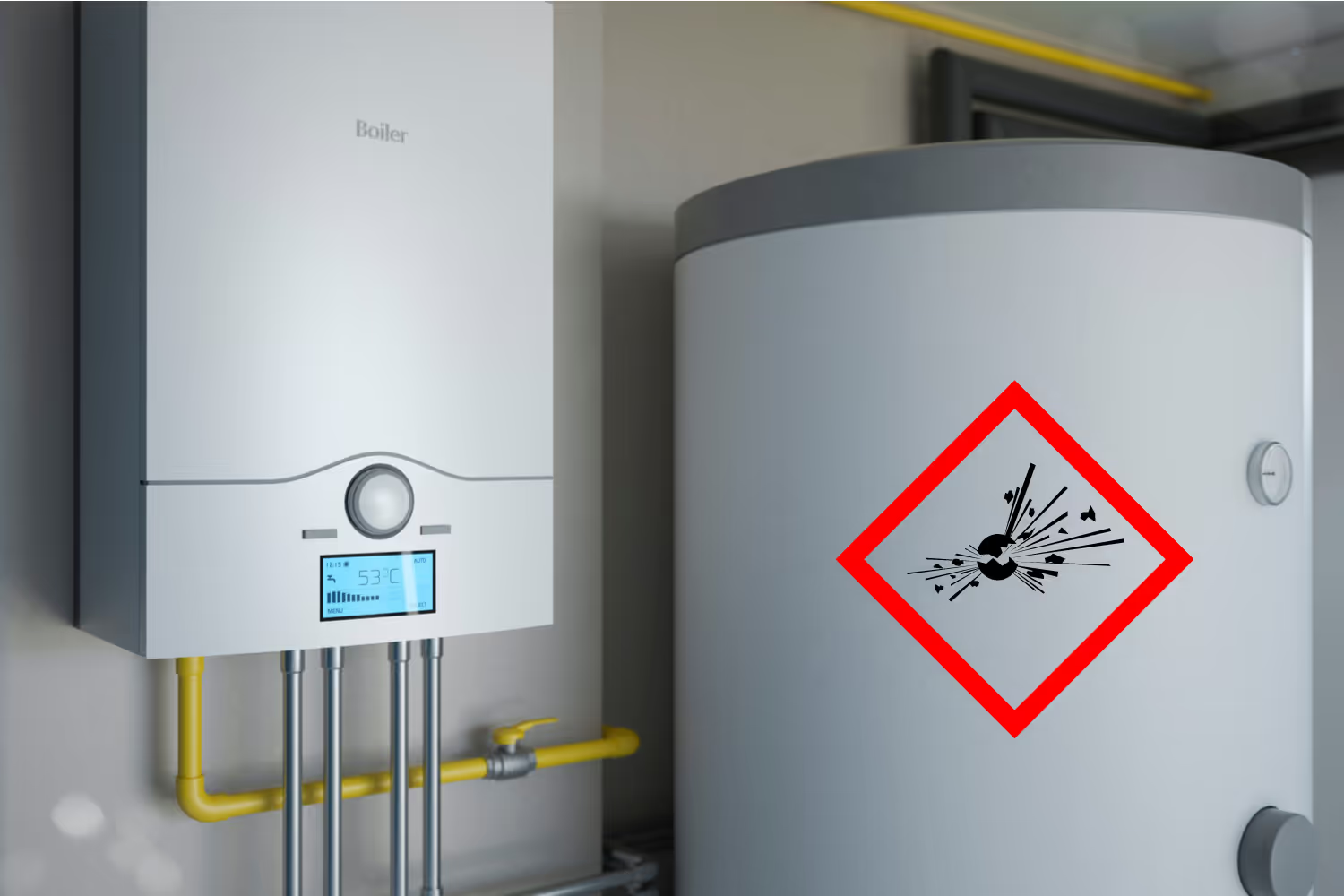
In this post, you'll find the following content:
- How safe is heating with gas?
- Can you smell a gas leak?
- How does a gas explosion happen?
- How do I prevent a gas explosion?
- What's the best way to measure methane?
- Heating safely with gas — monitor your methane levels
The natural gas used for heating consists mainly, at 75 to 99%, of the hydrocarbon methane (CH₄). Besides methane, various other gases are present: like carbon dioxide, nitrogen, ethane, ethylene, propane, butane, as well as small amounts of noble gases. For simplicity, we'll refer to the heating gas in this article as "gas," even though we're not referring to all gaseous substances like oxygen.
A gas explosion can release such force that entire homes are destroyed and people are fatally injured. In a gas explosion, an explosive gas mixture ignites and burns off in a very short time. Depending on the amount of gas, the pressure in the room, and the temperature of the gas, either a deflagration occurs or the mixture detonates.
How safe is heating with gas?
Although renewable energy sources have become more widespread in Germany in recent years, natural gas remains a popular heating fuel. Gas heaters are installed in numerous single- and multi-family homes. Reasons for this include that gas heaters:
- work relatively cleanly and have a high efficiency.
- are easy to regulate.
- cause relatively low pollutant emissions.
- require relatively little maintenance, since the boiler only needs to be inspected once a year by a chimney sweep.
Despite these benefits, heating with gas also carries dangers. Even small concentrations are explosive, since gas, or natural gas, which mainly consists of methane, is a highly explosive fuel. The danger increases especially when indoor spaces aren't sufficiently ventilated, such as in winter. Escaping gas from pipe leaks, faulty devices, a defective valve, or an incorrectly connected gas stove can enter room air and quickly reach critical limit values there. Even small amounts of gas are enough to trigger an explosion.
Can you smell a gas leak?
The problem here is that natural gas is odorless. That's why fragrances are added to heating gas. Chemical, pungent, or slightly sulfurous smells are used for this, so that escaping gas becomes noticeable. However, these smells are only noticed if people are present and, for example, aren't currently sleeping. Proper ventilation is therefore important when heating with gas, but not sufficient. Rather, you should regularly check all pipes and devices operated with gas. That's because gas suppliers are only responsible for the safety of gas transport up to the private house connection; from your own four walls onward, you're responsible.
How does a gas explosion happen?
For gas to explode, an explosive gas atmosphere and an ignition source are needed. Natural gas consists of 75 to 99% methane, whose lower explosion limit is 4.5 volume percent. For comparison: the oxygen share in the air is just under 21 volume percent. Even a fairly small amount of natural gas/methane can therefore lead to an explosion.
Ignition sources can be either electrical or mechanical in nature. If a sufficient concentration is present in a room, even a spark can ignite the gas, triggering a chain reaction in which the gas burns off instantly, together with a massive pressure wave. The sparks from flipping a light switch, sparks from metal striking metal, or small flames from lighting candles are enough for this.

How do I prevent a gas explosion?
If you suspect a gas leak, keep your fingers off electrical devices, plugs, phones, and doorbells. All these devices can provide the initial spark for a gas explosion. In the event of a gas leak, you should act quickly:
- Reduce gas concentration by opening all windows and doors wide. This lets the gas mix with the outside air.
- Immediately extinguish any open flames: such as burning candles, glowing cigarettes, or your turned-on gas stove.
- Prevent further gas from flowing into the room by closing the shut-off valve on the gas meter.
- Warn other household members by knocking or calling out — not by ringing the doorbell — and leave the house quickly.
It's not just a gas explosion that's dangerous, but also inhaling large amounts of gas, depending on its composition. This can lead to breathing problems, increase breathing and heart rate, or even trigger low blood pressure with dizziness and lightheadedness. In addition, the oxygen deficiency can affect the central nervous system and cause drowsiness, numbness in the arms and legs, or even mental confusion and memory loss. If you've inhaled a lot of gas, you should definitely see a doctor.
What's the best way to measure methane?
Measuring heating gas, particularly methane, can be done in various ways. A simple method is using an oxygen sensor to measure oxygen content in the air. As soon as another gas is present — in this case methane — oxygen in the gas mixture is displaced, so the falling oxygen value indicates methane content. This method is well suited for permanent monitoring, but is less accurate. For precise, direct measurements, a dedicated methane sensor that specifically detects the gas is recommended.
Heating safely with gas — monitor your methane levels
Since natural gas mainly consists of the hydrocarbon methane (CH₄), it's important to check methane, as the gas's main component, in room air. This way, you can notice an impending gas leak in time. The air-Q air analyzer is the only air quality monitor to offer you a methane sensor that makes the gas specifically detectable. Thanks to infrared absorption, there's almost no cross-sensitivity to other air components, so you can evaluate your room air specifically for this reading. In real time, the air-Q measures air quality and warns you when methane levels rise. This lets you detect gas leaks early, gain valuable time to act, and prevent a gas explosion.
.png)