
Green Billboards for Clean City Air – How Effective Is CityBreeze Really?
Green City Solutions GmbH promises clean, fresh air for all city residents. Regenerative bio-tech filters made of moss are meant to purify ambient air. Whether this actually works is what we tested with our air monitor at a CityBreeze billboard in Leipzig. Find the results here.
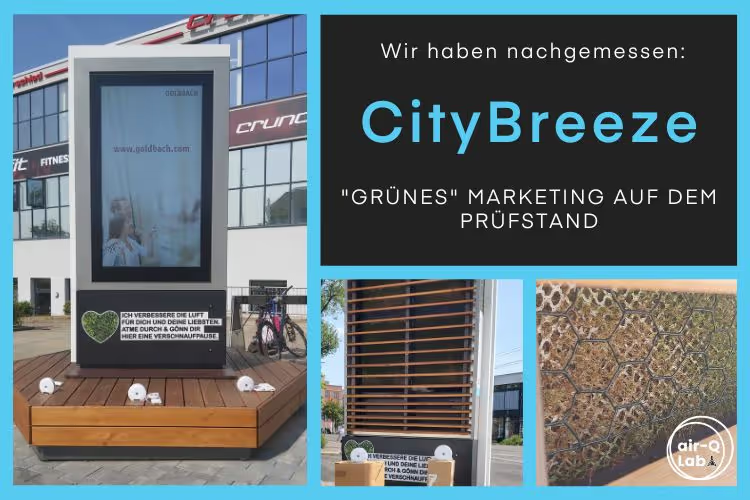
Promises & goals of the CityBreeze billboards
While the front of the CityBreeze pillars displays ads on a 75-inch LCD screen, the back features a living moss wall. According to the manufacturer, this is meant to filter the smallest particles such as particulate matter, viruses, bacteria, as well as odors and gases from the air. The moss is also said to bind climate-damaging greenhouse gases. By evaporating moisture on the moss surface, ambient air is even meant to be cooled by a few degrees. The billboards run on green electricity, so the digital advertising displays leave as small a CO2 footprint as possible, making outdoor advertising more climate-friendly and sustainable.
With its world-first regenerative bio-tech filters, the manufacturer promises a demonstrable improvement in air quality: the green billboards are said to remove up to 82 percent of the particulate matter contained in the air passing through them. For a noticeable effect, Green City Solutions primarily installs its billboards at high-traffic locations such as a shopping center, parking lots, or other busy places.
We've now measured whether CityBreeze lives up to its promises.
air-Q hands-on test: measurable air purification & CityBreeze's effect on air quality
We conducted our test measurement in Leipzig's Plagwitz district. Here, the CityBreeze billboard stands on a busy main street next to a shopping center and a gym. The screen faces the street, while the moss wall on the back faces a building wall. A wooden bench is grouped around the billboard, so you can sit down and, ideally, directly feel the purified air. To track the effects of air purification in the outflowing air, we placed several air monitors at various heights in front of the billboard. This let us simulate people of different heights and check the airflow at different points.
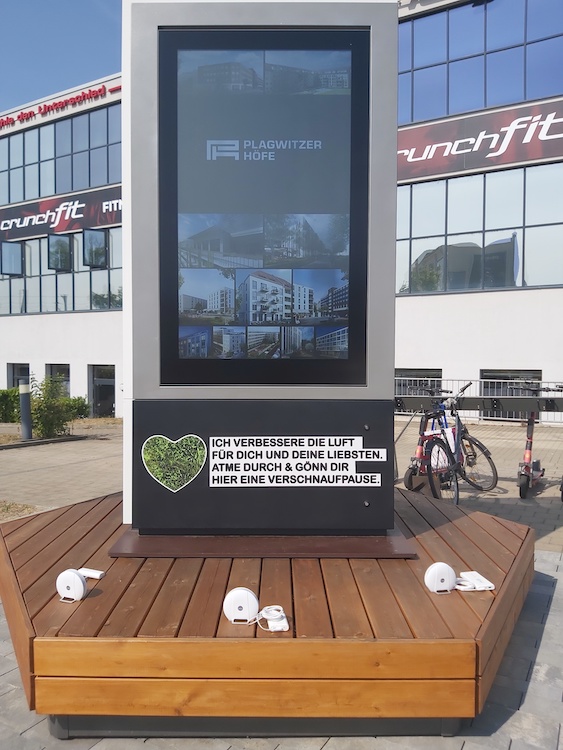
First, we checked the ambient air in front of the ad display. The test period was ten minutes in the morning, between 10:26 and 10:36 a.m. We then collected measurement data at the back of the pillar, to check the air purifier's effect. Here, we let the three air-Qs collect data between 10:40 and 10:55. We placed them at varying distances, sometimes as close as possible to the louvers, and pointed the sensors at them to determine the direct airflow. Since the readings are similar, we show one device's chart as an example below for each reading — but we also show the readings from the other devices.

Our test makes no claim to scientific rigor. Since the billboard stands in an urban space, we couldn't test it under lab conditions. Visitors using the bench are, after all, also in this real-world situation.
Can a CityBreeze pillar reduce particulate matter content in the air?
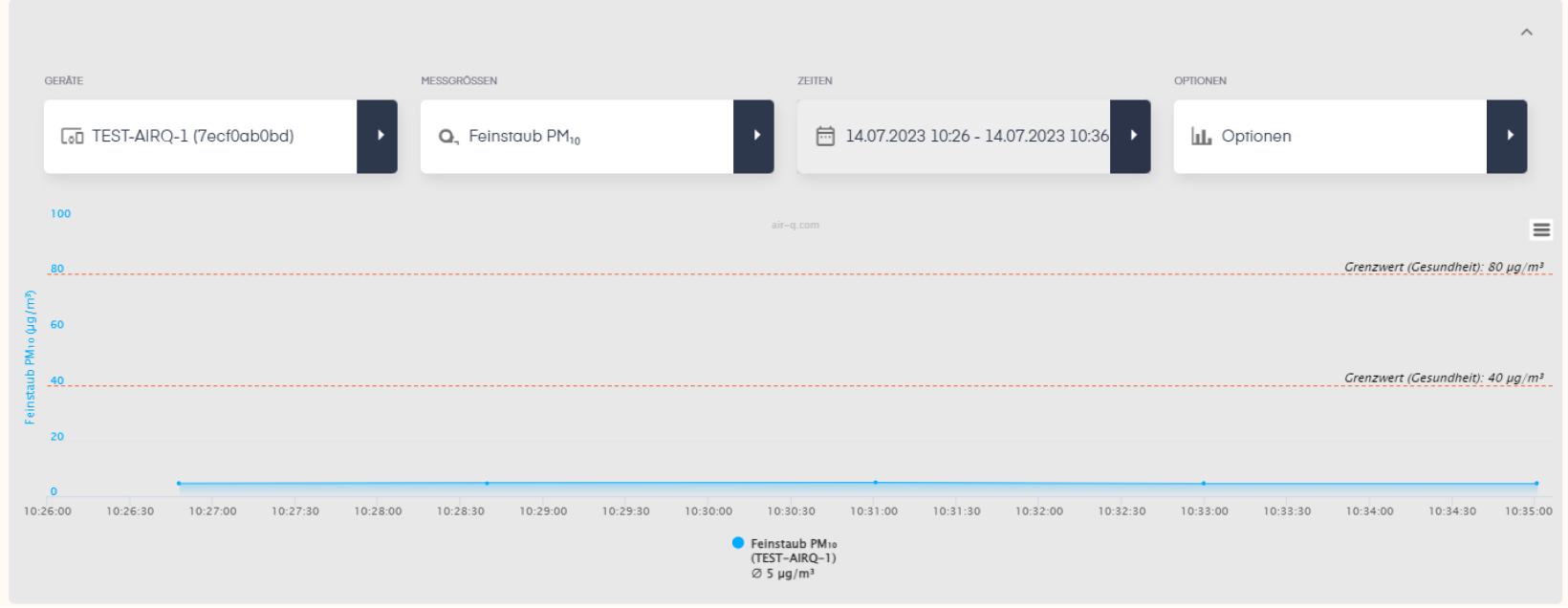
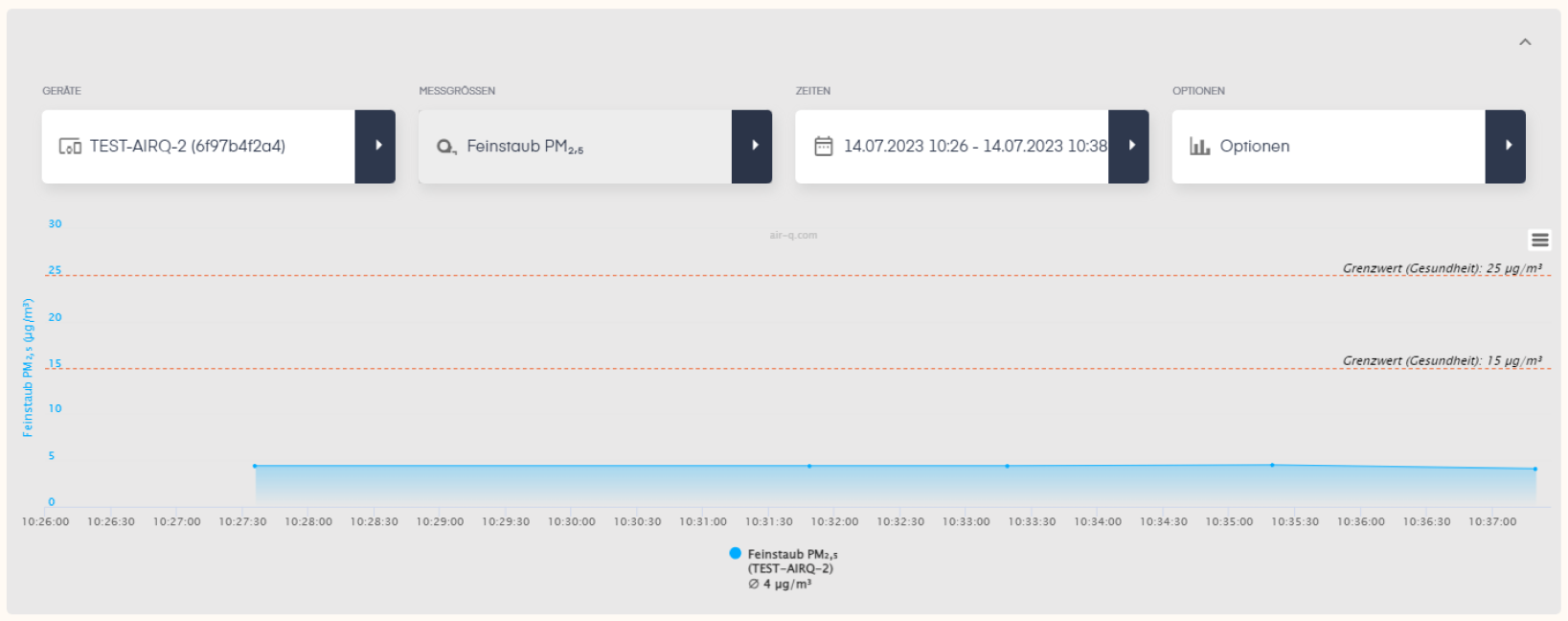
Directly in front of the pillar, the air-Q air monitor only detected a very low average particulate matter pollution level of larger PM₁₀ particulate matter molecules, at 5 μg/m³ (micrograms per cubic meter) or 6 μg/m³ (test devices 2 & 3) in ambient air. Particulate matter arises, among other things, from car brake wear and is very unhealthy to inhale. The value for smaller PM₂.₅ particles also averaged only 4 μg/m³ (test devices 1 & 2). This air pollutant only reaches a concerning threshold at 40 μg/m³, though. So there were hardly any pollutants in the air that the filter could have removed.
Evaluation chart: PM₁₀ readings, incoming air
Evaluation chart: PM₂.₅ readings, incoming air
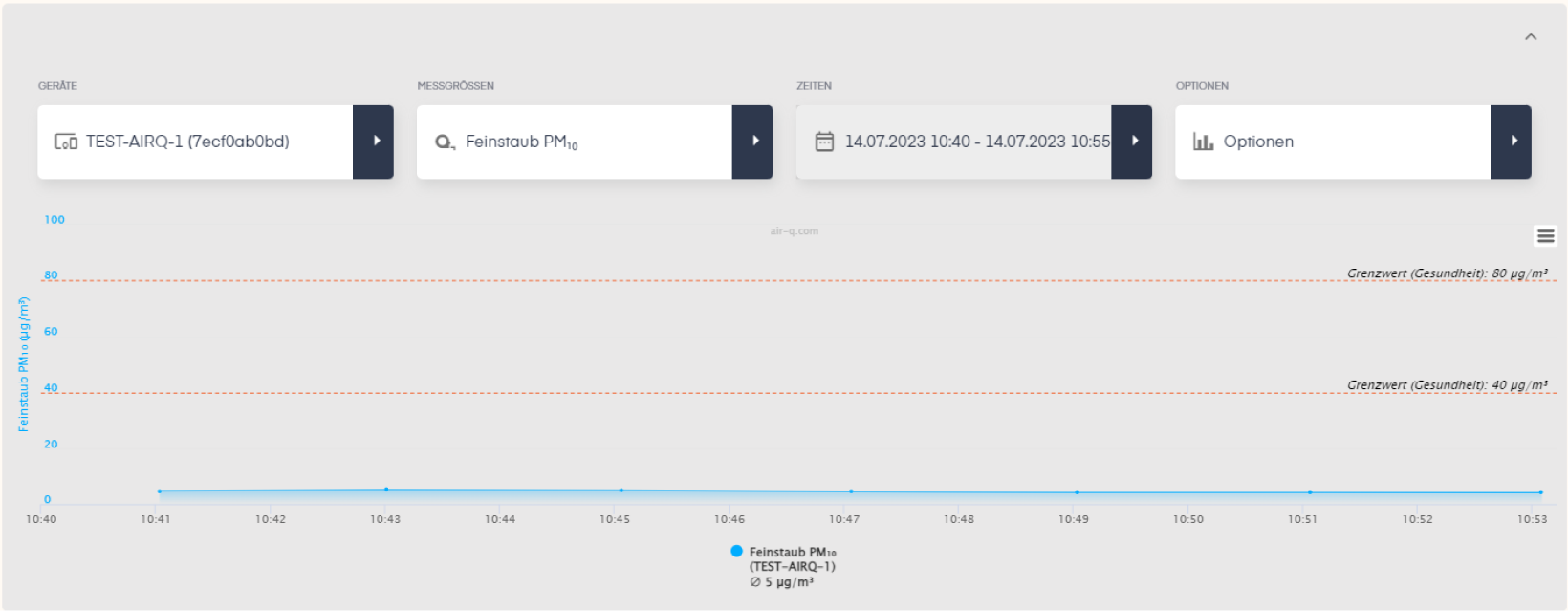
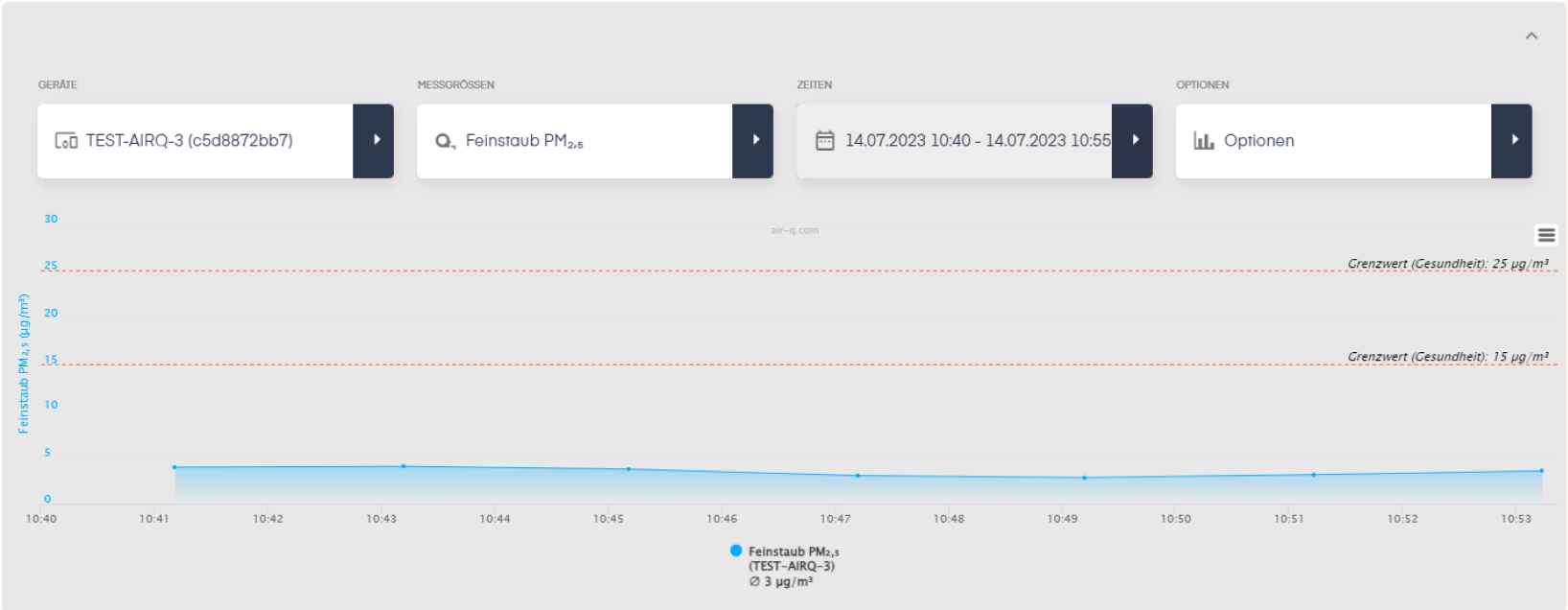
No difference between incoming and outgoing air quality could be detected. Accordingly, our experiment and the evaluation of the measurement data can't identify or prove any effect. On the moss filter side, the same PM₁₀ readings applied, averaging 5 μg/m³ (test devices 1 & 2; test device 3 recorded an average of 4 μg/m³), or 4 μg/m³ (test devices 1 & 2; test device 3 recorded an average of 3 μg/m³) for the smaller particulate matter particles.
Evaluation chart: PM₁₀ readings, outgoing air
Evaluation chart: PM₂.₅ readings, outgoing air
How does a CityBreeze billboard's moss filter affect the air's nitrogen dioxide content?
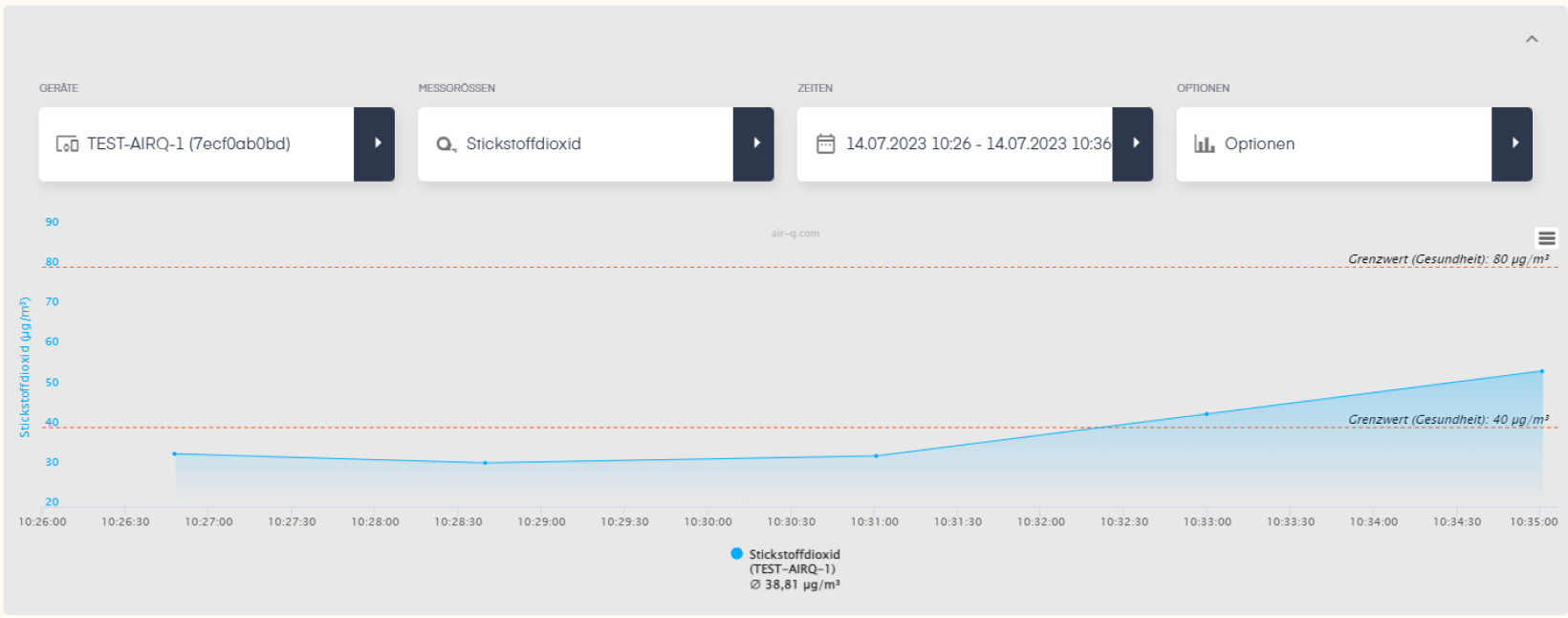
Besides its effect on particulate matter, we also observed the change in the nitrogen dioxide reading. Nitrogen oxides form at high temperatures, e.g. in engines, and enter the air via car exhaust. The incoming air at the busy street was enriched with an average of 38.81 μg/m³. Over the course of the test, pollution rose from just under 30 to over 50 μg/m³, thus exceeding the threshold of 40 μg/m³ on all test devices. This reflects the rising traffic volume, and thus car exhaust pollution, during the test period.
Evaluation chart: nitrogen dioxide readings, incoming air
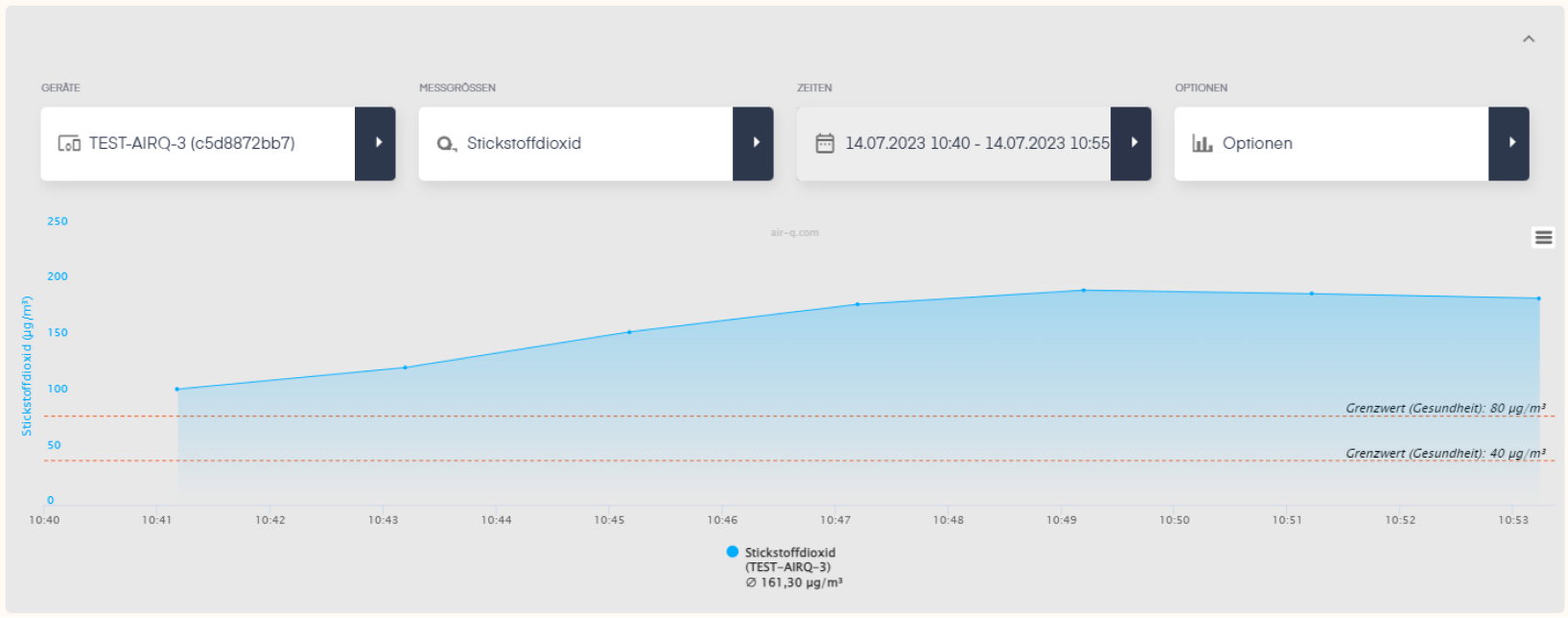
In the outgoing air, by contrast, only an average of 23.84 μg/m³ (test device 1) remained. The starting value initially dropped from about 30 μg/m³ to just under 10 μg/m³, but then rose continuously again, and toward the end of the test also exceeded the threshold of 40 μg/m³. The other test devices showed the same trend. So we couldn't demonstrate a significant improvement in air quality in the form of purifying the incoming, nitrogen-dioxide-laden air.
Evaluation chart: nitrogen dioxide readings, outgoing air
Does a moss filter improve relative humidity?
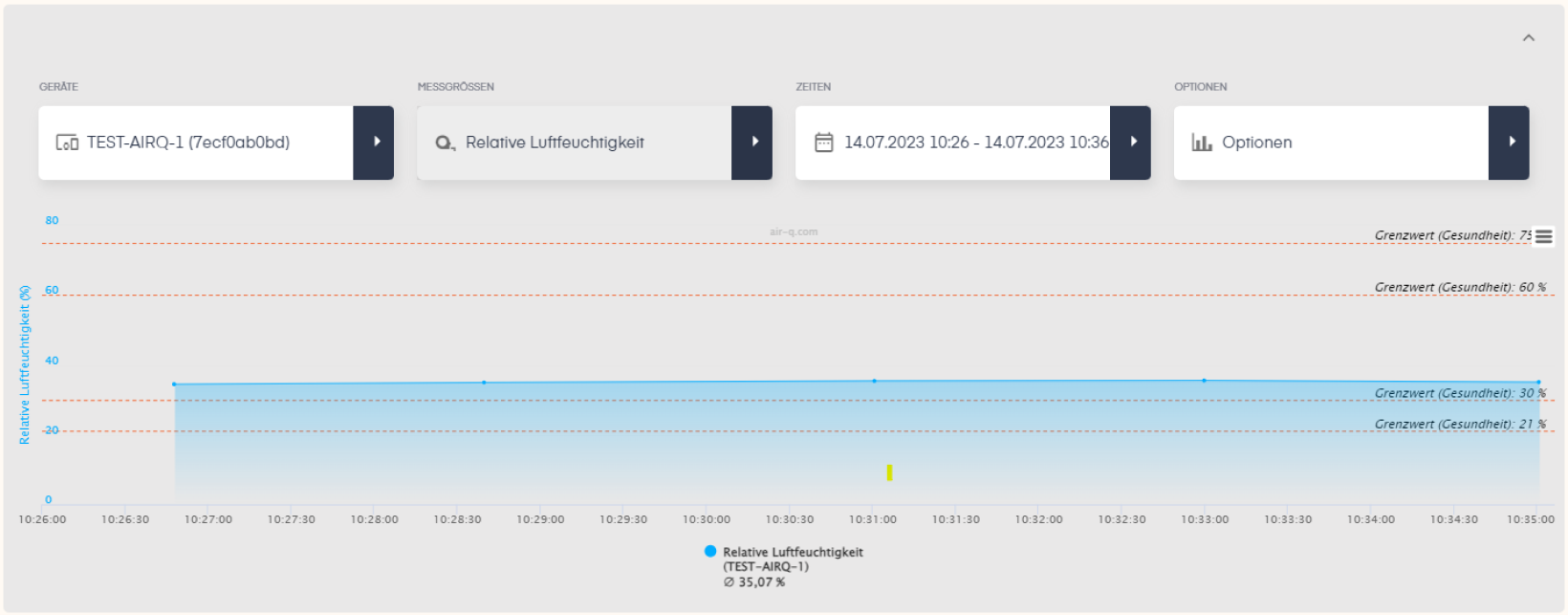
We also checked relative humidity. The incoming air had an average humidity of 35.07 (test device 1), 43.99 (test device 2), and 37.89 (test device 3) percent. This barely fluctuated and appears as a fairly constant line in our evaluation chart.
Evaluation chart: humidity of the incoming air
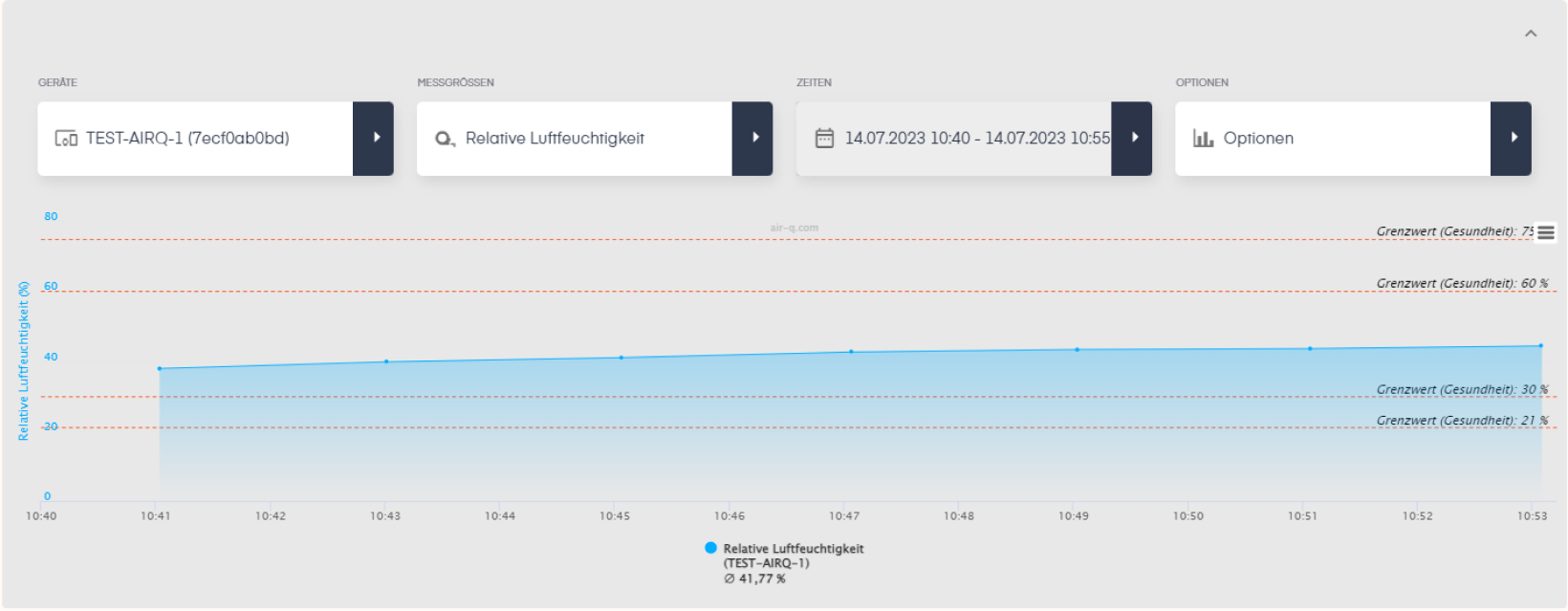
In the outgoing air, the air-Q detected a noticeably higher average humidity of 41.77 (test device 1), 43.86 (test device 2), and 43.45 (test device 3) percent. While the reading rose slightly for test device 1 during the hands-on test, it dropped for device 2 and stayed relatively constant for device 3. The different heights at which the air monitors were positioned thus seem to affect air composition.
Evaluation chart: humidity of the outgoing air
Can a CityBreeze billboard cool air temperature?
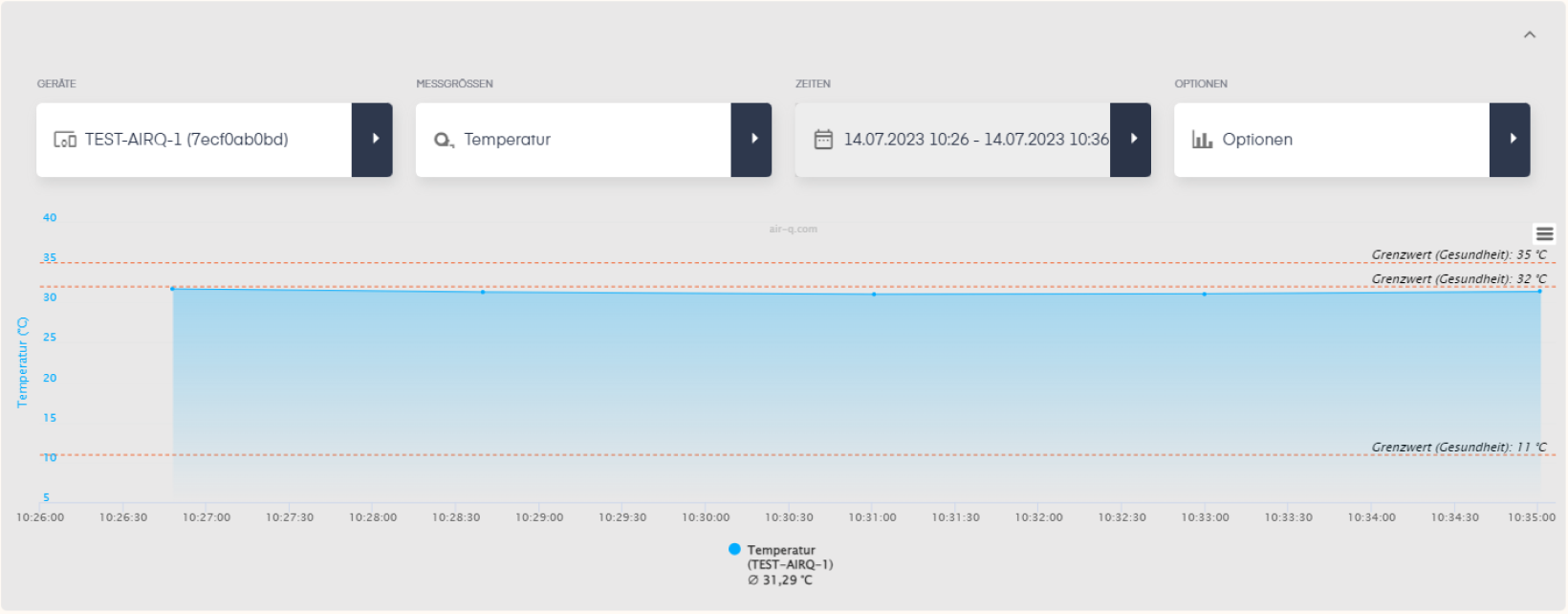
The CityBreeze billboards promise a cooling effect of up to 4°C at a power draw of over 2,000 watts. We measured this reading with the air-Q too. On the screen side, meaning the incoming air, temperature fluctuated between 28 and 32°C. The air monitor air-Q recorded an average temperature of 31.29 (test device 1), 26.54 (test device 2), and 29.28°C (test device 3).
Evaluation chart: air temperature of the incoming air
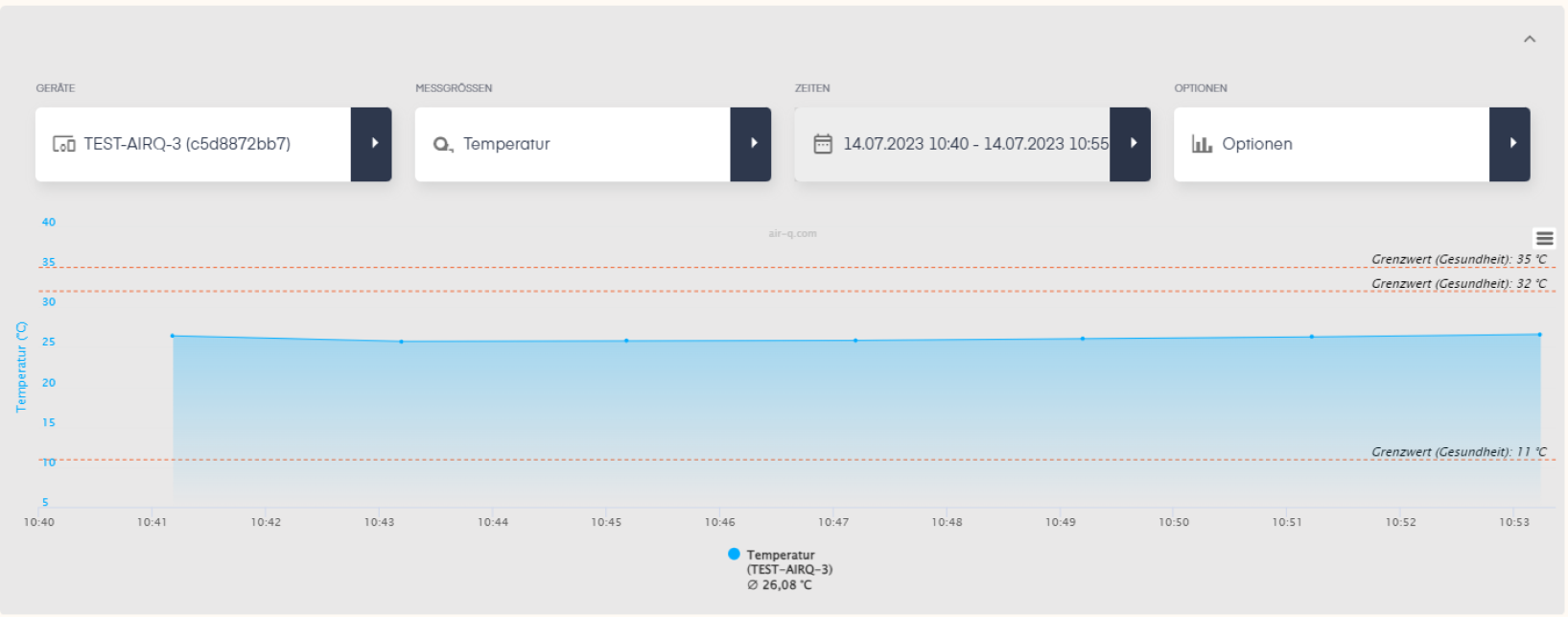
Since the sun fell directly onto the ad screen during the test period, a natural shadow formed on the moss wall side, and the ambient temperature there was already noticeably lower than in direct sunlight. So we could detect a substantial temperature difference behind the moss filter, but couldn't clearly attribute it to the pillar. Noticeably lower temperatures were also measurable in the shade all around the ad display. Test device 1 showed an average temperature of 26.98, device 2 26.75, and device 3 26.08°C.
Evaluation chart: air temperature of the outgoing air
Our conclusion on the CityBreeze test
Our measurement data showed no significant effect of the moss air filter on air quality. We could therefore neither feel nor measure an air-purifying effect. On the billboard we tested, though, the moss used was very dried out in many spots and didn't fully cover the back panel. It's therefore possible the moss wall wasn't working adequately. According to the manufacturer's website, the walls are regularly maintained — the interval for this would accordingly need to be significantly shortened to ensure functionality at all. We noticed nothing of the manufacturer's advertised "smart irrigation system."
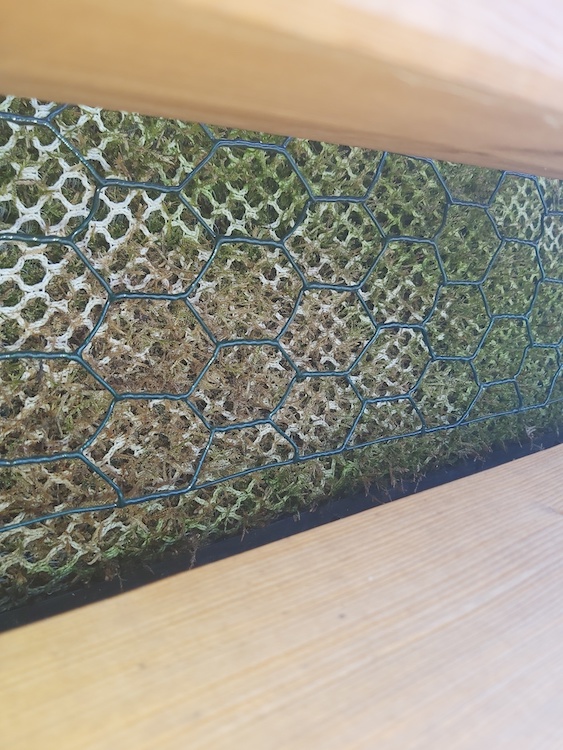
Since the billboard isn't maintained at short intervals, the question arises whether the moss wall's functionality is even the operator's focus. It's possible that the billboard's function and selling ad space under an ecologically acceptable label are actually the goal.
We also noticed that neither the location nor the bench's design particularly invites lingering. We noticed heavy noise pollution from traffic. Would you want to sit on a busy road in an industrial area and enjoy the "fresh breeze"? Or is the goal simply to have as many drivers as possible notice the ad message?
So how green is CityBreeze really — or is this a case of greenwashing? After all, the billboards advertise themselves as the first truly green ad network. This slogan's appeal could also rub off on the companies and products advertised here.
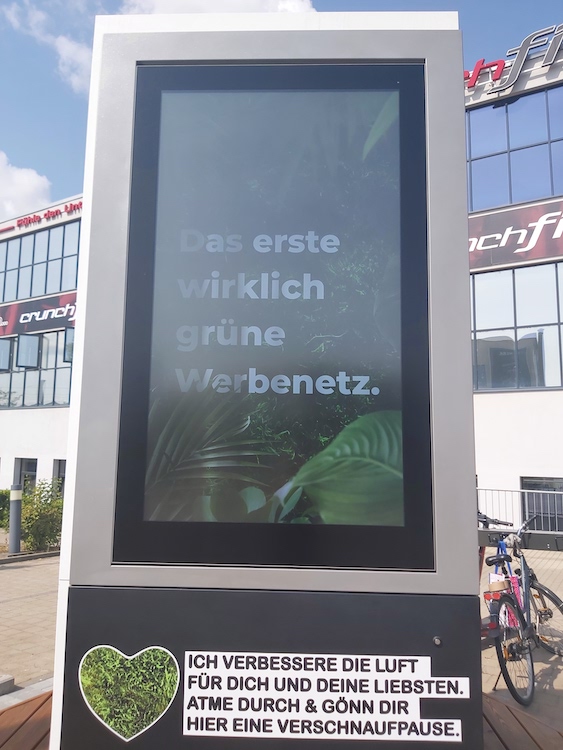
During our hands-on test, other questions occupied us too. For example: why isn't the electricity for the ad screens generated by the pillars themselves via solar panels? How many billboards would you need to install in a city to actually make a real difference to air quality? And why are the benches designed so that people sitting turn away from the air purifier instead of facing it? If the seating faced the filter, people lingering there could much more easily breathe the filtered, fresh air.
The manufacturer of the CityBreeze pillars also states on its own website that the air quality sensor measures filtration performance and environmental data and displays it in real time. Perhaps this happens on an external platform. However, the data isn't displayed on the pillar itself, and unfortunately no indication is given of where the data can be viewed. We would have very much liked to compare the billboard's air-quality-improvement data against the air-Qs' measurement data over the same period.