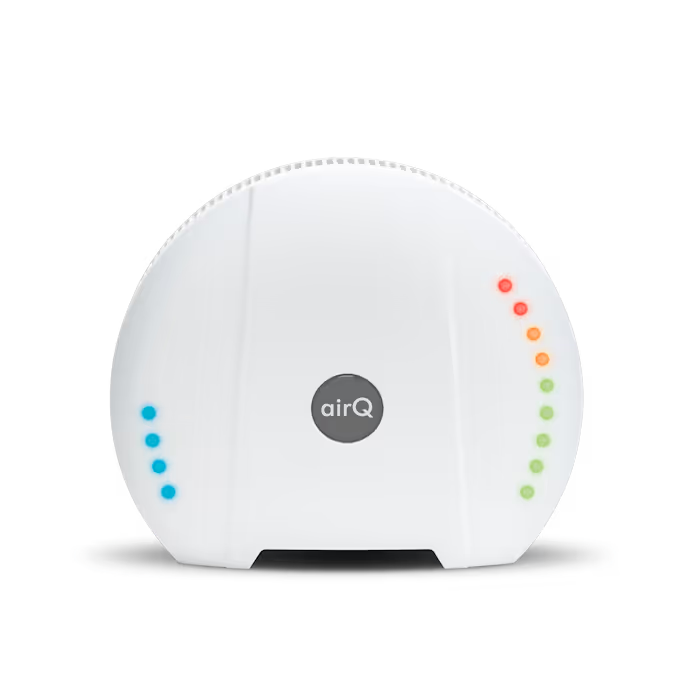

Which different VOCs does the air-Q measure?
The VOC sensor in the air-Q is very flexible and can detect a wide range of VOCs. These include formaldehyde, benzene, toluene, xylene, acetone, styrene, terpenes, trichloroethylene, tetrachloroethylene, naphthalene, ethyl acetate, methanol, chloroform, cyclohexane, or 1,3-butadiene, as well as hundreds of other VOCs. We’ve written an interesting blog article about their origins and sources.
Unfortunately, VOC sensors in general — including the one in the air-Q — report the VOC reading as a sum value. That means the substances listed above are measured but can’t be output individually. If these or other VOCs are present in the air, the VOC reading will rise, but it remains unclear which chemical is driving the reading.
The VOC PID sensor offered for the air-Q Science can be configured for a single substance, so its exact quantity can be measured very precisely. Note: the VOC PID sensor is only suitable for professional use in laboratory or industrial settings.