
Volatile Organic Compounds (VOC): Definition, Causes & Effects
Do you suffer from headaches or airway irritation indoors? Sick building syndrome, triggered by elevated VOC levels, could be the cause. Read now how volatile organic compounds get into the air, what health effects they can have, and what helps against VOCs.
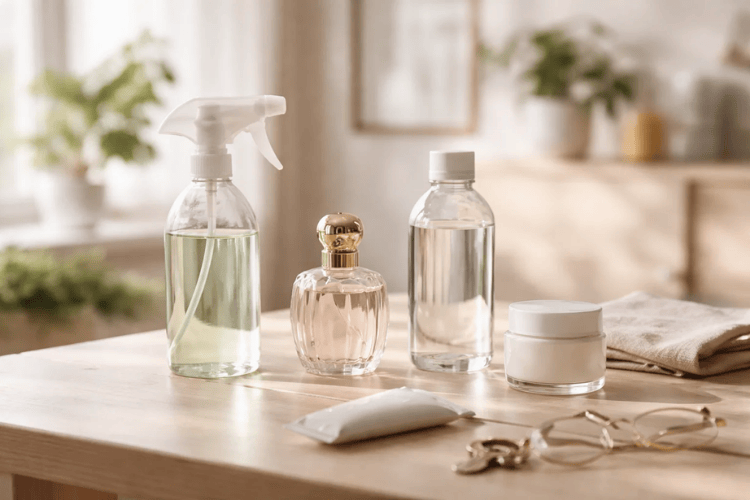
Volatile organic compounds — gas- and vapor-form substances — are referred to by the English abbreviation VOC (Volatile Organic Compounds) or VOCs. This is a group of substances comprising roughly 200 individual compounds with varying properties. What all these substances have in common, though, is that they evaporate relatively quickly — this is also reflected in their name.
VOC meaning
The acronym VOC stands for "Volatile Organic Compounds." The term describes a group of organic substances that, as the name suggests, easily transition into the gas phase — meaning they're "volatile." This property is central to their behavior indoors, since they evaporate at room temperature and disperse into the air.
The term thus emphasizes two aspects:
- Organic: the molecules are based on carbon frameworks — this includes both chemically manufactured and natural substances.
- Volatility: they transition into a gaseous state even at low temperatures, making them easily detectable in the air you breathe.
Understanding the meaning of VOC helps better categorize where they occur: they're omnipresent, though not always visible or detectable by smell. At the same time, this very volatility makes them a key parameter for assessing and controlling indoor air quality.
Volatile organic compounds (VOC): causes & origins
VOCs come from very different sources. These are either biogenic, meaning of natural origin, or anthropogenic, meaning man-made. Natural sources include: metabolic products, decay, and decomposition processes of natural materials such as wood or oil.
Anthropogenic VOCs are found in many everyday items, such as furniture and decor materials, care, cleaning, and hobby products. VOCs also arise from incomplete combustion or as a byproduct of industrial processes. Synthetic sources include, for example, off-gassing from building materials (such as varnishes, paints, carpets, insulation materials), solvent or cleaning products, or cosmetics. Combustion processes such as tobacco smoke, fireplaces or stoves, or cooking also contribute to indoor VOC buildup.
How do VOCs get into the air?
Volatile organic compounds convert into gas even at low temperatures and are released into room air. This happens either when solvents or liquid fuels evaporate, or when liquid or paste-like products dry. When adhesives or paints have been used, VOC off-gassing is noticed quickly, and the source is also identified quickly. More problematic are the less obvious VOC leaks: such as material emissions that plastics constantly release. Examples here are: plasticizers, solubilizers, antioxidants, or fragrances and flame retardants.
Health effects of VOCs
Since we Central Europeans spend most of our time indoors, elevated VOC levels carry greater health significance. This is especially true since indoors, the distance to VOC sources is usually smaller. Particularly high VOC exposure occurs immediately after construction or extensive renovation work.
An elevated VOC concentration shows up, besides an unpleasant smell, as a changed sense of smell and taste, and irritation of the eyes or mucous membranes. Other noticeable effects include: exhaustion, reduced concentration, dry skin up to eczema, or even headaches.
The toxicity of individual substances varies greatly. Scientists assume chronic long-term effects from sustained exposure: e.g. carcinogenic, mutagenic, and reproductive-toxic effects. Infants and small children are especially vulnerable.
What helps against excessive VOC levels?
- Buy used furniture instead of new, since second-hand products release hardly any chemicals.
- Choose low-emission products and materials when shopping. As a guide, look for quality seals like the "Blue Angel," since stricter controls apply here. Look especially for the seal when buying everyday cleaning products such as laundry detergent, air fresheners, furniture polish, and oven and carpet cleaners.
- For construction or renovation work, use materials tested according to the AgBB assessment scheme.
- Measure VOC levels in room air with an air monitor like the air-Q and ensure adequate fresh air supply through burst ventilation.
- Buy wall paints with the "EU Ecolabel" — similar to the Blue Angel, this seal indicates specially tested products with a higher quality standard. Also, don't store paint buckets or cleaning products in your living space, since toxic gases can escape even from sealed containers.
.jpeg)