
How Do Saharan Dust & Other Seasonal Changes Affect Air Quality & Health?
Even thousands of kilometers from the African desert, we feel the effects of Saharan dust. Every year, the fine dust reaches Germany via air currents. Here, it affects air quality and impacts our health. Learn now what health effects threaten and what you can do about it.

Saharan dust over Germany: does the dust affect air quality in German homes?
Yes, Saharan dust can affect air quality in German homes, especially when larger amounts of this dust are transported over long distances by atmospheric conditions. The effects can vary depending on dust concentration and individual sensitivity.
Particle exposure from Saharan particulate matter
Saharan dust consists of fine particles that enter indoor spaces through ventilation, leaky windows, or open doors. Indoors, the particulate matter floats in the air, worsens air quality, and can be inhaled. Since the particles have a small diameter, they reach the lungs when inhaled, and from there enter the bloodstream and thus deeper into the body. The dust can settle in the lungs. A high concentration of the fine particles can therefore cause breathing difficulties and is especially problematic for people with respiratory diseases like asthma, COPD, or allergies.
Desert sand also contributes to the spread of pollutants. Saharan dust can also transport pollutants and allergens like bacteria, fungal spores, and other organic compounds. This can trigger or worsen allergies and respiratory problems in sensitive individuals.
Particulate matter doesn't just float in indoor air, but also settles on surfaces indoors like floors, furniture, or windows. Besides contaminating indoor spaces and the associated increased need for cleaning, this leads to the dust being stirred up again during cleaning or movement.
What seasonal changes besides Saharan dust affect air quality?
Besides Saharan dust, various seasonal changes can affect air quality. The causes of these changes are often natural phenomena. Depending on the season, different pollutants therefore increasingly affect air quality.
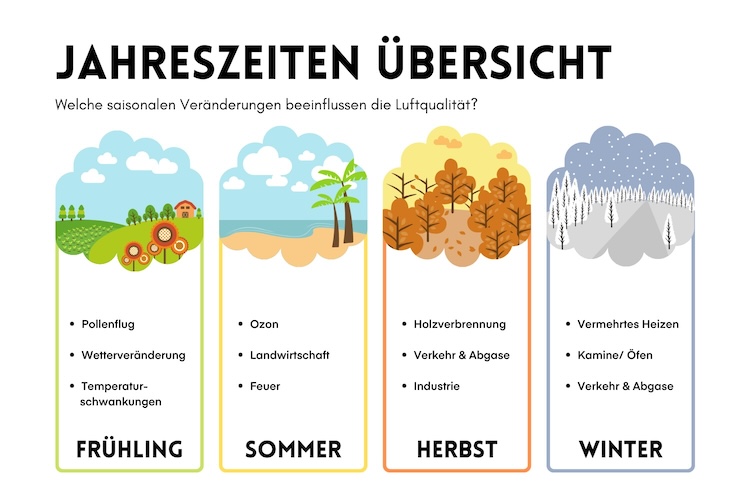
Generally, weather conditions like wind direction and speed also contribute to how pollutants spread and distribute in ambient air. In the warm season, stronger winds can help pollutants get diluted and removed faster. In the cold winter months, on the other hand, air layers are more stable and pollutants can remain in the air longer.
These air components affect air quality in spring
Pollen
During the spring and summer months, the concentration of pollen in the air rises. Grasses and other plants trigger allergic reactions like breathing difficulties in sensitive individuals, especially in people with hay fever or other allergies.
In our article "Pollen Allergy & Hay Fever: Definition, Diagnosis, Symptoms, Treatment", we explain how hay fever develops and what measures can provide relief
Weather changes
Sudden temperature fluctuations, high humidity, or rapidly changing weather conditions can cause breathing difficulties in some people.
These air components affect air quality in summer
Ozone formation & other weather-related factors
In the summer months, ground-level ozone can form, especially in high temperatures and sunshine. Ozone is an irritant gas that can cause respiratory problems. Besides hoarseness, coughing, and bronchitis, elevated ozone exposure can also cause the following symptoms: headaches and nausea, irritated, itchy, and/or watery eyes, nosebleeds, poor concentration, reduced performance, and fatigue.
Other changes in weather conditions, such as temperature inversions in winter, can also lead to poor air quality, since pollutants get trapped near the ground and can accumulate.
Agricultural activities
In spring and summer, agricultural activity increases, including the use of fertilizers and pesticides. These can lead to elevated concentrations of ammonia and other air pollutants, which enter indoor spaces through ventilation.
Fires
During the dry summer months, large amounts of smoke and particulate matter can be released into the air, which can affect air quality over wide areas. This pollutant exposure can be triggered by both natural and human activities: such as wildfires, burning garden waste, or increased grilling.
These air components affect air quality in fall and winter
Wood burning & other combustion processes
In the colder months, wood stoves and fireplaces are used more, which can lead to increased particulate matter exposure in the air. Especially when fireplaces and stoves malfunction or aren't adequately maintained, there's a risk of indoor pollutant exposure.
Traffic & exhaust fumes
Traffic is a significant source of air pollutants year-round. However, seasonal changes like increased travel during holiday periods or traffic jams in summer can additionally impair air quality. Exhaust exposure is especially high in winter, when people increasingly use cars for transportation.
Traffic releases a large number of pollutants into the air, such as nitrogen dioxide (NO₂), carbon monoxide (CO), particulate matter (PM), ozone (O₃), and sulfur dioxide (SO₂). Traffic also contributes to the release of heavy metals like lead (from gasoline) and copper (from brake pads) into the air, which can cause environmental and health problems.
Industrial emissions
The activity of industrial facilities and power plants can vary by season, causing air pollutant emissions to fluctuate as well. In the cold winter months, for example, the need for heating energy rises, which leads to increased fuel use in industrial facilities and power plants and thus to increased emissions of pollutants like sulfur dioxide (SO2), nitrogen oxides (NOx), and particulate matter. Winter weather conditions, such as stable air layers (inversion weather patterns), can also cause pollutants to linger and accumulate in the air longer.
What can you do about the health effects of Saharan dust and other seasonal changes?
These seasonal changes show how varied the factors affecting air quality are. Monitoring indoor air is therefore recommended, in order to detect any health effects and take effective measures for clean air. To minimize the effects of Saharan dust and other seasonal influences on air quality in German homes, the following measures can be taken:
- Ventilate regularly, to refresh indoor air and reduce particle concentration.
- Air analysis using an air quality monitor like air-Q.
- Use air filters or air purifiers to reduce particle exposure indoors.
- Clean surfaces regularly to minimize dust buildup.
Sensitive individuals should take special precautions during periods of elevated Saharan dust levels, such as closing windows and using air filters. Constant air analysis is advisable here. If the measuring device shows an increase in particulate matter and issues a warning, you can react and close the windows. This reduces your exposure.
.png)