
Review: How Good Is Eoleaf's NeoPur 400 Air Purifier Really?
We tested Eoleaf's NeoPur 400 air purifier. Learn here how it cleaned pollutant-laden air and how air quality changed as a result.
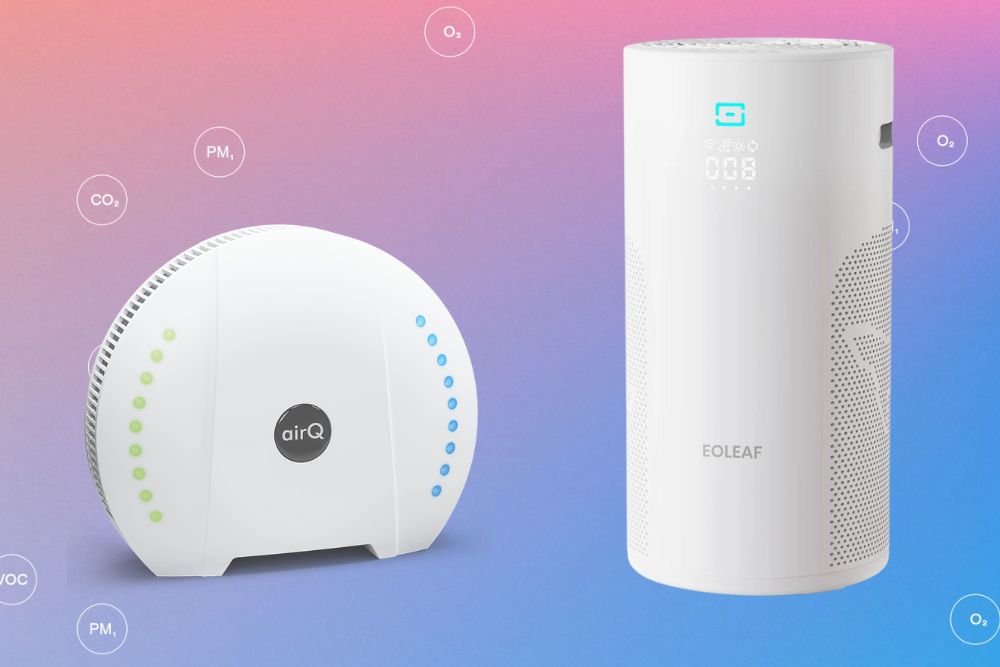
The NeoPur 400 in an air test
The air we breathe indoors is often more polluted than we think. Cooking, candles, cleaning products, or simply the room air itself can release pollutants that affect our well-being. Air purifiers promise relief here. But how well do they really work? In our current test, we checked how effectively the NeoPur 400 from Eoleaf can remove various pollutants from the air.
The test devices
The air-Q Pro is a highly precise monitor with up to 14 sensors that captures particulate matter (PM1, PM2.5, PM10), VOCs, CO₂, temperature, humidity, and other pollutants in real time. Using the air-Q Pro, we were able to precisely document the changes in air quality during and after burning the incense stick and track the air purifier's effect.
The tested NeoPur 400 air purifier from Eoleaf is designed for rooms up to 40 m² and combines a HEPA H13 filter, an activated carbon filter, UV-C light, and an ionizer to effectively remove particulate matter, allergens, smoke, VOCs, odors, and other pollutants from the air.
-(300-x-250-px)-(1500-x-1300-px).jpg)
Test setup
Our test was carried out in two phases. In both phases, the starting conditions were identical: the air in a small room of about 10 square meters was polluted using an incense stick. This stick burned for 5 minutes in both test setups. Throughout the entire test phase, existing air conditions were measured and recorded by an air-Q Pro.
In the first test phase, no countermeasure was taken. In the second test phase, the polluted air was meant to be cleaned by the NeoPur 400 air purifier from the company Eoleaf. This way, we could see how quickly the air returns to a normal state without further measures, allowing a better comparison.
Expected changes in air quality
Particulate matter (PM2.5)
For particulate matter, we expected values to rise sharply right after lighting the stick, since the flame produces many fine particles. Thanks to the NeoPur 400's HEPA H13 filter, particulate matter was expected to be significantly reduced within ten to twenty minutes. PM2.5 was expected to drop exponentially, since the air is circulated through the filter multiple times, until nearly the starting level is reached.
VOCs
For VOCs, we expected the incense stick to release volatile organic substances, some of which settle on surfaces and gradually escape back into the air. The NeoPur 400's activated carbon filter was expected to reduce VOCs.
Test results
Particulate matter (PM2.5)
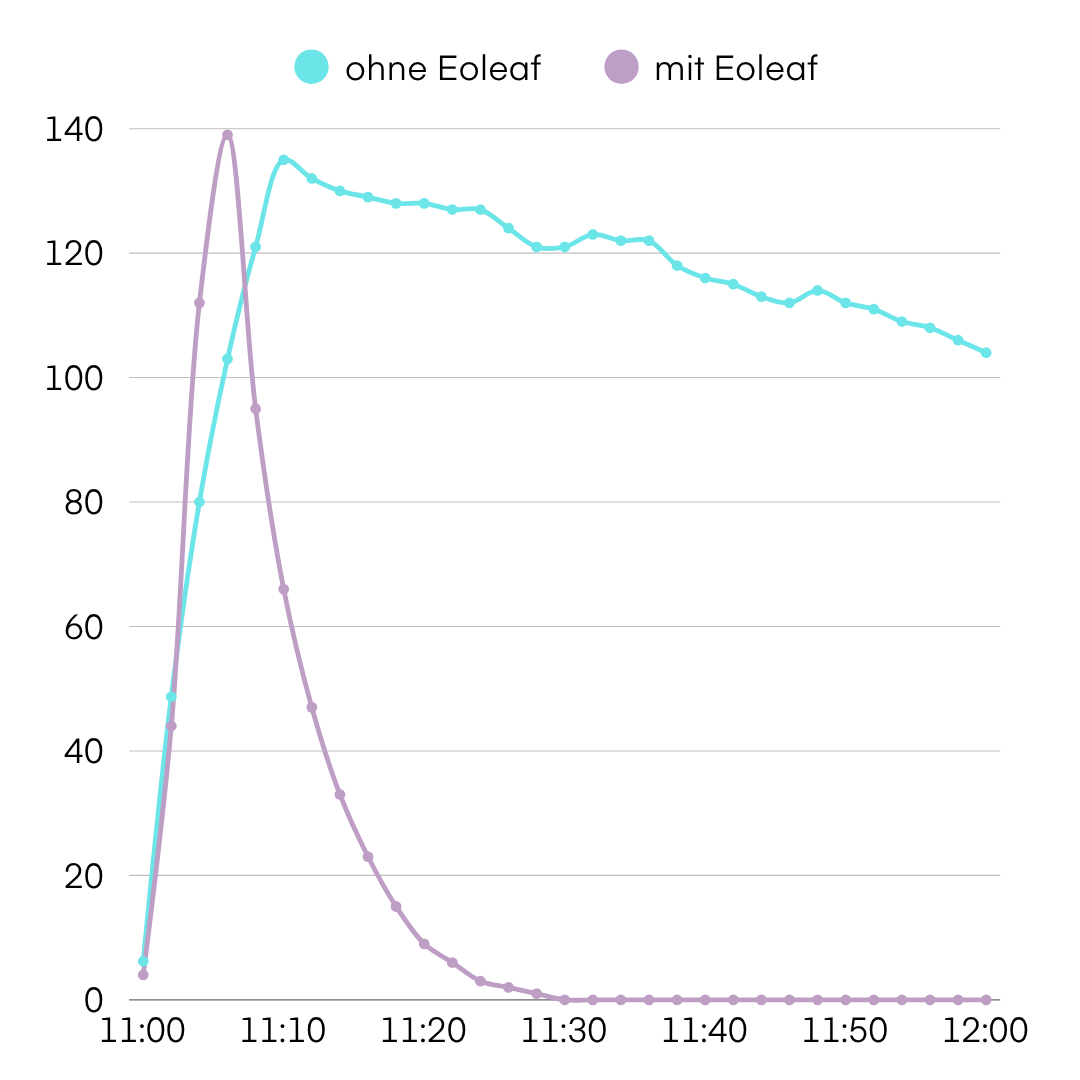
The readings clearly confirm our expectations. Without the air purifier, particulate matter rose to a peak of 135 µg/m³, right after the stick was extinguished, and then dropped only slowly. Only 14 hours later did values fall below 10 µg/m³. With the air purifier turned on, particulate matter rose to a similar peak of about 139 µg/m³. Right after the device was activated, particle concentration dropped drastically. After just 12 minutes, values were already below 10 µg/m³, and shortly after that, 0 µg/m³ was even reached, confirming the high efficiency of the HEPA H13 filter.
VOCs
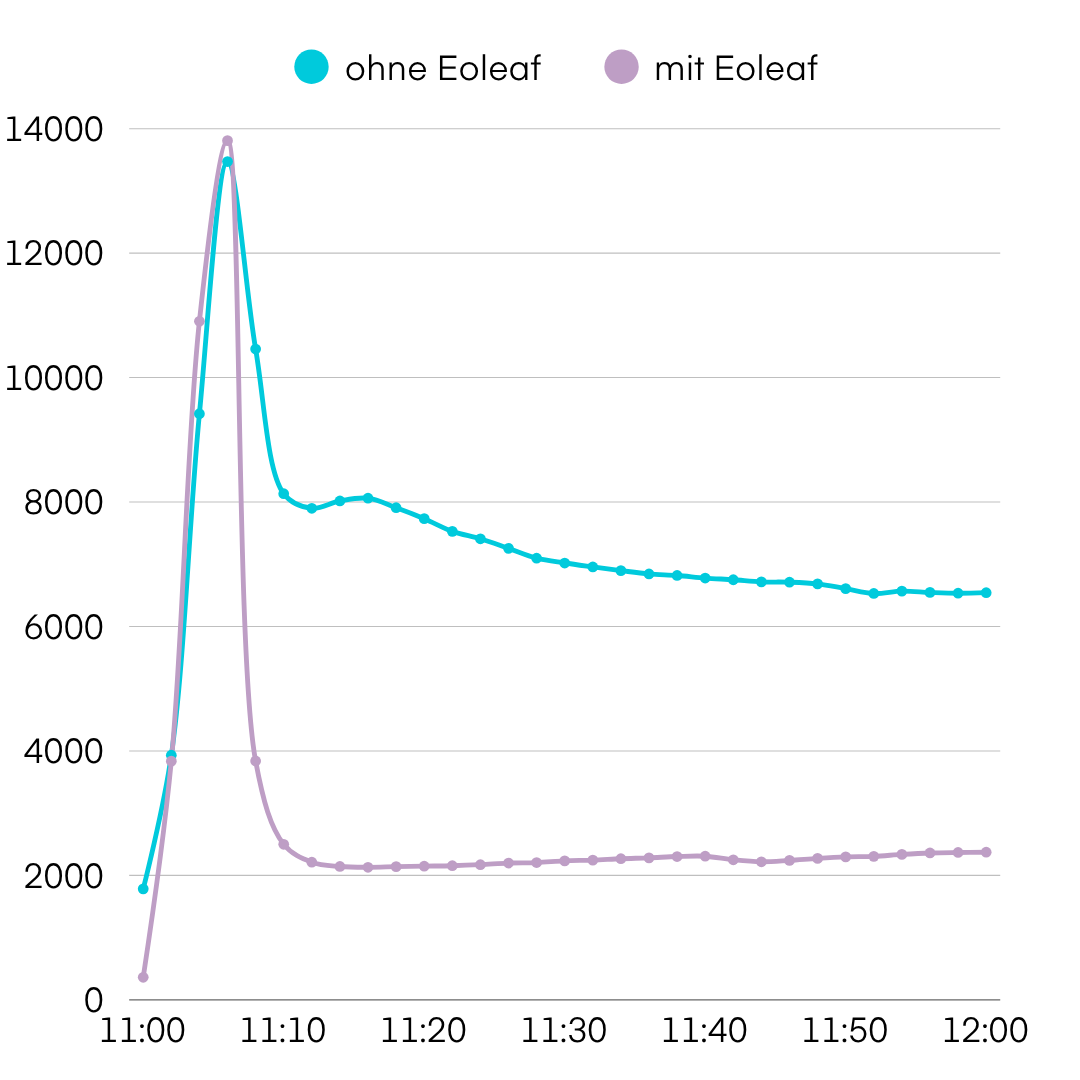
VOC values rose to over 13,000 ppb while the stick burned. After the stick was extinguished, they fell slowly and stabilized after about 3 hours at around 6,000 ppb, before ventilation brought values down to below 100 ppb. In the test phase with the air purifier turned on, VOC concentration dropped from over 14,000 ppb within 8 minutes to 2,212 ppb. VOC values stayed at about 2,000 ppb despite the air purifier, since this represents the room's baseline exposure. Many VOCs adhere to surfaces or are only partially captured by the filter. Ventilating then led to a further drop below 100 ppb.
The experiment shows that the NeoPur 400 can significantly and relatively quickly reduce VOCs under the tested conditions.
Conclusion
In our test, the NeoPur 400 proved to be an extremely effective air purifier. The reduction of particulate matter in particular was very effective. The test environment was deliberately kept small to better control the conditions and observe the effects in isolation. However, the cleaning effect, especially for particulate matter, was so strong that similar effects can be assumed to be achievable in larger rooms as well.
To permanently optimize indoor air quality, it's crucial to continuously monitor the air. The air-Q offers precise real-time measurement of pollutants like VOCs, CO₂, and particulate matter. With up to 14 built-in sensors, it provides detailed data on air composition and enables targeted control of ventilation measures. Through integration into smart home systems, the air-Q can automatically respond to changes in air quality and make appropriate adjustments.
This supports not just health and well-being, but also contributes to energy efficiency. Continuous air quality monitoring with such a device is therefore an important step toward permanently improving the air and detecting potential health risks early.
This video illustrates the results once more and shows the test setup: