
PCBs in the Air – Invisible Danger in Old Buildings
Polychlorinated biphenyls (PCBs) remain a health risk decades after their ban. Especially in buildings from the 1960s to 1980s, they can be absorbed via room air. The air-Q helps detect suspicious exposure early.
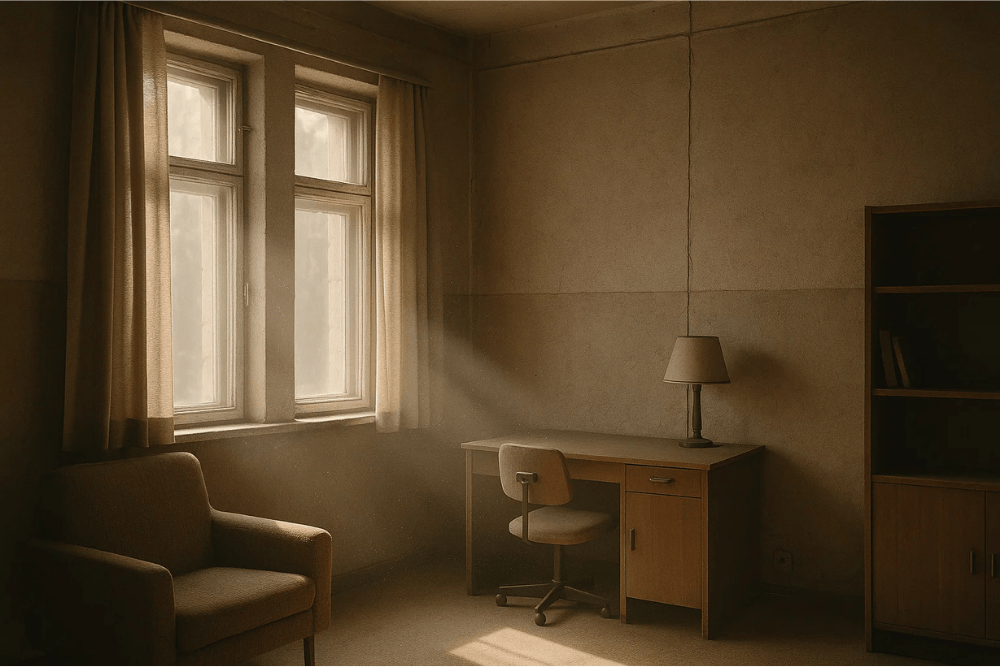
How PCBs still pollute the air today
Polychlorinated biphenyls (PCBs) are among the most persistent environmental toxins ever industrially produced. For decades, they were used in paints, varnishes, sealants, plastics, and electrical devices, until their production was banned in most countries in the late 1980s.
But the problem hasn't disappeared: PCBs are chemically very stable and break down only extremely slowly in the environment. In many older buildings from the 1960s to 1980s, PCBs can still be present in materials today and slowly escape into room air from there.
-(300-x-250-px)-(1500-x-1300-px).jpg)
Why PCBs in the air are problematic
PCBs are lipophilic, meaning they accumulate in body fat and build up over time. Even at low, long-term exposure, health risks can arise:
- Damage to the liver and immune system
- Hormonal disorders
- Developmental problems in children
- Elevated cancer risk (classified as probably carcinogenic)
Intake occurs mainly through food, but exposure from indoor air, especially in buildings with PCB-containing materials, can also be significant.
How is exposure detected?
The tricky part: PCBs are colorless and odorless. Elevated exposure is usually only detected through room air measurements or material analyses. In Germany, there are guide values above which remediation measures are recommended or even required.
What can the air-Q measure?
The air-Q provides valuable indications that suggest possible PCB exposure and can thus give a warning signal for when action is needed. The air-Q can serve as an early warning system and point to generally problematic air quality. This makes it visible when it's worthwhile to bring in experts for verified proof of PCBs.
.png)
With the air-Q, you can continuously monitor, among other things, the following parameters:
- Volatile organic compounds (VOC) – VOCs can indicate off-gassing pollutants.
- Particulate matter (PM1, PM2.5, PM10) – important, since pollutants can also bind to particles.
- Carbon monoxide, carbon dioxide, and ozone – for a comprehensive picture of air quality.
- Humidity and temperature – affect how strongly materials release pollutants.
Persistently elevated VOC exposure or unusual readings can be reason to arrange a targeted PCB measurement through a laboratory, since direct proof of PCBs requires special laboratory procedures.