
Heat Wave in Germany – Does THIS Trick Actually Help?
Many anti-heat tricks are currently circulating online, mostly focused on trying to cool down. We tested a fan tip from the internet and measured whether room air actually cools down. We've also summarized more heat tips at the end of the article.

Summers are getting hotter due to climate change — even in Germany. Air conditioning still isn't very common in Germany, especially in private homes. So it's time to SWEAT! Or is it? Online, there are various more or less helpful tricks circulating for cooling down in high temperatures. Among other things, we read that a wet towel in front of a fan is supposed to have an actual cooling effect. We tried this "anti-heat trick" and measured whether it really gets cooler. Find more heat tips at the end of the article.
Test setup
On an especially hot day (33°C outdoor temperature), we measured temperature in a 24 m² room. We ventilated for 10 minutes beforehand, so room air quality was good. Room temperature after ventilating was 27.25°C. We then closed the windows and placed a simple standing fan in the room. We soaked a towel in ice-cold water and attached it to the fan.
.png)
The fan test
We let the fan run and rotate at its highest setting. Our test ran for about 90 minutes, with no person in the room. The chart shows that temperature doesn't drop significantly. Fluctuations were so small that the temperature stayed at about 27 degrees throughout the entire test.
.png)
Other readings, though, changed in a visible and noticeable range. For example humidity, which even exceeded the 60% threshold, as seen here:
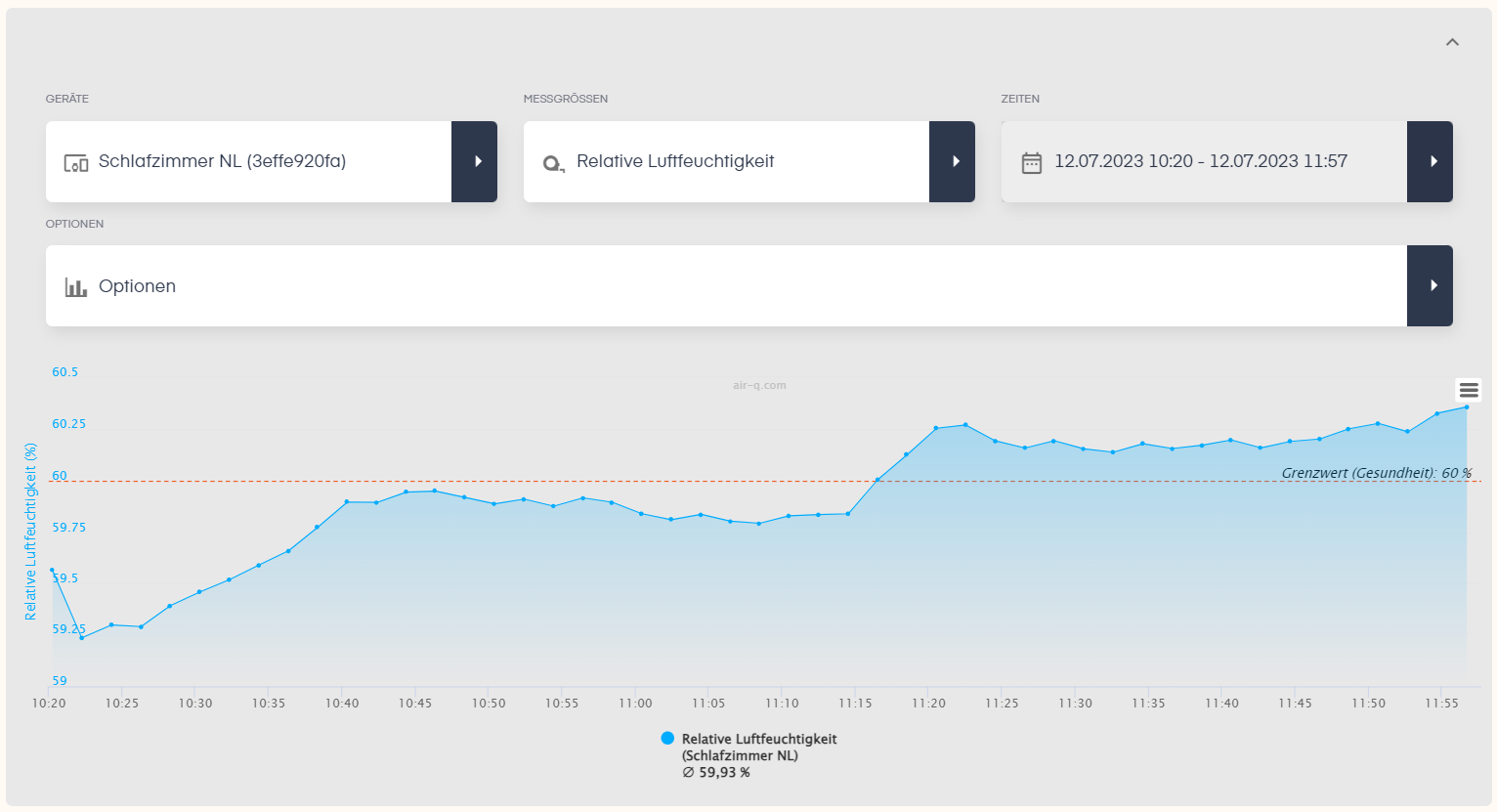
The VOCs also rose, likely due to the fragrances in the detergent used on the freshly washed towel, and not harmful.
Conclusion on the anti-heat trick:
Even though overall room temperature didn't drop, we found that the immediate airflow from the fan cools noticeably. Thanks to evaporative cooling, you feel a cool breeze in the fan's immediate vicinity, though it doesn't change room temperature. We therefore still recommend the tip, for example at a desk or next to the bed at night, since the direct cooling is very pleasant.
We've collected more heat-fighting tricks for you to try:
1. Wet towel, or wet hair
To sleep well at night even in heat, you need to cool down. This works, for example, with a wet towel or washcloth you keep cooling yourself with or covering yourself with. Going to bed with wet hair also helps. Combined with a fan, these tips are even more effective. Caution: overly wet, dripping towels or hair leave water stains, which can lead to mold in bedding and mattresses.
2. Unplug devices
PCs, laptops, TVs, and other devices continuously produce heat even in standby mode. So you should fully unplug them when not in use. On hot days, also avoid charging devices in your home — better to do that at night.
4. Choose suitable clothing
Wear loose, airy clothing made of natural materials like cotton or linen on hot days. Dark clothing absorbs and stores sunlight's heat, so light-colored clothing is the better choice. Tight, synthetic garments can lead to heat buildup.
5. Cool your wrists
Run cold water over the spot where you normally check your pulse on your wrist, or use a cooling pad. This gives a refreshing effect in between. If no cooling pad is at hand, you can also use products from the freezer.
6. Please don't take a cold shower!
An ice-cold shower abruptly stimulates circulation and raises blood pressure. It also causes blood vessels to quickly contract to preserve body heat. This leads to increased sweating after cooling off. It's therefore better to shower lukewarm. Let your skin dry in fresh air after showering, since water evaporation has an additional cooling effect.
7. Use your fridge and freezer correctly
Refrigerators and freezers release heat, especially when opened. So always think ahead about what you want to take out, and close the doors quickly again. Also only set the devices as cold as necessary, since otherwise they produce even more heat. The ideal temperature is 7°C for the fridge and -18°C for the freezer.
8. No ice-cold drinks
Even though you often crave ice-cold, fizzy drinks in summer, it's better to drink lukewarm tea or lukewarm water and ensure adequate fluid intake. Overly cold drinks need to be warmed by the body. This demands a lot of energy from it and heats it up further.
9. Try light summer recipes
Light, water-rich dishes are easier on the body and provide refreshment. Fruit like watermelon or pineapple are ideal as a snack. Mineral-rich salads are also a good choice. Avoid spicy dishes, since they can cause increased sweating. Eat harder-to-digest meals only later in the evening, once it's cooled down.
There are thus many tips and tricks for cooling down in the heat. Hopefully these help you get through summer refreshed.