
Halloween Special: How Pumpkins, Scented Candles & More Spread Bad Air
It's getting unpleasant outside: fall and Halloween are supposed to feel especially cozy. Scented candles spread a sweet mist and spooky-beautiful decor adorns rooms, but scented candles and the like can be harmful to health, even carcinogenic. We take a closer look at the risks and search for healthy alternatives.
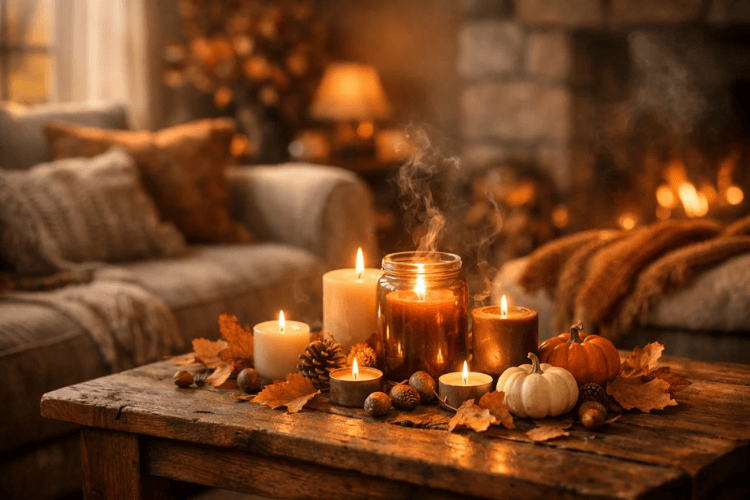
Health risk scented candles: are scented candles bad?
When it gets dark and unpleasant outside, many people cozy up at home with scented candles or incense sticks. But the scent of vanilla, lavender, or cinnamon can also have negative health effects.
These pollutants enter the air you breathe from scented candles
Conventional scented candles contain paraffin and stearin, petroleum byproducts that enter the air when burned and are thus inhaled. Paraffin can release toxic volatile organic compounds (VOCs), such as alkenes, acetone, or benzene. These chemicals are also present in diesel fuel emissions and are released even at room temperature — meaning even when the candle isn't burning. Burning paraffin wax produces particulate-matter-enriched soot that floats in the air for several hours. Also problematic are the limonenes often contained in candles, which react with room air's ozone. This produces the carcinogenic chemical formaldehyde.
While the scented candles burn, they deplete oxygen from the room and also release harmful chemical substances such as sulfur dioxide, which likewise enter our bodies through breathing.
Health risks & effects from burning scented candles
Even though the amount of pollutants released by a single candle seems small, bad room air burdens the body and can cause unpleasant side effects. Headaches, nausea, dizziness, reduced concentration and performance, as well as burning eyes or asthma attacks can result. Some people react hypersensitively to scents and smells. Allergic reactions such as irritation of the mucous membranes from the candle's fragrance compounds, or an allergic contact eczema on the skin, especially on the hands or face, can possibly occur. These reactions are increasingly triggered by linalool, cinnamon compounds, citrus aromas, or other terpenes.
Besides scented candles, many decorative items also off-gas toxic substances like VOCs. You can recognize this by a chemical smell, often associated with low-priced mass-market goods. This is partly due to less strict production processes and lower-quality materials used.
Small particles penetrate especially deep into the body, while larger particles are already filtered out when inhaled. Ultrafine particles reach the bloodstream via the lungs and thus spread throughout the entire body. Serious health problems can result:
- Allergies
- Asthma
- Respiratory disease & infections
- Heart attacks
- Strokes
- Cancer
6 tips for healthier, pollutant-free coziness at Halloween & in fall
- Instead of scented candles, use essential oils or set out bowls of spices like cinnamon sticks and cloves. A potpourri of dried flowers, berries, fruit peels, or wood can also spread a pleasant scent.
- Don't want to give up your scented candles? Then when burning them, make sure they neither flicker nor produce soot, and that the flame doesn't "burn into" the wax too deeply. This is a sign that the candle is releasing more harmful particles. Place the candle upright and ensure sufficient wick length, so the flame gets enough oxygen and burns with adequate distance from the wax.
- Monitor air quality with an air monitor like the air-Q, and exchange stale room air for fresh air as needed.
- Instead of blowing out the flame and spreading more pollutants in the room via candle smoke, extinguish the flame with a candle snuffer or press it into the liquid wax.
- Ventilate after extinguishing the scented candle.
- Instead of scented candles for your Halloween decor, use LED candles, or get organic candles made from beeswax, soy wax, rapeseed wax, or coconut oil.