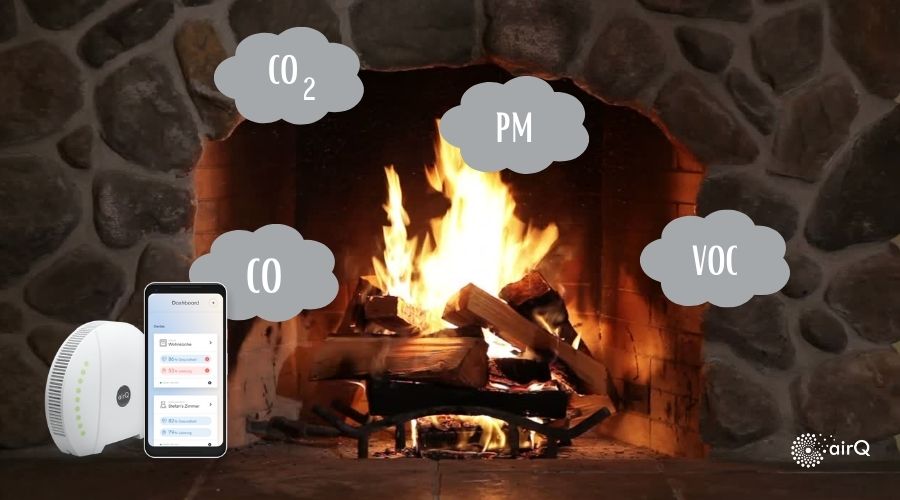
Fireplace – Enjoying the Warmth Safely & Securely
In the cold season, people love lighting up their fireplace. This year especially to save on heating costs and keep utility bills in check. Heating with wood does carry some risks, though, and can pollute the air you breathe. Read here what to watch for and how best to save energy with your fireplace.
What types of fireplaces are there?
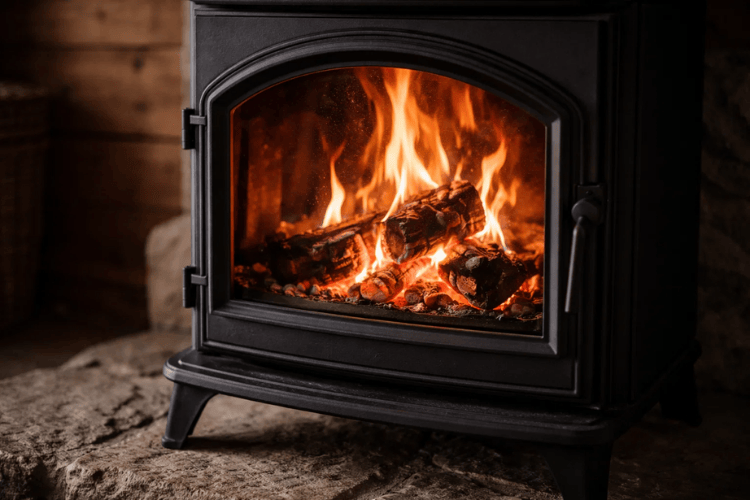
When choosing a suitable fireplace, your expectations for the model are decisive. With a wood stove, you quickly generate warmth in the room during cold temperatures and create a cozy atmosphere. A continuous-burning or workshop stove, on the other hand, achieves higher heating output. These stoves are thus ideal for efficiently heating larger areas, your entire house, or apartment. Besides these options, there are also gas fireplace stoves, which you operate at the push of a button and which, thanks to their typical open design, offer a great view of the flame.
Does a fireplace save on heating costs?
Driven by rising energy prices, many homeowners are looking for an affordable heating method. Wood stoves are especially economical here, since these models are cheaper and can also be heated with the inexpensive fuel wood. A wood stove can save up to 50 percent on heating costs. Ideally, you connect your water-bearing wood stove to the central heating system. This way, your fireplace generates warmth and also feeds hot water into the heating circuit. This lets you fully replace other heating methods during transitional seasons. A fireplace made of firebrick (a heat-storing stone) stores heat for a long time and releases it evenly into the room. So the right fireplace choice also opens up savings opportunities!
What should you watch for when heating with a fireplace?
Use only suitable fuel for your fireplace. When heating with wood, make sure to use modern wood-burning systems that are energy-efficient, low-emission, and meet legal thresholds. This applies, for example, to systems awarded the "Blue Angel" environmental label. A specialist should also inspect and maintain your combustion system annually, to prevent, for example, a chimney fire. To offset carbon dioxide emissions and make heating more climate-friendly, wood from local forests is ideal for your fireplace.
What fuel is suitable for heating with the fireplace?
You can use various materials to heat your fireplace. The following criteria should be decisive for your choice: environmental impact, burn duration, cost. Firewood is ideal, since it's a renewable resource that's easy to light and creates a especially cozy atmosphere with quiet crackling sounds as it burns. However, firewood has a lower calorific value than, say, coal or wood briquettes, and also needs a lot of space for storage. This is especially true since many types of wood need to be stored dry for several years before they can be used for heating. Wood is also less suited to continuous stove operation, since it burns quickly and you constantly need to add more.
Wood briquettes have a significantly lower water content than firewood due to how they're manufactured. This gives you a higher calorific value. The small briquettes also produce much less ash and need less storage space. Hardwood briquettes are harder to ignite, but burn longer.
Coal is primarily suited to continuous-burning stoves, since these need air supply from below.
You can heat your fireplace with these fuels:
- Firewood
- Wood briquettes and wood pellets
- Lignite briquettes
Combine wood and coal briquettes for an optimal, long-lasting heating result. Use the wood for lighting and save yourself constant refilling by maintaining the fireplace's temperature with coal briquettes.
What fuels should you avoid when heating with the fireplace?
Avoid treated or painted wood, particleboard, or plywood as fuel for your fireplace. Only burn untreated, dry wood. Follow the rule of thumb: residual moisture in the wood must be below 25 percent. Only this way do you avoid both heavy smoke development and excessive ash buildup.
How do you properly light the fireplace?
Besides fuel quality, correct lighting is important. This ensures safe use of your fireplace and also an optimal burn duration. Follow our guide, and lighting your fuel will go smoothly.
In general, before heating, you should check your fireplace for cracks and open all air vents. For lighting, firelighter blocks or sticks are better than paper, since they burn more slowly and thus ignite the actual fuel for longer.
Here's how to light your fireplace with wood:
- Stack the firewood. Make sure air can circulate between the logs. The fire needs air to develop well. Layer large logs at the bottom, ideally two pieces lying parallel to each other. On top of these, place two more, larger pieces of wood crosswise. Now place smaller logs on top.
- Use an eco firelighter. Place it on your stack.
- Once the stack is burning, close the vents to regulate air supply.
Here's how to light your fireplace with wood briquettes:
- Before lighting, break the wood briquettes into individual slices or small pieces.
- Fill the firebox about halfway with the pieces.
- Close the upper draft and fully open the lower draft.
- Place lit firelighters or already-burning wood shavings under the briquettes.
- Once the briquettes are burning, you can open the upper draft and half-close the lower one.
Here's how to light your fireplace with coal briquettes:
- Place enough wood shavings and several firelighters in the firebox.
- Place two to three wood briquettes on top of these.
- Fully open the lower air supply.
- Light the firelighters and the wood briquettes.
- Once the briquettes are fully lit, you can throttle the air supply somewhat.
Risks and dangers of fireplaces for room air
Both improper or faulty use of wood stoves and chimneys, as well as inadequate fireplace equipment, can lead to significant air quality pollution: both inside and outside the home. Besides regular maintenance, proper lighting and correct ash disposal are also important. Open fireplaces in particular heavily pollute room air with their emissions and, as an open flame source, pose an elevated fire risk.
Besides the elevated fire risk, the deterioration of air quality from a fireplace shouldn't be underestimated. If a wood stove hasn't yet reached operating temperature, the combustion process can't always run completely and optimally. One reason for this can be that the process isn't supplied with enough oxygen. This can produce large amounts of soot, or particulate matter, and carbon monoxide.
During a fireplace's regular operation, nitrogen oxides and carbon dioxide (CO₂) also form in large quantities; sulfur oxides, hydrocarbon compounds, and other substances like formaldehyde can also form. Besides these health-harming air pollutants, other substances such as methane or nitrous oxide also form, which also harm the climate.
As air quality declines, this can affect your well-being: headaches, discomfort, and declining concentration and performance are the result.
What you should definitely watch for when heating with the fireplace
To keep your room air healthy and safe despite your fireplace, pay attention to the following criteria when lighting your fuel and heating your fireplace:
- light the fuel according to the product description
- let the fire breathe and avoid overfilling the fireplace
- add new wood in time — this reduces smoke development
- check your room air quality with an air analyzer: the air-Q measures air pollutants like particulate matter, carbon monoxide, or ozone and reliably analyzes air quality — for your health and safety.
Pollutant exposure & air quality monitoring
While smoke detectors are mandatory in most homes, they don't sound an alarm for carbon monoxide (abbreviated CO). This colorless, odorless gas forms during incomplete combustion processes and is highly toxic. At high concentrations, carbon monoxide poisoning occurs quickly and can lead to unconsciousness and even death. That's why it's worthwhile to place carbon monoxide detectors like the air-Q in your home. Especially in rooms with a fireplace. This way, you're warned in time about high concentrations of these air components.
Especially PM₂.₅-sized particulate matter particles, being very small and light, remain airborne longer and are more easily inhaled. They penetrate deep into the body and can thus cause cardiovascular disease. The carbon dioxide released during combustion, on the other hand, causes headaches and fatigue, among other things. At 1,400 ppm at the latest, you should urgently ventilate.
A precise air monitor like the air-Q helps you track pollutant exposure in your indoor spaces in detail and keep everything in view. If the respective thresholds are exceeded, you're notified and can act early.
Note: next week, we'll start a hands-on test with the air-Q and measure which air components change while heating with a fireplace. Find the results here in our air-Q Lab.