
The CellActivator Air Purifier by CellGenius, Hands-On Tested
Air purifiers are an effective solution for improving indoor air quality. In this article, we test the CellActivator by CellGenius, which uses so-called Light-AirIon technology. We tested with the air-Q whether the device lives up to its own ambitious claims.
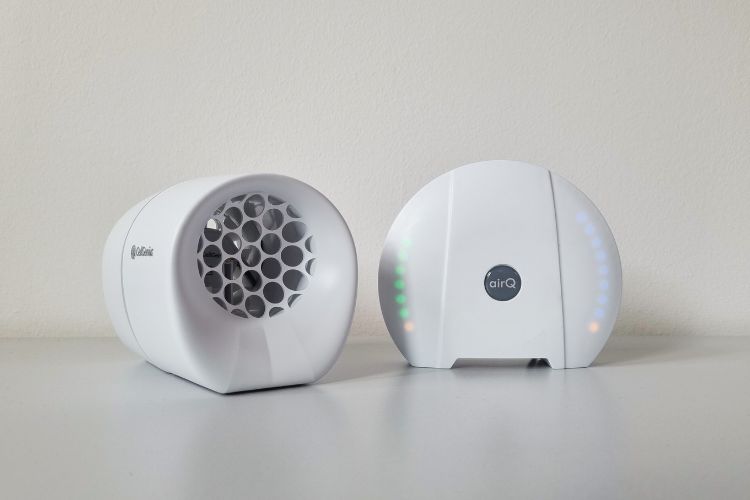
The air we breathe every day can be polluted by pollen, particulate matter, viruses, mold spores, and chemical residues. Especially indoors, where windows aren't constantly open, air quality can decline quickly. This often leads to concentration problems, worse sleep, or irritated airways. Air purifiers offer a solution to improve air quality and create a healthier indoor climate.
In our air-Q Lab, we tested the CellActivator air purifier by CellGenius. We took a closer look at how it works and how effectively it purifies, measuring it with the air-Q.
What types of air purifiers are there?
Air purifiers can be divided into three main categories:
1. Filter-based air purifiers
These devices draw in room air and pass it through various filters to remove pollutants
- Pre-filter/coarse dust filter: removes larger particles like household dust, hair, and pollen.
- HEPA filter (High Efficiency Particulate Air): filters the finest particles like bacteria and viruses. Filter classes H13 and H14 can remove up to 99.995% of particles sized between 0.1 and 0.3 micrometers.
- Activated carbon filter: absorbs gases, vapors, and odors through its porous structure.
These filters need to be replaced regularly to maintain their effectiveness.
2. Air washers
Air washers clean the air by passing it through water. Particles and some gases are bound in the water. They combine air purification with humidification and are especially useful in dry environments.
3. Ionizers
Ionizers generate negatively charged ions that attach to particles in the air. These charged particles combine into larger clusters, which can sink to the floor more easily or be captured by collector plates. However, some ionizers can produce and release harmful ozone.
air-Q Lab test: the CellActivator air purifier by CellGenius
The CellActivator belongs to the ionizer category. The device is based on a technological advancement of classic ionizers, already used in products from various manufacturers.
According to the manufacturer, the CellActivator simulates the freshness of forests or ocean coasts — an effect that's meant to go beyond simply binding pollutants. This is made possible through so-called Light-AirIons, negatively charged ions that, according to the company, also occur in natural environments. These ions are meant to bind to pollutants and allergens in the air and neutralize them effectively. Despite its small size, the device is meant to create a noticeably clear, refreshing climate throughout the room.
The CellActivator is meant to operate completely ozone-free — making it suitable, according to the manufacturer, for use in sensitive areas such as bedrooms, children's rooms, or offices.
We tested whether the air purifier lives up to its purification promise as follows.
1. Test setup
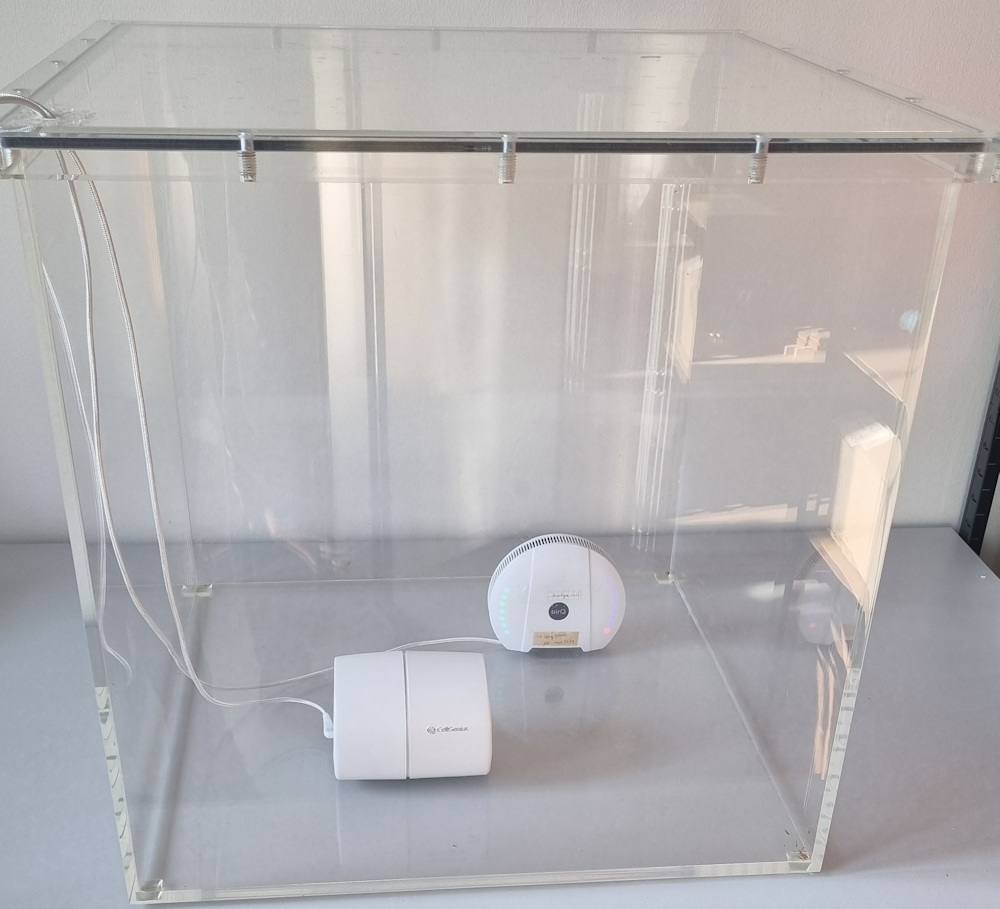
In our test, the CellActivator air purifier was tested in our gas measurement chamber, with a volume of about one cubic meter. To measure air quality, we used the air-Q pro, which can capture every conceivable air quality parameter. The test covered several scenarios to assess the CellActivator's effectiveness under different conditions:
- Unchanged room air: over several hours, air quality in the gas measurement chamber was measured without pollution, both with and without the CellActivator running. We wanted to find out what influence the device has on factors like temperature and other cyclically fluctuating variables.
- Polluted room air: an incense cone served as a pollution source, to deliberately pollute the air. This produced substantial amounts of particulate matter and VOCs (volatile organic compounds) in the chamber. Here too, measurements were taken with and without the CellActivator.
2. Test results
Our test results were clear. In the pollution scenarios, the CellActivator showed a significant improvement in air quality compared to measurements without the activated device.
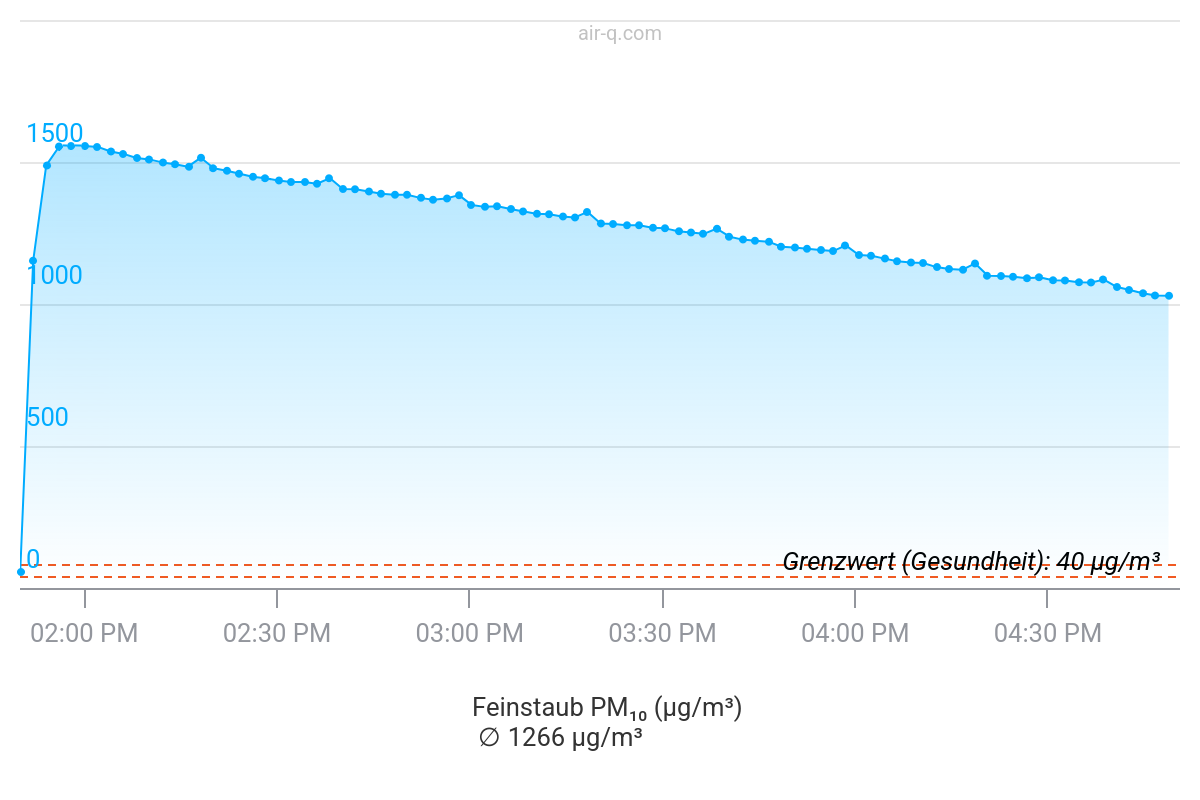
Heavy, visible (smoke) particulate matter pollution also settles on its own over time. Large particles in particular slowly sink to the floor, while small particles can remain airborne permanently. This can be seen in the reading curve below this paragraph.
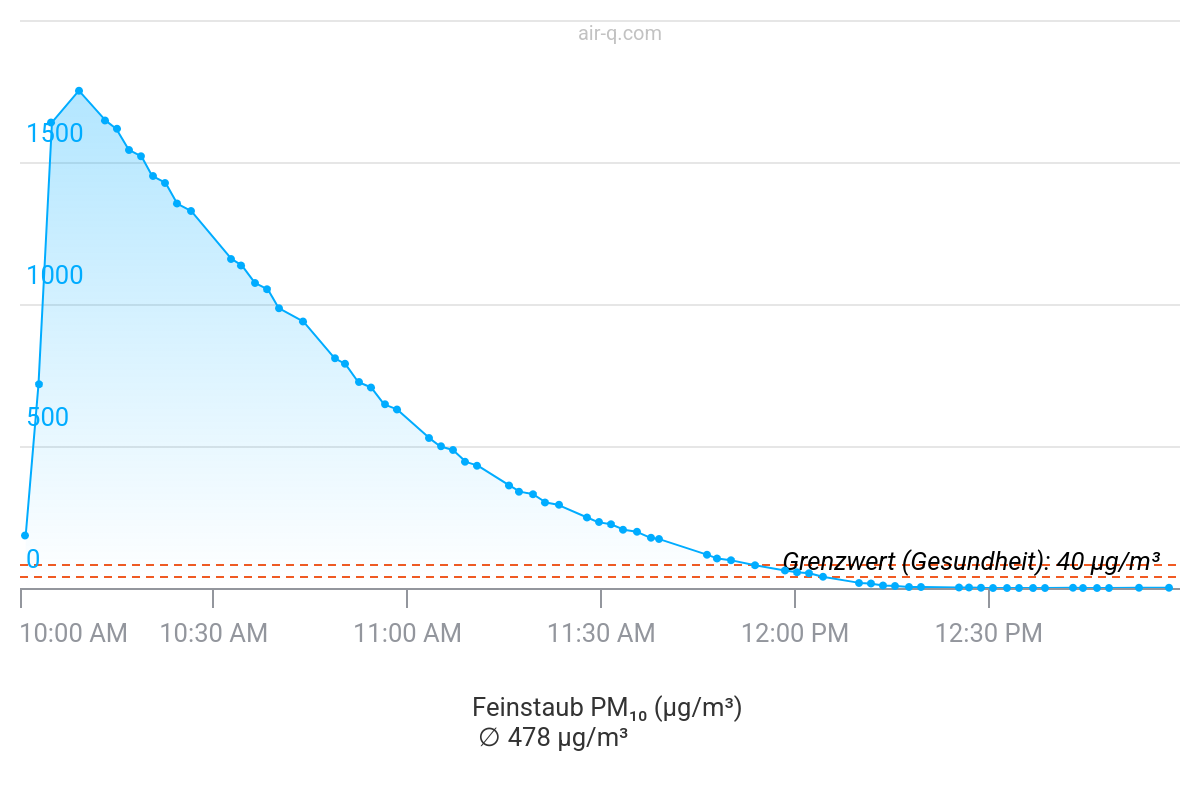
With the CellActivator activated, the very high particulate matter pollution in the measurement chamber could be reduced within a short time. The PM10 reading dropped from over 1,500 µg/m³ to 0 µg/m³ — meaning particulate matter pollution was completely neutralized (see the following chart).
But where did the particulate matter go?
This can be explained by the ionization of the air, which electrostatically charges particulate matter particles and lets them attract each other. The resulting clumps become too heavy to remain airborne and fall to the floor.
Measuring the VOC reading produced a similar picture. However, the VOC pollution we generated was so large that our VOC sensor hit its measurement limit of 60,000 ppb. Without the air purifier activated, the value stayed at 60,000 ppb for days — with the CellActivator activated, the VOC reading could be significantly reduced after just 4 hours.
Throughout the entire time, we tracked the ozone reading with the air-Q pro. This showed no spike either with or without the CellActivator air purifier activated.
3. Summary
In our test, the CellActivator proved to be a highly effective means of improving air quality (particulate matter and VOCs). However, the test environment took place in a very small volume, to better control conditions and better isolate the effects. The purifying effect, especially for particulate matter, was still so significant that it can be assumed this also transfers to larger rooms.
The difference from other common air purifiers is that the CellActivator can run continuously and thus purify continuously. It's very small, quiet, and consumes only a few watts. Other, for example filter-based, air purifiers clean heavy pollution faster, but are also louder and consume considerably more energy.