
Briiv – The Most Sustainable Air Filter? We Tested It in the air-Q Lab!
Clean indoor air through plant power: that's the promise of the Briiv air filter, made of 90 percent natural and renewable materials. We measured with our air-Q air monitor whether this self-proclaimed most sustainable air filter in the world lives up to these high expectations. Read the test results here.
What is the Briiv air filter? A brief introduction to the air purifier
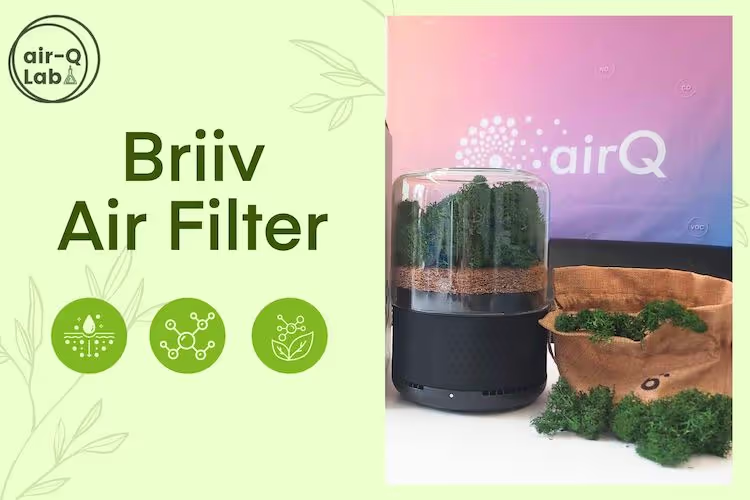
According to the manufacturer, a Briiv can purify as much room air as 3,043 medium-sized houseplants. Inside the purifier, which looks like a stylish terrarium, you can visibly see different layers of fresh moss, coconut shells, and a nano-matrix combination. Thanks to its natural design, the device almost looks like a mini greenhouse and contributes to room decor.
A fan in the base draws in air and pulls it through three filter layers before releasing it back into the room. Large particles like dust or pet hair are meant to get caught in the moss and coconut shell filter, cleaning the air of these suspended particles. Both materials can be composted at home. Besides moss and coconut shells, the Briiv has an activated carbon filter made from walnut shell waste, meant to purify the air and infuse it with a pleasant scent. Additionally, a tight mesh of high-tech nanofibers is used, meant to bind the finest harmful particles from the air.
The air purifier is said to provide 1.5 cubic meters (m³) of purified, clean air per minute. This means the Briiv can supposedly improve air quality in a 36 m² living space within just one hour.
The Briiv air filter is said to be able to remove the following pollutants:
- PM₂.₅, PM₅, PM₁₀ (particulate matter, allergens like pet hair or pollen, combustion emissions, smoke, odors)
- VOC (volatile organic compounds)
All filter layers have different lifespans, which are also affected by the selected fan speed: the lower the selected speed, the longer the filter can be used.
The Briiv filters last this long:
- Moss filter: 360 days (speed 1 & 2) to 250 days (speed 3 & 4)
- Coconut filter: 360 days (speed 1 & 2) to 250 days (speed 3 & 4)
- Nano-matrix filter: 90 days (speed 1 & 2) to 60 days (speed 3 & 4)
Note: the moss doesn't need to be moistened during use. The starter pack also includes three replacement nano filters.
The Briiv hands-on test with the air-Q air monitor
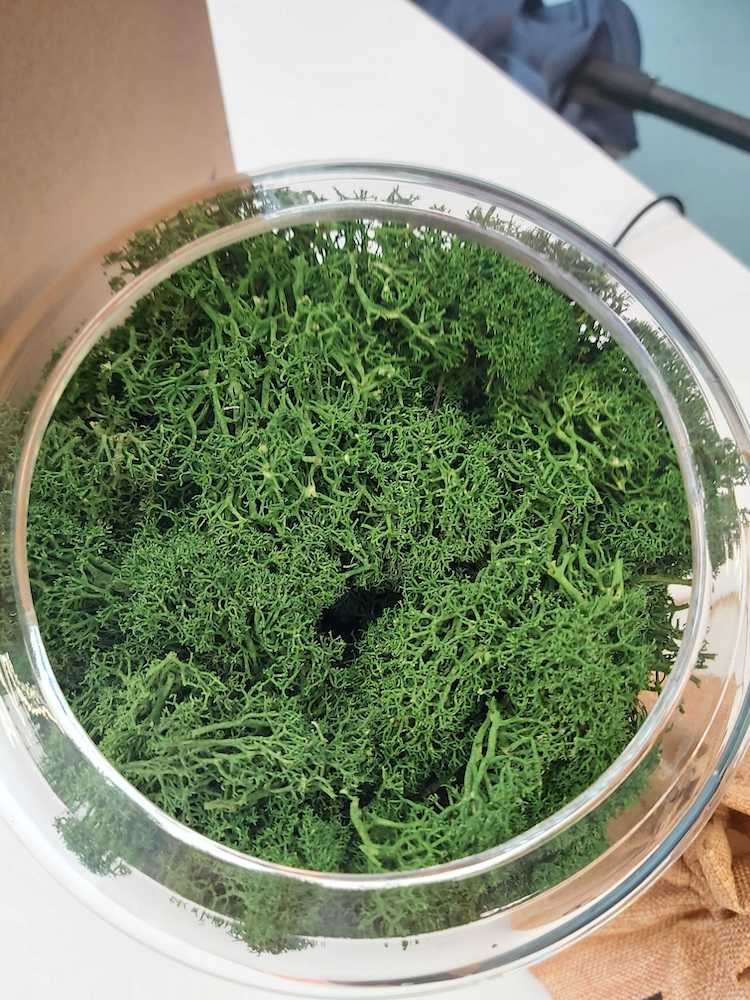
The air purifier's first impression was very convincing. In keeping with the sustainable theme, the Briiv was delivered in plastic-free packaging. The device was well secured with papier-mâché stabilizers. The fresh moss came separately packed in a small jute bag. Overall, the Briiv feels very high-quality and looks stylish, especially since the coconut filter and moss are visible in the glass container. Handling is also simple:
The app installed quickly, and the Briiv air filter was operational within a few minutes. The purifier can even be started without instructions, since everything works very intuitively. An LED bar can be operated via touch to adjust fan strength. In the app, you can set an individual cleaning schedule.
While the filter works quietly at levels 2 to 3, it's fairly loud at the highest level. When the purifier is running, you can feel the air flowing out at the bottom and smell a woodsy scent of moss.
air-Q Lab: the results
We ran several tests with the air purifier and checked its effect on different scenarios with our air-Q air monitor.
Test: Briiv under "lab conditions"
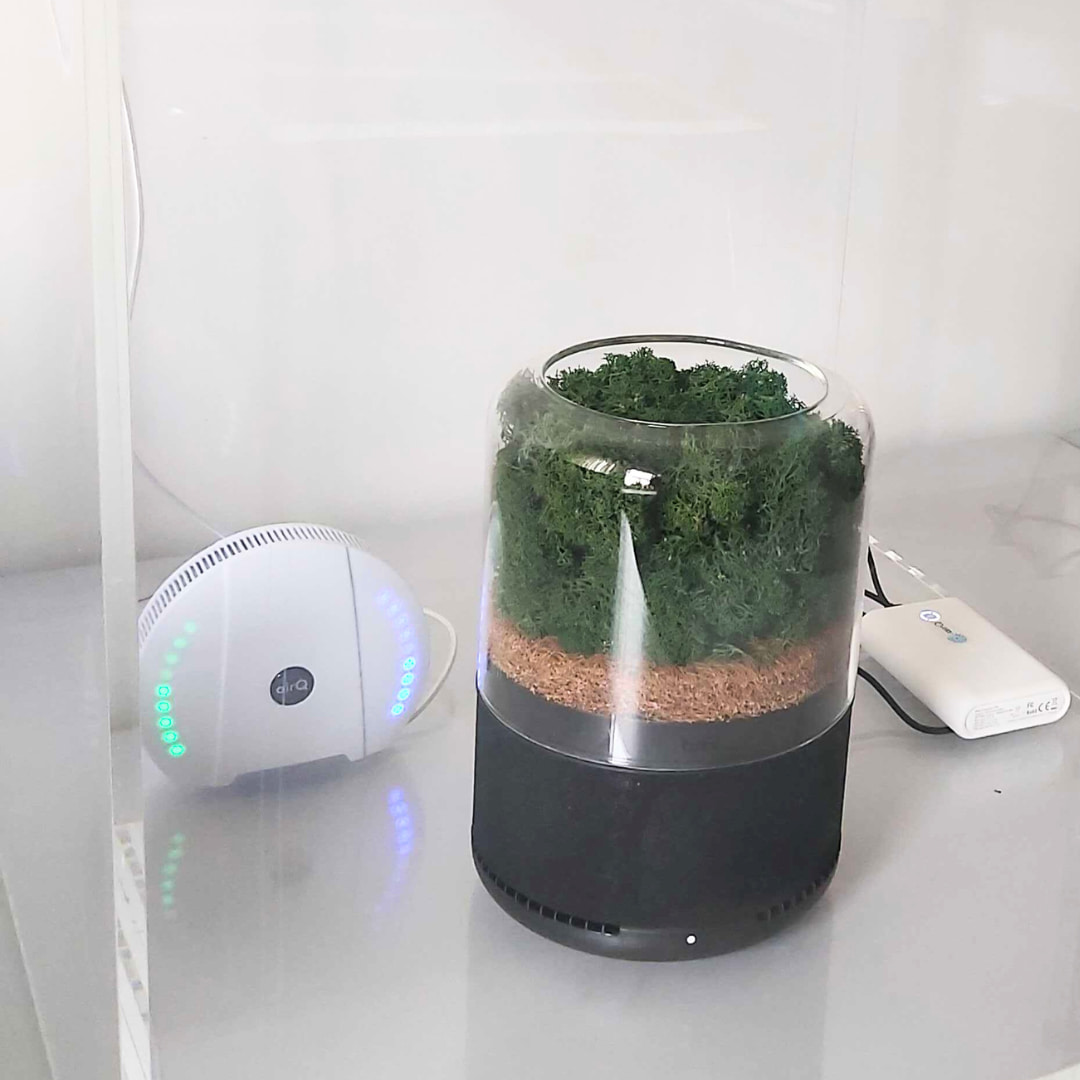
First, we looked at how the air purifier behaves in an unpolluted environment. To simulate roughly "normal" room air, we used a 1m³ box. First, we let the air-Q analyze air conditions in the box for an hour (between 10:50 and 11:50 a.m.). We then also placed the Briiv in the air lab. Between 11:55 a.m. and 12:55 p.m., the air purifier ran — set to the highest level and powered via a power bank.
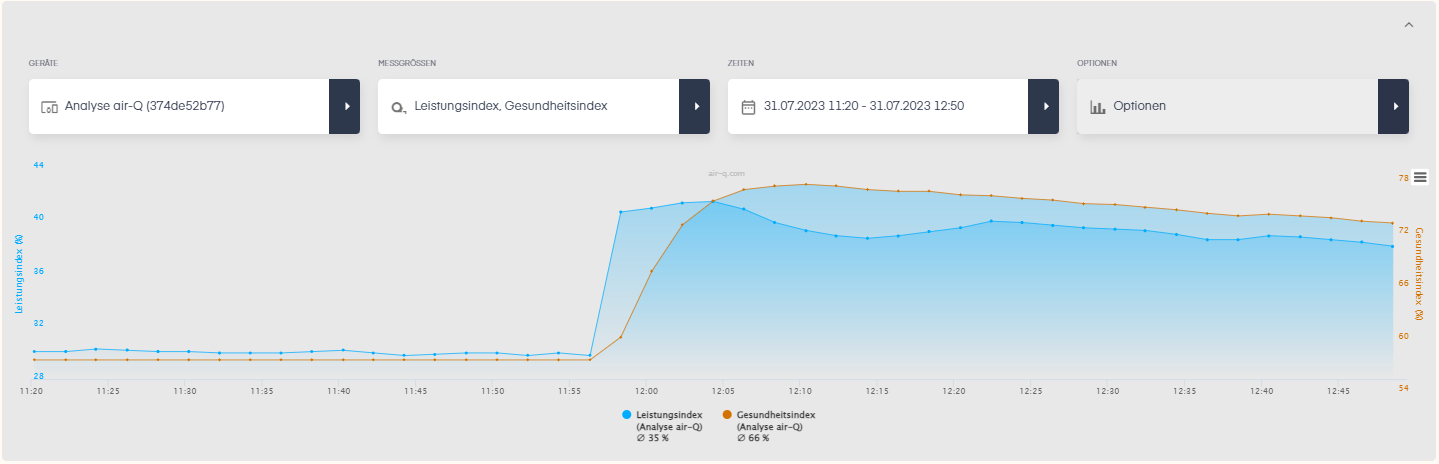
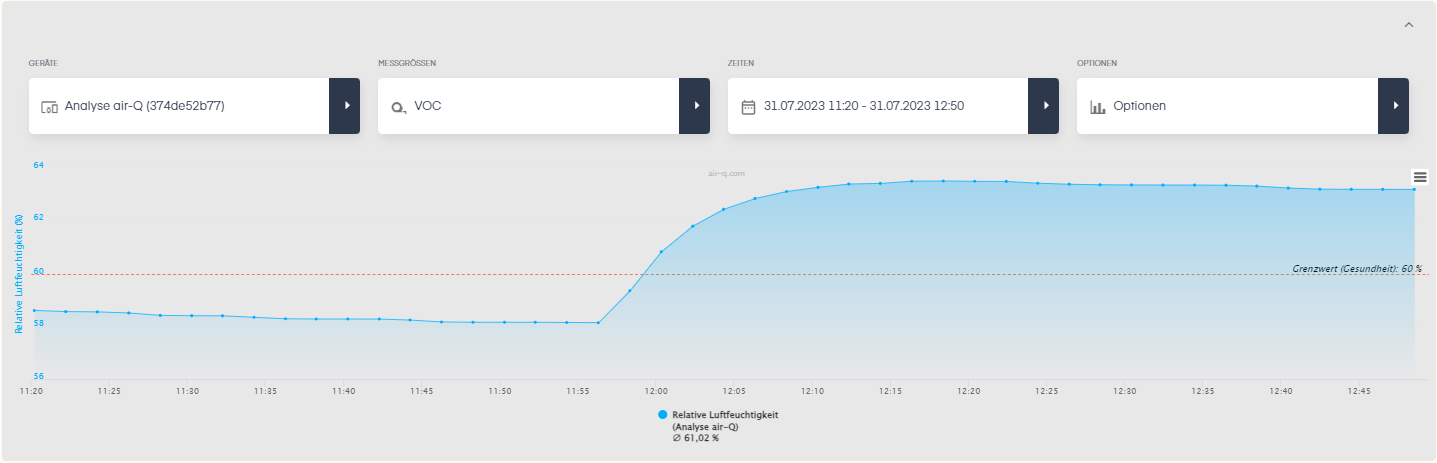
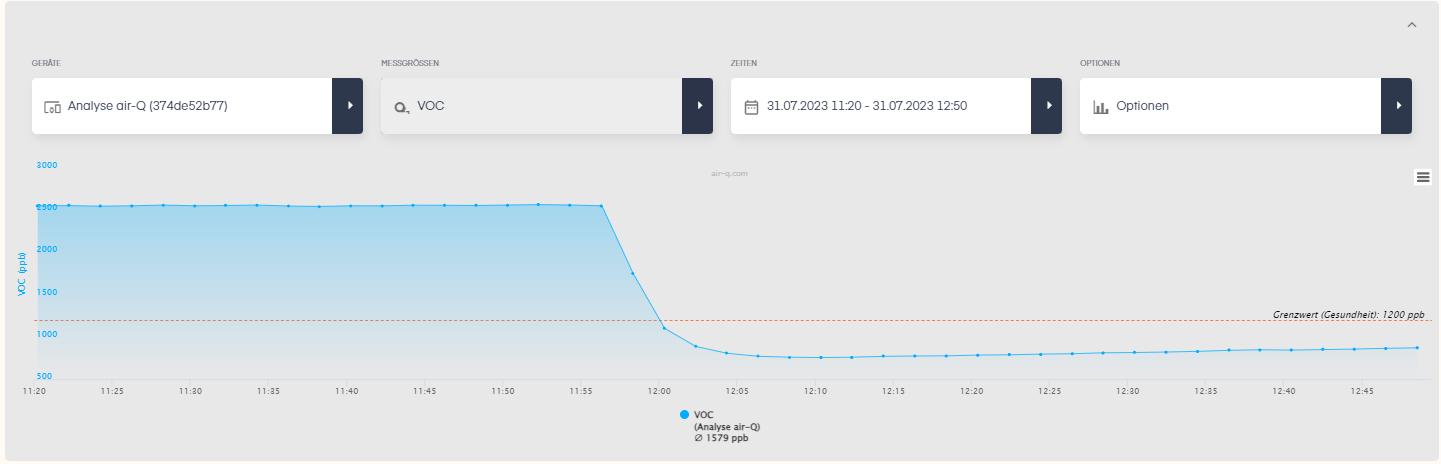
We measured the health and performance index, volatile organic compounds (VOCs), and humidity. As the evaluation charts show, all values changed clearly for the better right after the Briiv was switched on.
While the performance index was just above 30 percent at the start of the test, values jumped sharply when the Briiv was switched on, peaking at over 40 percent — an improvement of 33 percent. The health index, previously at around 56 percent, also rose to nearly 78 percent once the air purifier was activated — an improvement of nearly 40 percent.
Relative humidity was about 58 percent at the start of the experiment. As a minimum threshold for a good health index, room humidity should be at 60 percent. This value rose steadily to just under 64 percent thanks to the Briiv. Room air quality could thus be raised to a recommended level.
Initially, many VOC particles floated in the box, possibly from the test operator's perfume. The starting value was 2,500 ppb (parts per billion), exceeding the recommended threshold of 1,200 ppb. After switching on the Briiv, VOC levels in the air dropped to about 700 ppb in less than 10 minutes, thus undercutting the threshold.
1st hands-on test: Briiv under "normal air conditions"
Our second test focused on a longer test period. Between August 1st and 5th, the Briiv was in use every day from 7 a.m. to noon — always set to the highest level. We chose an ordinary room of about 38 m³ as the test location. During the five days, the room was neither ventilated nor artificially polluted. There were also no people present in the room who could bring pollutants into the space.
The average health and performance index during the test period was ~59 percent. The chart shows that values rise while the Briiv runs.
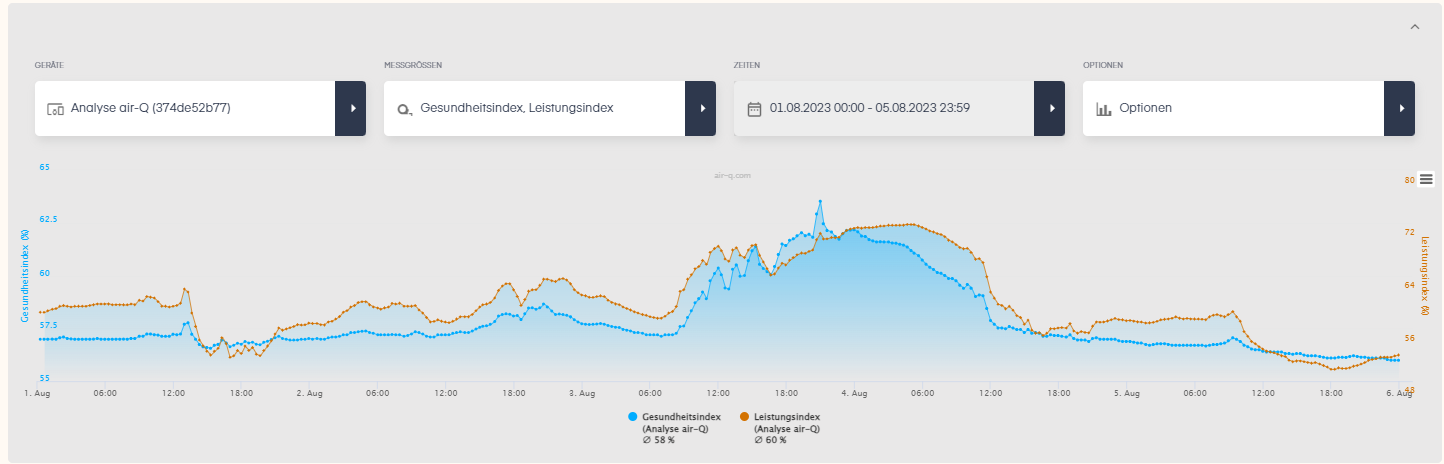
It's clearly visible that room air maintained relatively good quality despite no ventilation. Relevant thresholds were therefore not exceeded, and the air stayed at an unproblematic, good level. This means using the Briiv daily has a positive effect. Via adjustable time intervals, you can even configure the device for daily use.
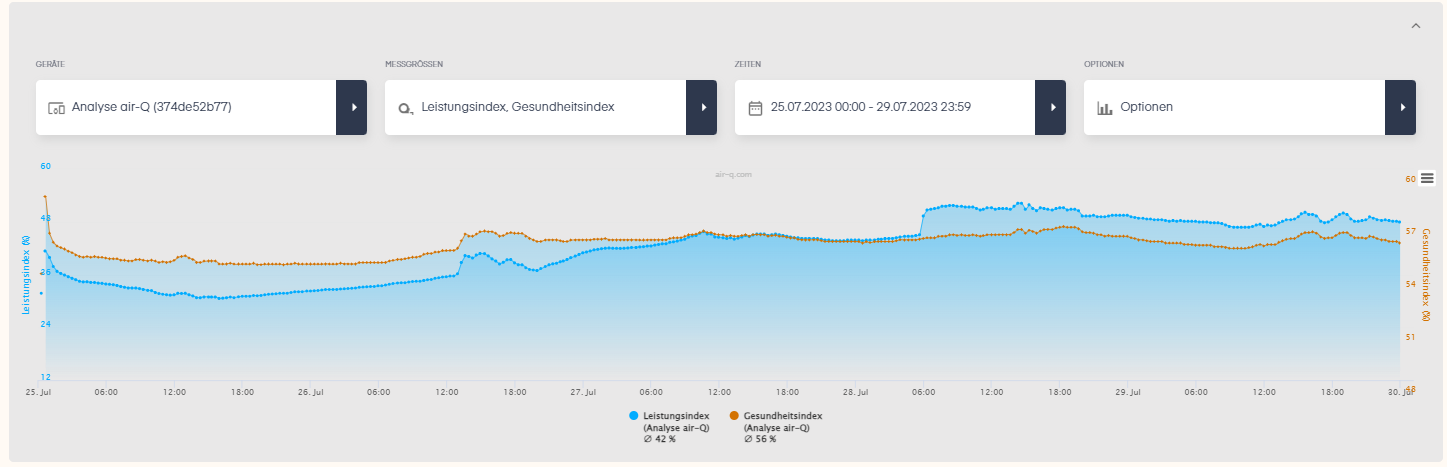
A direct comparison without the air purifier shows the Briiv's effect. The chart depicts air development over the same time span a week earlier, except during this test phase only the air-Q air monitor was running in the test room. Here too, the test ran over five days, the room wasn't ventilated, wasn't artificially polluted, and no people were present. Unlike the test with the Briiv, the average indices were more than 10 percent lower (~48 percent) than the result with the air purifier — despite identical room conditions.
2nd hands-on test: Briiv with "artificial air pollution"
In our second hands-on test, we wanted to examine how well the device can actually reduce existing air pollution and provide healthier room air. To objectively assess the air purifier's effect on air pollution, we first looked at how air quality normalizes, or behaves, after pollution without an air purifier.
To artificially pollute the room, we lit an incense cone for 3 minutes and sprayed 15 spritzes of an alcoholic solution (disinfectant) into the room. Using the air-Q, we checked over 24 hours how long it takes for pollutants to disappear from the air.
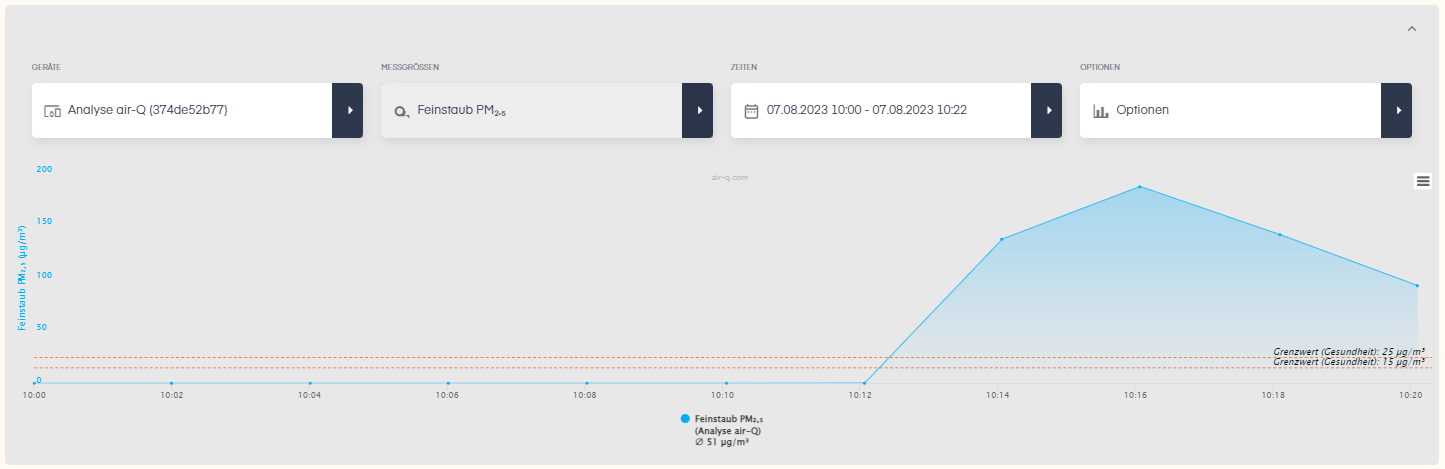
The chart shows that the amount of particulate matter (2.5 pm) reached its peak of 186 µg/m³ at 10:16 a.m. VOC reached its peak of >60,000 ppb at 10:24 a.m.
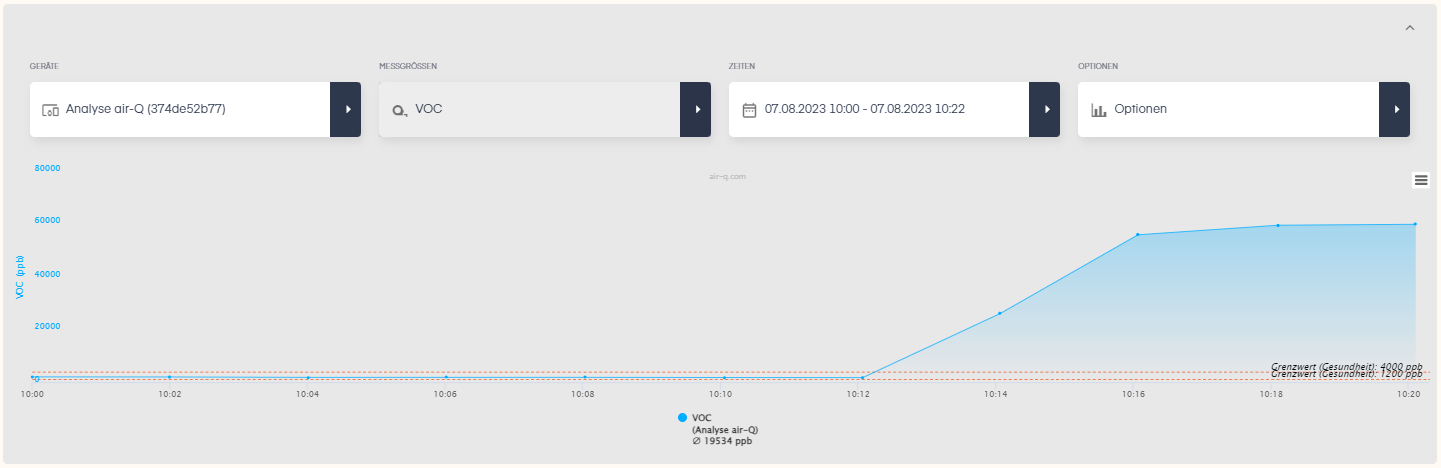
The air-Q recorded a safe particulate matter reading at 2:17 p.m. Within 24 hours, the particulate matter reading could thus be lowered to a safe level, meaning the artificial pollution was eliminated by the Briiv. The VOC reading, on the other hand, didn't drop below 6,000 ppb by the next day. That said, the Briiv managed to reduce the airborne particles from 60,000 to 6,000 ppb.
Since VOC values were still very high, we briefly ventilated ahead of the second experiment.
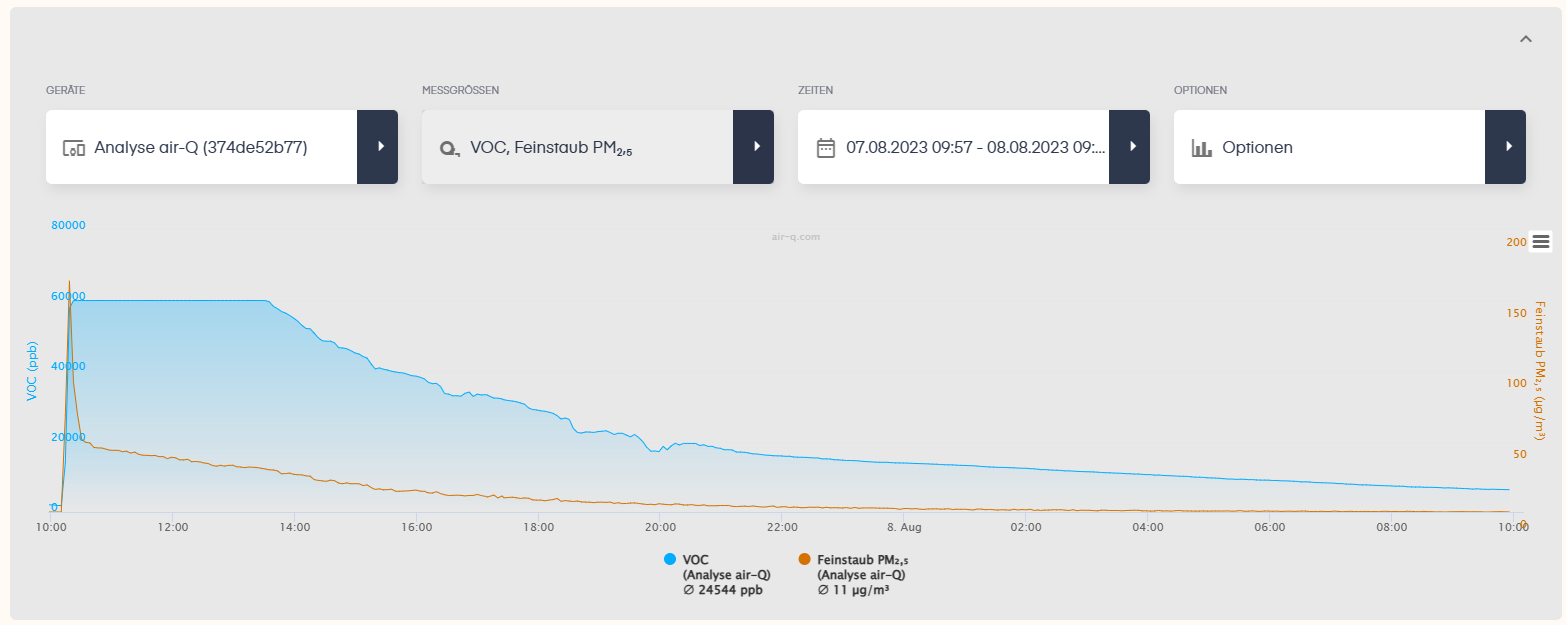
The following day, we repeated the experiment and again polluted the test room by letting an incense cone burn for 3 minutes and spraying 15 spritzes of alcohol into the room. We then set the Briiv to its highest level and analyzed how long air purification took.
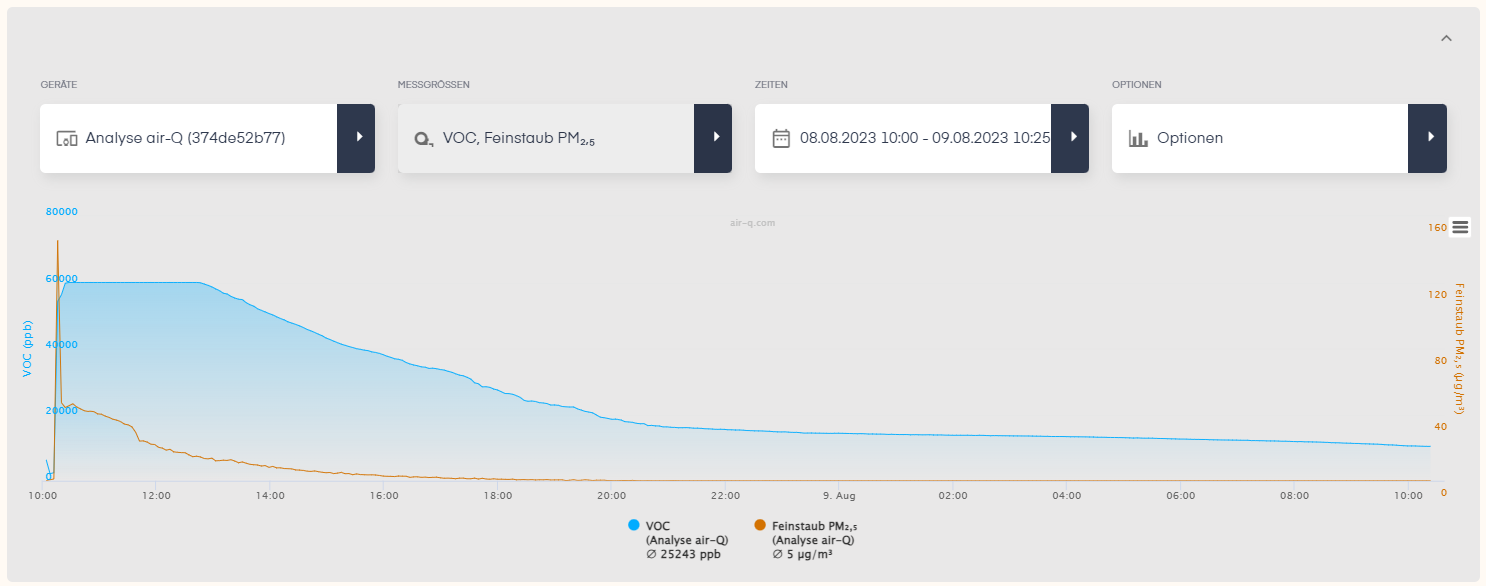
The particulate matter starting value (2.5 pm) peaked at 163 µg/m³ at 10:15 a.m. The VOC peak again reached over 60,000 ppb at 10:27 a.m. Already by 11:40 a.m., roughly 3 hours faster than the previous test day, the air-Q recorded a safe particulate matter reading. We could see how the Briiv drew in the pollutants. Again, the VOC reading remained well above the recommended threshold after 24 hours, at over 10,000 ppb. Despite the air purifier running, volatile organic compounds couldn't be fully eliminated. These remaining traces would need to be removed again through ventilation.
Our test shows that an air purifier isn't a general substitute for ventilation. Regarding the VOC pollution, it must be noted that VOC concentration in the experiment was extremely high, and the rather viscous disinfectant settled on surfaces rather than remaining suspended in room air. So only part of it could be cleaned from the air, since not all particles remained airborne — some sank to the floor due to their weight.
Conclusion: the air-Q air monitor confirms the Briiv's air-purifying effect
The Briiv air purifier works well. Particularly the particulate matter reading dropped extremely fast. Worth noting positively: thanks to the moss and natural materials, the filtered air smells very pleasant, like "forest air." The room feels refreshed. We can therefore recommend the Briiv. Especially at the workplace, the air purifier seems to help you keep a clear head. We also see further applications in the kitchen, where odors arise and particulate matter readings while cooking, frying, or toasting are often elevated. On top of that, the Briiv looks very stylish and, unlike other electrical devices, comes across as a decorative object.