
air-Q Lab: How Worthwhile Is a Tea Light Oven? We Measured It!
Heating with a tea light oven – does it really work? We took a close look at these DIY heaters made from flower pots and measured them with our air-Q air monitor. In our hands-on test, we check whether tea light ovens really do warm a 20 m² room, and which other air readings change while the mini oven is running.
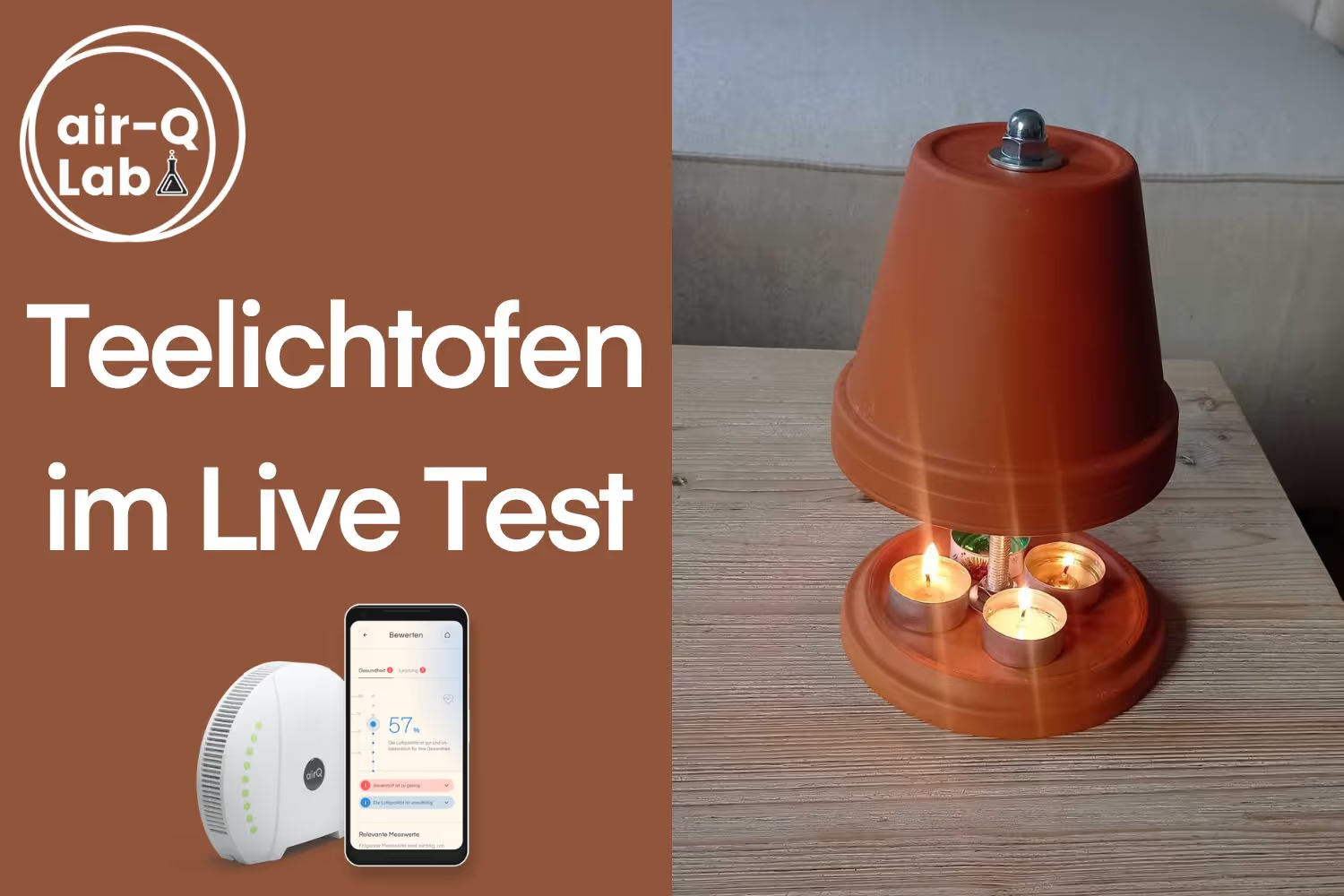
Hands-on test with a tea light oven: air analysis results with the air-Q
Before our hands-on test with the tea light oven could start, we ventilated our test room for ten minutes, from 8:40 to 8:50 a.m. The slightly elevated carbon dioxide reading of around 700 ppm dropped to 450 ppm (ppm meaning parts per million) by then. Then the test began, and we lit the tealights in our mini heater at around 8:52 a.m.
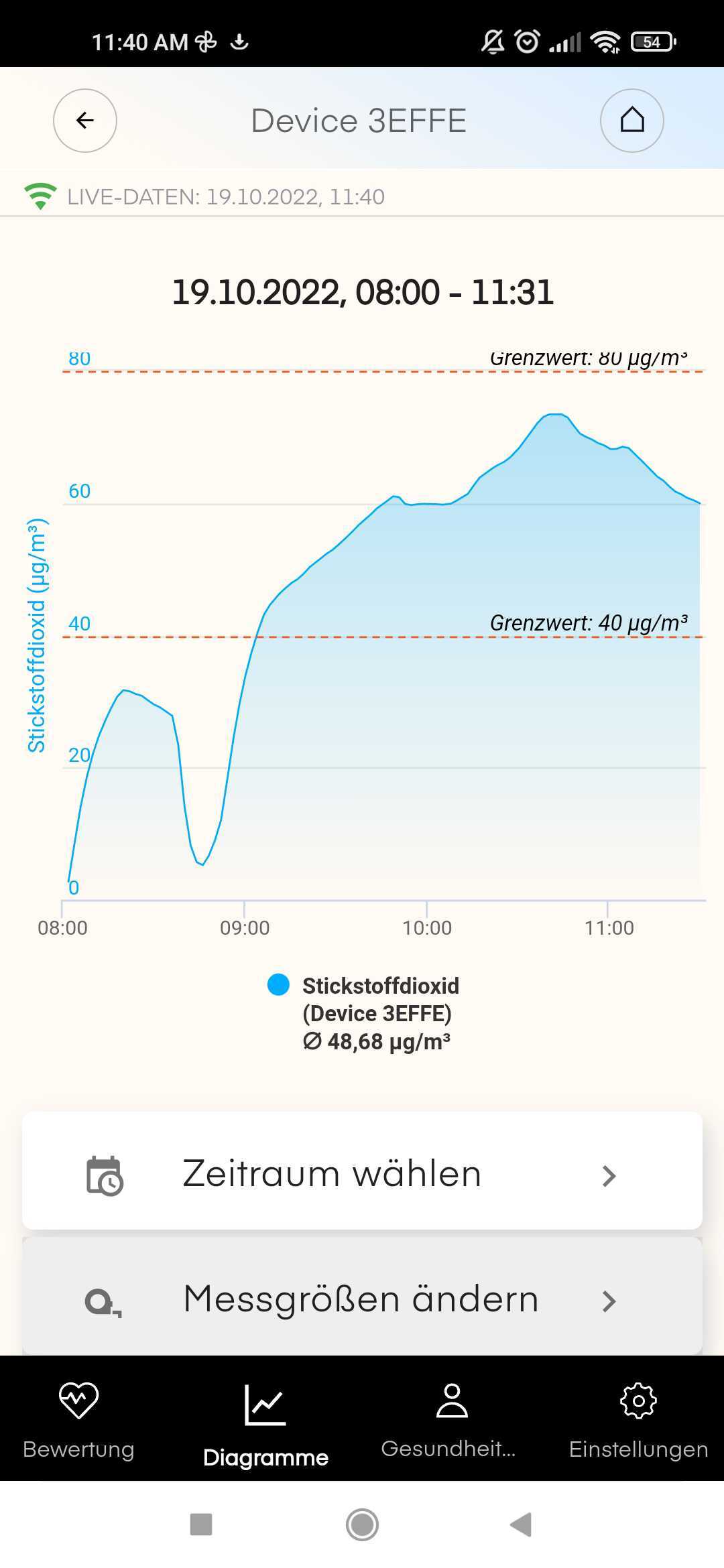
The test phase ran for 2.5 hours, from 8:56 to 11:31 a.m.: from lighting the tealights until they went out on their own. Throughout that time, our air-Q air monitor recorded room air quality development and tracked 14 air components with dedicated sensors. Several of the air sensors showed noticeable changes during this time — we'll go into a few of the readings here.
Already after just fifteen minutes of running the tea light oven, the nitrogen dioxide (NO₂) reading rose sharply. While starting values after ventilating were not even 10 µg/m³, they reached a peak of over 75 µg/m³ shortly before the experiment ended. The average NO₂ value was 48.68 µg/m³. This means the EU outdoor air thresholds for long-term exposure are exceeded, and short-term indoor peak values are nearly reached.
Surprisingly, particulate matter readings (PM₁, PM₂.₅, and PM₁₀), contrary to our expectations, stayed at a consistently low level of about 6 µg/m³ on average, a level that already existed after ventilating and was maintained by the tea light oven thanks to minimal particulate matter emissions. The likely reason is that burning tealights is a pure combustion process. Soot only forms at the wick.
Besides the other readings, we also observed how the volatile organic compounds (VOC) reading developed. Shortly after the test began, around 9:10 a.m., the value exceeded the threshold of 2,000 ppm. After that, VOC pollution in the room steadily increased, reaching four times the threshold by the end of the experiment. The average pollution level was 5,661 — well above the line the German Federal Environment Agency classifies as hygienically unacceptable.
.jpeg)
How much heat does a tea light oven produce?
We were pleasantly surprised! During the runtime of the tea light oven, air temperature (T) could indeed be noticeably raised, from 19.7°C (right after ventilating) to 21.5°C. The temperature rise is also noticeable fairly quickly thanks to heat radiating from the clay pots. The flickering tealights also create a cozy fireplace atmosphere, so the perceived room temperature feels very pleasant.
Of course, the rise in air temperature can't be fully attributed to the tea light oven, since furniture also releases residual heat from before ventilating, but the effect was noticeable and measurable.
air-Q energy-saving tip: lower your heating by 1 to 2 degrees Celsius and let a tea light oven generate supplementary warmth instead.
.jpeg)
Even two hours after our experiment, the tea light oven's pot is still warm, and the threaded rod is even hot. So the clay pot effectively stores absorbed heat and releases it over a long period. Even once the heat is no longer enough to warm your room, it's certainly enough to warm your hands or feet.
How dangerous is it to heat with a tea light oven?
To supervise the burning tealights, someone was always present in the room during the test. This, of course, also contributed to the rise in CO₂ (carbon dioxide) readings, which are attributable not just to the burning candles but also to the test operator's breathing. The air-Q recorded a CO₂ starting value of just under 450 ppm. After the test phase began, the value rose sharply within about 45 minutes, reaching its first peak of over 1,000 ppm at a quarter to ten. Another hour later, the second peak value of over 1,200 ppm was exceeded. The average carbon dioxide level was 912 ppm.
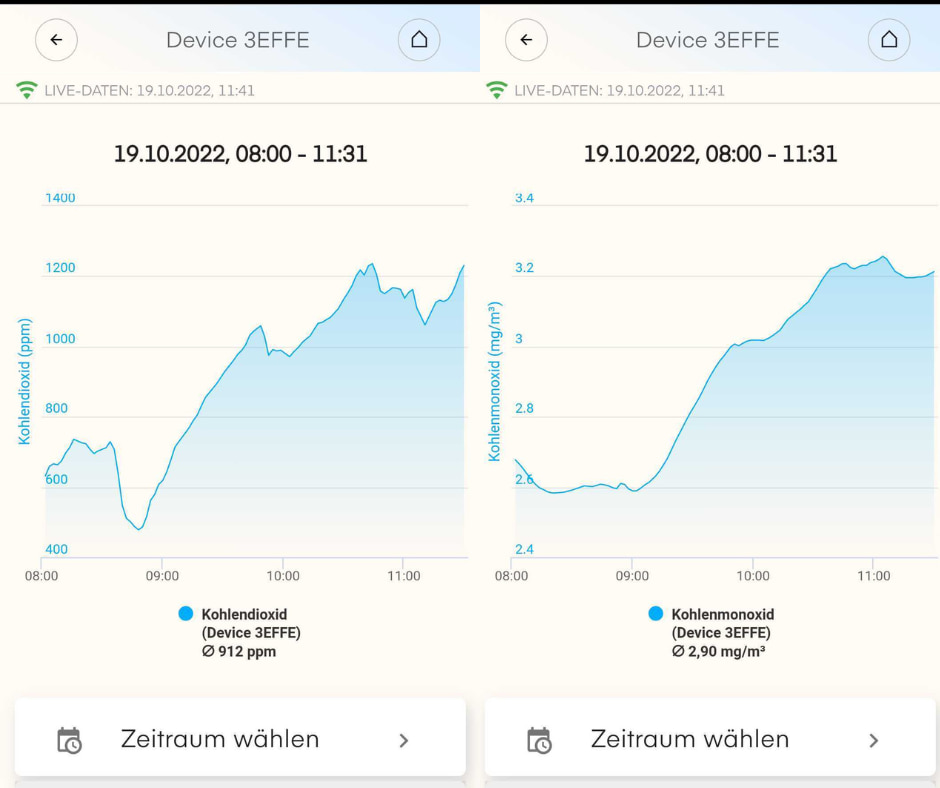
Our measurement data also shows a clear exceedance of carbon monoxide thresholds while running the tea light oven. That can quickly become dangerous. Carbon monoxide (CO) is a colorless, odorless, and tasteless gas, but a highly toxic one. Carbon monoxide disrupts oxygen saturation in the blood, since it can bind to hemoglobin in the blood roughly 210 times more strongly. Even at a saturation of 1.28% carbon monoxide in room air, you risk suffocation within one to two minutes.
So if you want to warm your room with an oven like this, it's essential to check room air development for elevated CO readings. If your air monitor shows heavy carbon monoxide pollution, you should definitely ventilate.
Further precautions to observe when heating with a tea light oven:
- Place your tea light oven on a fireproof surface.
- Don't leave the tea light oven unattended. Since the tealights sit close together, heat can multiply here and trigger a wax fire.
- Should a wax fire occur: smother the flame with a fire blanket. Attempting to extinguish it with water could cause a fireball.
With the air monitor air-Q, we were able to track 14 relevant air components affected by running the tea light oven. Thanks to the air analyzer, the tea light oven can be operated safely in the future, since all air components and threshold exceedances can be checked. If you watch for pollutants and ventilate regularly, a tea light oven can support you with heating and help you save energy in winter.
(Cover image: air-Q)