
4 Tips Against Humidity in Your Home: What Tenants Should Know
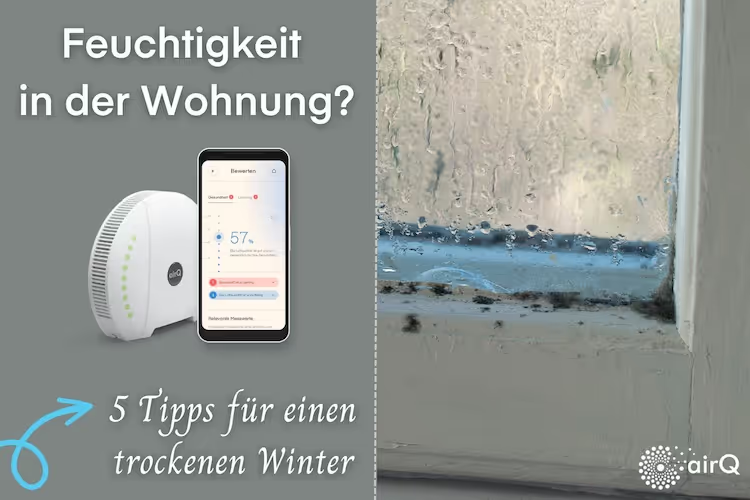
Humidity in the home can lead to mold and health problems. As a tenant, you're obligated to prevent mold growth in your home – but sometimes the moisture lies in the building fabric itself. We explain how to reduce humidity, prevent mold, and prove that you've fulfilled your duty to prevent mold.
In this article, you'll find the following:
- Causes of excess humidity in the home & tips for prevention
- Humidity in the home: tenants' obligations for mold prevention
- Mold despite heating & ventilating? Here's how to protect yourself against your landlord!
Causes of excess humidity in the home & tips for prevention
Humidity levels in living spaces affect both our general well-being and the preservation of the building fabric. An appropriate level of humidity is essential for a comfortable and healthy indoor climate. However, excessive humidity indoors can not only cause discomfort but also lead to a range of problems. Below, we show how this unwanted moisture buildup occurs.
#1 Ventilating & airing
The main cause of elevated humidity in rooms is that moisture accumulates in the air. This is caused by activities that produce water vapor, such as cooking, bathing, showering, or drying laundry. Moisture also enters the room through breathing, as humidity increases with exhaled breath. That's why damp rooms such as the kitchen and bathroom are particularly affected, but so are the bedroom or living room (if you hang laundry there). Humidity rises wherever many people spend time. You can learn how the number of people in a room affects humidity in our practical test on humidity.
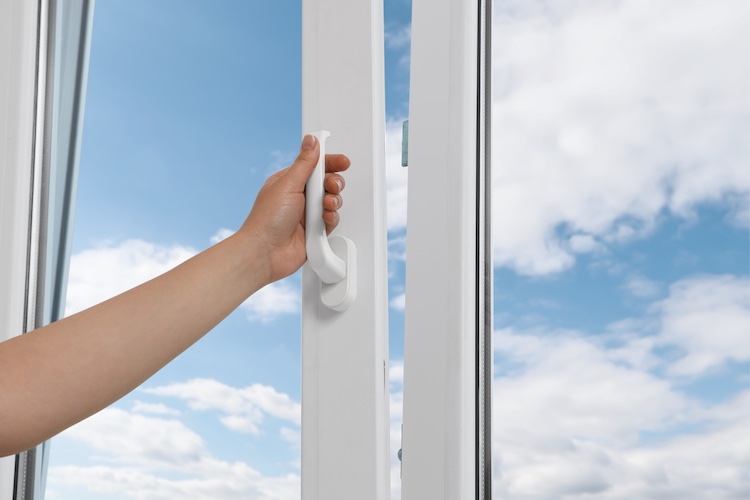
The solution: ventilate regularly, especially after showering or cooking. Burst ventilation is ideal for effective air exchange. Open the windows wide instead of just tilting them, so that humid air is carried outside and dry air comes in. In winter, we recommend burst-ventilating for 5 to 10 minutes with the heating turned off. It's important to include all rooms and enable cross-ventilation. Open windows on opposite sides of the home to ensure a fast air exchange.
Reading tip: In our separate article "Ventilating Correctly: The Best Tips", you can learn how to ventilate properly.
#2 Controlling room temperature & humidity
Unheated rooms can encourage condensation, since cold surfaces cause moisture in the air to condense. That's why you should maintain a constant temperature even in unused rooms like the bedroom, and heat and ventilate them occasionally. In other rooms too, it's important to maintain an adequate temperature to avoid cold bridges.
Damp walls or surfaces are often caused by restricted air circulation. Lack of clearance between large pieces of furniture such as wardrobes or sofas prevents air exchange between the furniture and the wall: stagnant moisture builds up and can dry out only slowly, if at all.
To know how high the temperature and humidity in a room actually are, an air measurement is helpful. With an air quality monitor like the air-Q, you can detect the relevant readings and get a warning if they exceed threshold values. This lets you ventilate on an as-needed basis and save on heating energy, since you only exchange the room air when it's actually necessary.
Stay well informed, for your healthy life
.jpeg)
#3 Using dehumidifiers
Humidity levels tend to rise especially in fall and winter due to weather conditions and increased rainfall. Use dehumidifiers as needed to keep the humidity in your home within an acceptable range. This is particularly useful in basements or bathrooms, where stagnant moisture occurs more often. Ideally, connect the dehumidifier to the air-Q via a smart home system. That way you can activate the dehumidifier only when the measurement actually calls for it, saving energy. You can find out which smart home standards the air-Q integrates with here.
If you'd rather not use a dehumidifier, you can also set out a small bowl of granulate that absorbs moisture from the surrounding air. Just make sure to replace or dry it out once it's saturated. Besides calcium chloride desiccant granules, salt as well as rice or moisture-absorber pouches also work well.
#4 Choosing the right houseplants
Some houseplants need a lot of water, so you water them more often. While the plants absorb this water, they release it again through evaporation from their leaves. This moisture then re-enters the room. That's why, for rooms that already have high humidity, we recommend plants that need less watering. Plants like snake plant, aloe vera, or succulents are ideal here.
Humidity in the home: tenants' obligations for mold prevention
Preventing mold in rental apartments matters not just for preserving the building fabric, but also for the health and well-being of residents. After all, mold can cause health problems such as respiratory illnesses and allergies, significantly reducing quality of living. That's why tenants in many countries are legally required to take certain measures to prevent mold. As a tenant, you should make sure you comply with the rules and requirements for mold prevention and remediation set out in your lease. These typically include:
No excessive moisture sources
Avoid unnecessary moisture-generating activities, such as drying laundry indoors without adequate ventilation.
Ventilation
Humidity should be kept low through regular ventilation.
Reporting damage
As a tenant, you're required to inform your landlord about potential water damage or mold problems so they can be resolved.
Regular cleaning
Tenants should keep the apartment clean, especially in rooms where moisture tends to accumulate, such as bathrooms or kitchens.
Mold despite heating & ventilating? Here's how to protect yourself against your landlord!
Are you complying with your obligations to prevent mold and heating and ventilating correctly? Then the cause of the elevated humidity may lie in the building fabric itself, for example if new buildings weren't sufficiently dried out before move-in, or if the house simply has poor insulation. In these cases, you can use the air-Q air quality monitor to prove that you've fulfilled your obligations. The device continuously records the air analysis, documents it in the Web App, and provides you with the data in charts. This allows you to demonstrate that you've maintained the temperature and ventilation intervals for individual rooms specified in your lease.