
What Is the Study About?

Children growing up in the United Kingdom today spend most of their time indoors, at home or in schools. The air there is often polluted with various contaminants. Although indoor air quality has a major impact on our health, it has so far been little researched.
The WellHome study examines indoor and outdoor air quality in White City, West London, with a focus on asthmatic children. For this, over 100 households, particularly from ethnic minorities, were integrated into a sensor network.
• Building a research network with the local community.
• Measuring pollutants in households that can trigger asthma.
• Investigating social inequalities and the effectiveness of air quality measures.
• Analyzing residents’ knowledge and behavior regarding air quality.
• Developing a model to identify factors influencing pollutant exposure.
• Combining and statistically analyzing all data to identify correlations between air quality, behavior and health symptoms.
The Minder sub-study also investigates whether indoor air pollution, particularly particulate matter, intensifies cognitive impairment in people with dementia. According to Imperial College, there’s already evidence that air pollution can impair cognitive abilities. However, more research is still needed to quantify the direct effects of specific air pollutants and determine which of these substances is most strongly associated with the onset or progression of dementia.
How Was the Study Conducted?
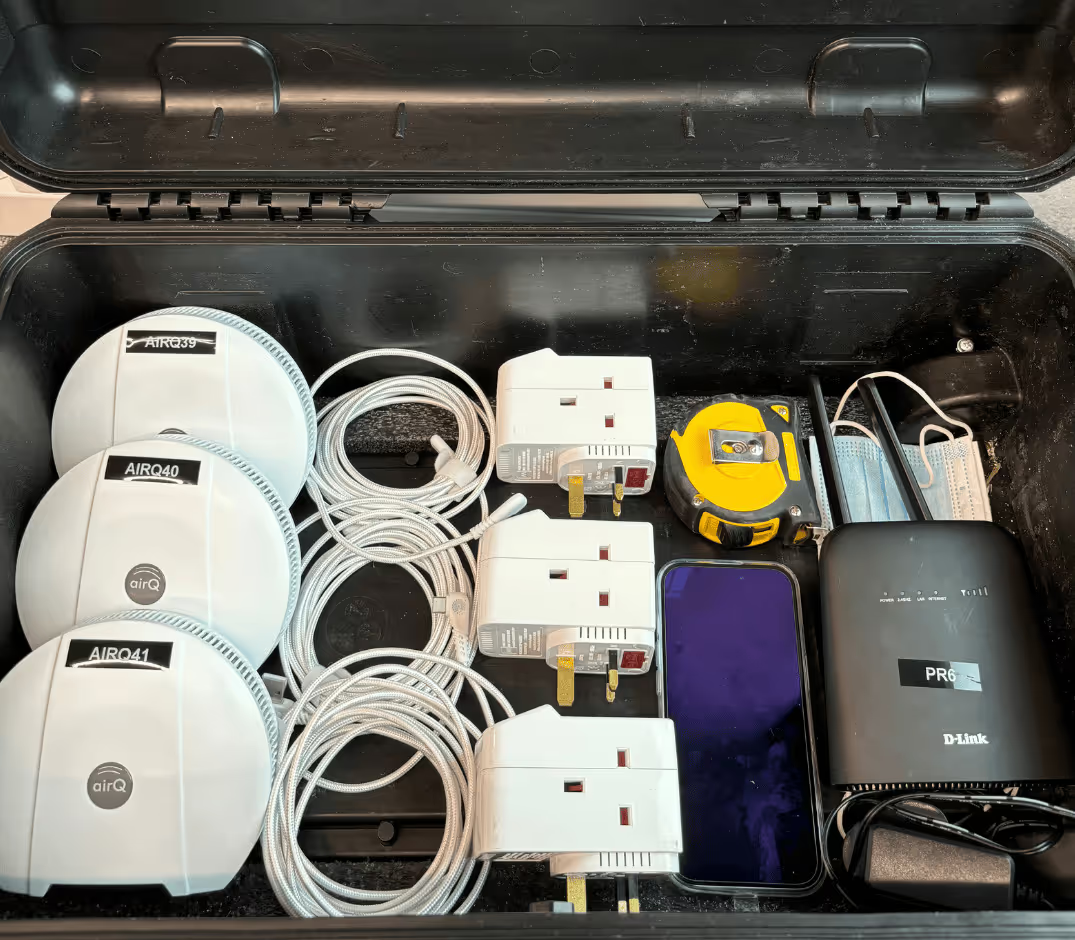
For the WellHome study, air-Q sensors were installed in 10 of 100 selected households in West London to collect data for a year. These households were selected based on their good condition, the residents’ stable living situation, and their particular interest in indoor air quality.
Each apartment received three air-Q devices — one each in the living room, kitchen and bedroom — to continuously monitor indoor air quality. Modified Dyson air purifiers were used in the remaining households.
As part of the Minder sub-study, an additional 24 households with dementia patients were equipped with air-Q sensors. Here too, three sensors were installed in each apartment to investigate the relationship between air quality and behavioral changes in residents.
For a comprehensive analysis, the indoor air data was combined with outdoor air values from the Breathe London network. This network captures air quality data from across London, including residential areas, schools, streets, parks and business districts, to obtain a detailed picture of air pollution in the city.
The two-year data collection phase was completed in summer, and data analysis is currently underway. All participants received reports on air quality in their living rooms, kitchens and bedrooms. The results of the analysis will be published within the next 12 months. In addition, the research team is developing a model based on the collected data that shows the influence of White City residents’ behavior on air pollution. This model will be expanded to also cover other ethnic communities as well as asthmatic children across the UK.
What Are the Conclusions / Research Findings?
The findings from the WellHome study could play a decisive role in developing new guidelines for improving indoor air quality. The research results provide valuable data that can help educate the public about the importance of indoor air quality and promote healthier behaviors.
For the researchers, the air-Q provided detailed real-time data on air pollution sources, e.g. cooking fumes and VOCs, which helps better understand health effects and advance targeted policy measures to improve air quality.
In practice, the air-Q’s LED display has already helped promote healthier behaviors and created greater awareness of air quality among residents.
In public spaces such as schools, offices and hospitals, displaying the data creates transparency and accountability, strengthens the sense of safety, and promotes health-conscious behavior, such as refraining from smoking indoors or using environmentally friendly cleaning products.
According to Imperial College researchers, better indoor air quality demonstrably contributes to higher productivity in schools and the workplace, offering not only health but also economic benefits. Introducing corresponding regulations would also support environmental goals and ensure healthier, more sustainable indoor spaces in the long term.
As soon as the study is published, we’ll link to it here.
How the air-Q Is Revolutionizing Indoor Air Quality Measurement in the WellHome Study
WellHome Study - Indoor air pollution and its impact on asthma.

Key air-Q Features for Imperial College London’s Research
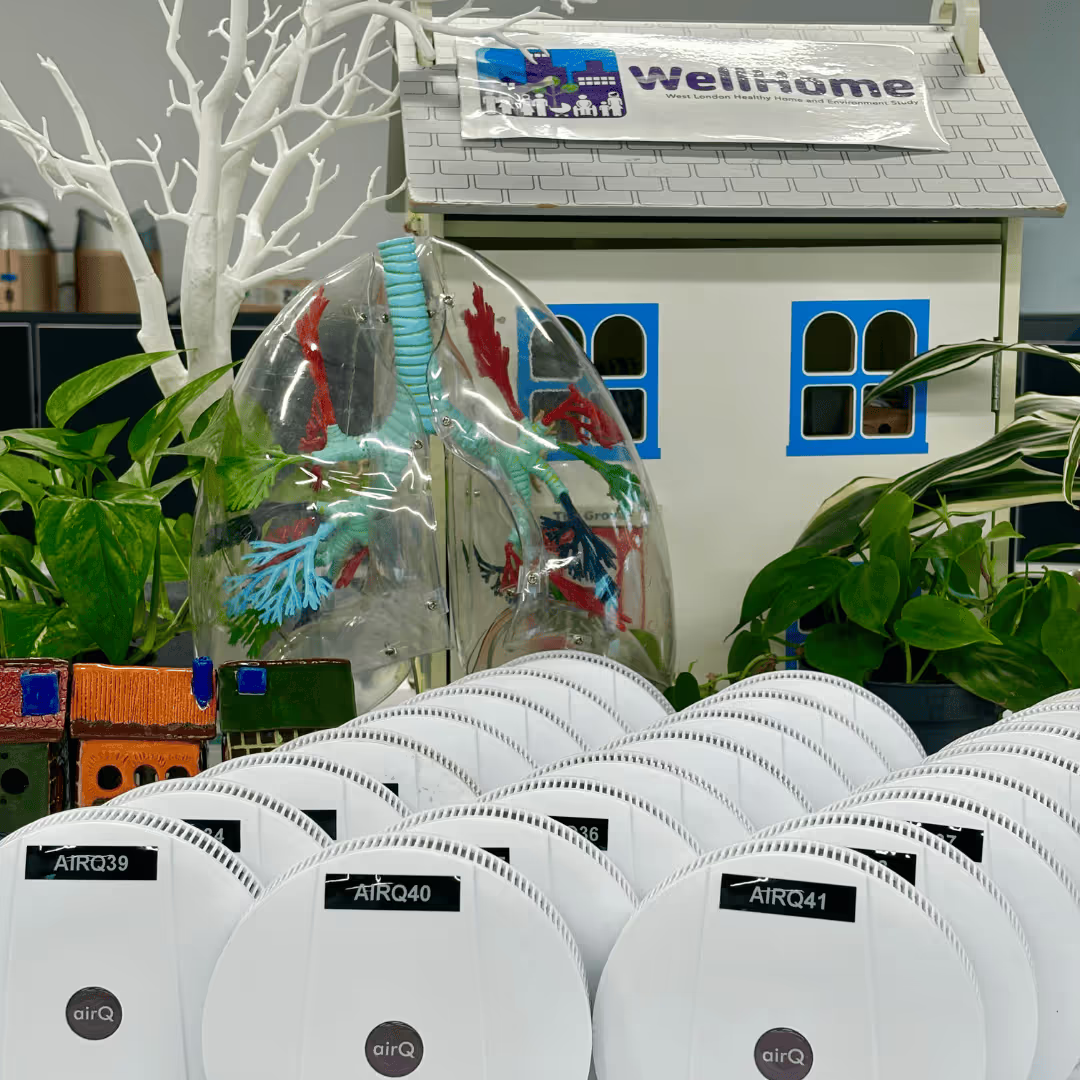
Comprehensive data collection: The air-Q device lets Imperial College’s team simultaneously measure multiple air pollutants such as carbon monoxide (CO), particulate matter (PM), carbon dioxide (CO₂), formaldehyde (CH₂O), ozone (O3) and nitrogen dioxide (NO₂). Currently, 39 air-Q devices are in use for the research. They were specially customized for Imperial College. This is especially important for epidemiological studies dealing with the health effects of various air pollutants.
Flexibility and ease of use: The air-Q is compact, easy to install and easy to transport, making it ideal for use in various households. This flexibility has allowed the researchers to collect comprehensive and detailed data from participating households.
Real-time monitoring: The air-Q’s ability to transmit air quality data in real time gives researchers the ability to quickly identify specific pollution sources and give study participants timely feedback. This has not only raised awareness of indoor air pollution, but also led to practical changes in participants’ everyday behavior, such as switching to less emission-intensive cooking methods.
Data access options: Specifically for researchers, the air-Q device offers every way to access the data. Data can be captured at minute or even second intervals and imported into analysis software. This allows for very fine-grained evaluations and analyses.
Interview with Imperial College London
Discover exciting insights from our written interview with researcher and PhD candidate Sutong Li from Imperial College London.
Learn more about the WellHome and Minder sub-studies, in which over 40 air-Q science devices play a decisive role. The results are based on the status as of September 2024 and offer exciting insights into the connection between science and modern air analytics — and the collaboration continues.
How Does Indoor Air Pollution Affect Our Children’s Health?
air-Q: In today’s United Kingdom, children spend most of their time indoors — in apartments and schools — where air quality is often complex. Can you give us a current update on research into the relationship between indoor air quality and public health, particularly with regard to children?
The children growing up in the United Kingdom today belong to the generation of "indoor children," whose activities mostly take place in enclosed spaces such as apartments and schools. These places often have complex air quality. Despite its importance for human exposure, the relationship between indoor air quality and public health is a relatively under-researched area.
Imperial College London is conducting active research called the West London Study on Healthy Home and Environment (WellHome), which focuses on the relationship between indoor air quality and public health, with particular attention to children. As part of the WellHome study, indoor and outdoor air quality was monitored in more than 100 homes in West London where children with asthma or allergies lived. The researchers are particularly interested in determining the nature of the pollutants present, their sources, and the interactions between these pollutants and the children’s health conditions. In close collaboration with local communities, the study also aims to raise awareness and understanding of indoor air pollution and promote behavioral changes to improve health.
The study has now completed its two-year data collection phase and is analyzing the data. All participants were provided with feedback reports on air quality in the living room, kitchen and bedroom of each household. The analysis results will be published within the next 12 months.
How Does the WellHome Study Monitor Air Quality in Households, and How Is It Linked to Outdoor Air Quality?
air-Q: Could you explain to us how air quality monitoring has evolved since the study began? What types of air quality monitors — both indoor and outdoor — are in use, and how extensive is the network you’ve built for this research?
1. The WellHome study: West London Healthy Home and Environment Study: The WellHome study was developed together with the local community in White City, West London, and focuses on indoor and outdoor air quality across more than 100 homes of children with asthma. We selected 10 of 100 homes in West London for the installation of air-Q sensors to collect data over a year, since these homes are in good condition, wouldn’t be moving, and have a strong interest in indoor air quality. We installed 3 air-Q devices in each apartment — one in the living room, one in the kitchen, and one in the bedroom — to monitor indoor air quality. Modified Dyson air purifiers are used in the remaining apartments.
2. Minder sub-study: Is exposure to indoor air pollution related to acute cognitive impairment in dementia? Given the general effects of air pollution on older people, examining the effects of indoor air pollution on brain health should play a priority role. This includes drawing on the existing scientific literature on the topic as well as taking a targeted look at population groups particularly vulnerable to indoor air quality problems.
The goal of this sub-study is to investigate the relationship between exposure to indoor air pollutants, particularly particulate matter, and behavioral changes in people with dementia. There’s already evidence that air pollution can impair cognitive abilities. However, more research is still needed to quantify the direct effects of specific air pollutants and determine which of these substances is most strongly associated with the onset or progression of dementia.
For this study, about 24 or more households of people with dementia in West London are being recruited. Three air-Q sensors are installed in each apartment: one in the living room, one in the kitchen, and one in the bedroom, to comprehensively monitor indoor air quality.
3. Outdoor air quality monitors: We combine our indoor data from the air-Q with outdoor air quality data from our community network Breathe London (www.breathelondon.org). The Breathe London network covers all of London, including various types of environments such as residential areas, schools, streets, parks and business districts. This ensures that data is collected across a wide variety of locations, capturing a broad spectrum of air quality conditions in the city.
Use and Selection of the air-Q Device
air-Q: How is the air-Q device specifically used in your study, and what led you to choose this device? Can you also share how many units are currently in use?
Currently, 39 air-Q science devices are in use for research purposes. The devices were custom-ordered by Imperial and produced by air-Q to measure CO, PM, CO2, formaldehyde, O3 and NO2. The air-Q is compact and flexible, making it easy to transport when researchers bring it to installation sites for data collection. The air-Q takes up little space in participants’ households, which makes installation more acceptable to them. The installation process is simple and takes only about 10 minutes, requiring only Wi-Fi and a mobile phone. Once the air-Q is operational, data transmission is stable, and real-time data can be viewed and downloaded. This lets researchers manage data efficiently and maximize the collection rates of validated data. Finally, the air-Q can measure a wide variety of air pollutants and environmental data, which is highly significant for epidemiological studies involving multiple air pollutants.
How Has the air-Q Changed Awareness of Indoor Air Pollution?
air-Q: Can you give an example of a situation or result where the air-Q played a decisive role in uncovering important findings during the study?
The air-Q device’s LED display serves as a clear indicator of air quality: green for good, yellow for moderate, and red for poor air quality. In the WellHome study, researchers often choose to leave the light active even after installation. As a WellHome field worker, I regularly visit various households to maintain or collect sensors, and talk with residents about their experiences with the air-Q. Once, a lady told me a particularly memorable story:
After I explained to her that the red display simply indicated poor air quality — caused by the many particulate matter particles and gaseous pollutants produced while cooking — she was relieved.
The Importance of Air Quality Regulations in Public Spaces
air-Q: Since France and Belgium have enacted laws to monitor indoor air quality in certain public spaces, do you think it would make sense to introduce similar regulations in other countries? How could the air-Q, with its ability to display air quality data via Smart Widgets on large screens, help improve public awareness and safety in these environments?
Introducing regulations for monitoring indoor air quality in public spaces, similar to those in France and Belgium, would be extremely beneficial in other countries, as it could significantly improve public health by reducing exposure to harmful pollutants, especially for vulnerable populations such as children and the elderly. It could also lower the health costs associated with air pollution. Furthermore, awareness of the importance of indoor air quality could promote better building management practices and lower long-term maintenance costs. Improved indoor air quality has also been linked to increased productivity in the workplace and in schools, offering economic benefits beyond health improvements. Overall, implementing such regulations would align with broader environmental goals and create healthier, more sustainable indoor spaces for everyone.
By providing immediate visual feedback on air quality, the air-Q sensor lets people become more aware of the air they breathe and the potential health risks of poor air quality. This visibility encourages individuals to take proactive measures, such as opening windows, turning on ventilation systems, or using air purifiers when air quality declines.
Furthermore, prominently displaying this data in public spaces such as schools, offices, hospitals and transit hubs fosters a culture of transparency and accountability. People feel safer and more protected in environments where air quality is actively monitored and managed. It also serves as an educational tool that raises awareness of the factors affecting air quality and promotes healthier behaviors, such as avoiding smoking indoors or using environmentally friendly cleaning products.
For the public, placing the air-Q in their homes has increased both their understanding of the sources contributing to poor indoor air quality and their awareness of maintaining good indoor air quality. For researchers, the air-Q’s real-time monitoring capability enables the collection of detailed, time-specific indoor air quality data. This helps identify pollution sources such as cooking fumes and volatile organic compounds (VOCs) indoors, and understand the effects of poor air quality on the population’s health and performance. These insights give researchers and policymakers concrete evidence to drive meaningful changes in health policy and practice.
What Are the Long-Term Expectations and Impacts on Policy and Practice
air-Q: What are your long-term expectations for this study? How do you imagine the study’s results influencing policy or practice regarding indoor air quality and public health?
The long-term expectations for the WellHome study and the Minder sub-study focus on obtaining comprehensive and robust data on indoor air quality and its effects on vulnerable populations. These studies aim to provide a detailed understanding of how various factors (e.g. household activities and outdoor pollution) affect air quality in different residential buildings. By collecting and analyzing this data over time, we can identify the main sources of indoor air pollution, seasonal variations, and patterns associated with specific health effects.
The results of the WellHome study and the Minder sub-study could play a decisive role in shaping new strategies and practices related to indoor air quality. For example, the results could be used to educate the public about the importance of indoor air quality and its maintenance. By understanding the specific activities and conditions that contribute to poor indoor air quality, health authorities could give households practical advice for reducing indoor pollution, such as using exhaust fans while cooking, changing cooking methods, avoiding smoking indoors, or choosing low-emission cleaning products.