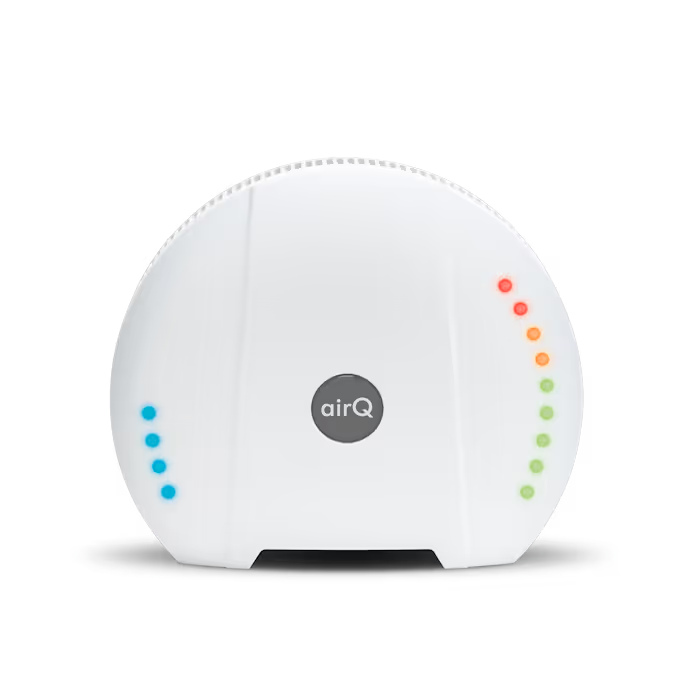

Can the air-Q detect mold? How does the air-Q help prevent mold?
Mold releases spores into the air, which, depending on the type of mold, can be detected as particulate matter. However, the amounts released are very small. Since there’s usually already a baseline level of particulate matter present, the spikes caused by mold spores are unfortunately hard to distinguish from it. This means it’s not possible to say with certainty that a room is mold-free.
That said, the risk of mold can also be assessed indirectly by monitoring various readings. The air-Q indoor air monitor can detect a tendency toward mold formation, for example by tracking the development of absolute and relative humidity, volatile organic compounds (VOC), and particulate matter in real time. These readings can be related to one another to assess the risk of existing mold. If these values are higher than normal, or even rise continuously over a period of time, the source of this increase should be identified — it could already indicate mold growth, or signal favorable growth conditions for mold.
However, a lab test is still essential to determine an existing mold problem with legal certainty.
With the Mold-Free Index, the air-Q offers a good starting point for monitoring mold risk over time.