
Wet Wall in the House - Causes, Consequences, and What Helps Now
Is your wall wet or damp and you're wondering what to do? In this guide, you'll learn how to correctly interpret signs of moisture in a wall, which causes are likely, what risks threaten health and building structure, and which measures let you get wet walls permanently under control.
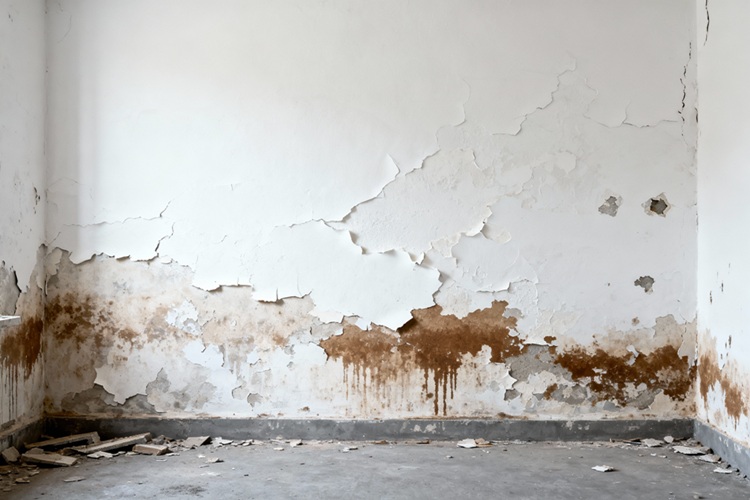
Early signs of a wet wall
Moisture in a wall often first shows up as darker stains, a musty smell, or peeling paint. Over time, swollen wallpaper, crumbly plaster, and sometimes white, crystal-like deposits are added.
Anyone who takes these signals seriously and responds early prevents costly damage to the wall, furniture, and flooring.
Why moisture in walls is serious
Wet or persistently damp walls attack plaster, joints, and potentially load-bearing components as well. The longer the wall stays damp, the deeper the moisture penetrates into the masonry, and the more elaborate the remediation becomes.
In addition, moisture promotes mold growth, which can irritate the respiratory tract and intensify allergies. Children, older people, and people with pre-existing respiratory conditions are especially sensitive.

Common causes of moisture in a wall
Condensation and improper ventilation
In rooms with a lot of water vapor, such as the bathroom, kitchen, or bedroom, moisture accumulates in the air. When this humid air meets cold wall surfaces, it condenses there, creating damp areas, especially in corners and at thermal bridges.
If ventilation is rare or done incorrectly, humidity stays high and the wall can't dry out. Large furniture placed directly against exterior walls worsens the problem, because barely any air circulates behind cabinets.
Rising damp from the ground
If a functioning horizontal barrier is missing in the masonry, water can rise capillary-style from the ground. Typical signs are damp baseboard areas in the basement and ground floor that slowly move upward.
Plaster often flakes off, efflorescence forms, and the wall feels cool and clammy. Without structural measures, such walls generally don't dry out permanently.
Laterally penetrating moisture and leaks
Cracks in the facade, damaged baseboard areas, or a leaky basement waterproofing let driving rain and surface water penetrate the wall. In the basement, missing or defective drainage can also be a factor.
Leaky water pipes, heating pipes, or roof surfaces can also bring large amounts of water into the masonry. In that case, quick action is important to limit consequential damage to the wall and furnishings.
Why does condensation form on the wall?
When warm room air meets cooled surfaces, condensation on cold walls forms. This is a common phenomenon especially in winter: water condenses on the wall because the surface temperature falls below the dew point. This problem often occurs as condensation on the bedroom wall, since a lot of moisture is exhaled there at night while the heating is usually set lower.
Condensation on the wall: what to do?
- Check the cause: is it condensation on the wall or a burst pipe?
- Ventilate properly: if the walls are wet, the question of what to do quickly arises. Cross-ventilating is essential to lower humidity quickly and, ideally, permanently.
- Adjust heating behavior: keep the wall temperature constant so that condensation on the wall doesn't form in the first place.
Wall is damp: immediate measures in the first 24 hours - how to repair a wet wall in the house
Clear the affected area so that air and warmth can reach the wall. Heavily soaked wallpaper and loose bits of plaster can be carefully removed to expose the damp surface.
Ventilate intensively and, in cases of severe moisture, use a dehumidifier or construction dryer. Document the damage with photos and notes on the timing and extent in case insurance needs to be involved.
Long-term solutions for dry walls
Drying walls and sealing them properly
Which remediation makes sense depends on the cause. For rising damp, a retrofitted horizontal barrier is often installed, for example through injections into the masonry or other specialized methods.
For laterally penetrating moisture, exterior sealing, sealing plasters, sealing slurries, and, if needed, functioning drainage help. Indoors, remediation plasters and special interior insulation systems can additionally protect heavily affected surfaces.
Improving ventilation and insulation
For condensation problems, ventilation and heating behavior are the focus. Regular quick ventilation and a moderate room temperature help keep relative humidity in a range of about forty to sixty percent.
Thermal bridges, such as poorly insulated roller shutter boxes or unsuitable window reveals, can be mitigated through targeted insulation measures. Warmer wall surfaces reduce the risk of water vapor condensing there.
Recognizing and properly removing nitre (salt efflorescence) on a wall
The typical white, crumbly, or needle-like deposits on a wall are often called nitre (saltpeter). These are generally salts that get transported to the surface along with moisture from the masonry.
This efflorescence is a clear sign that the wall has been, or still is, damp over an extended period. Simply brushing it off isn't enough — what matters is eliminating the source of moisture and carrying out appropriate plaster remediation.
When DIY is enough and when professionals are needed
Small damp patches from short-term condensation can often be fixed yourself. Often it's enough to adjust ventilation and heating, move furniture away from exterior walls, and keep an eye on humidity.
However, if larger areas are wet, nitre appears, or the damage keeps recurring, a specialist company or surveyor should be brought in. Only a professional analysis of the cause ensures that the chosen measures really work permanently.
Checklist for permanently dry walls
- Regularly check the facade, baseboard, roof, and basement for cracks and leaks
- Consistently cross-ventilate bathrooms, kitchens, and bedrooms, especially after showering, cooking, or sleeping
- Don't place furniture directly against exterior walls, and leave enough space for air circulation
- Don't overload basement rooms with laundry, and avoid storing permanently damp textiles if possible
- Monitor the indoor climate with hygrometers or sensors and counteract in time if values stay high
Finally, it's worth taking a look at the indoor climate, because moisture rarely only becomes a problem once the wall is visibly wet. This is where the air-Q can help by continuously monitoring temperature and humidity in the room and showing early when critical values are reached. Combining precise measurement with clear analysis lets you specifically adjust ventilation and heating behavior, so moisture never migrates into the wall in the first place and existing remediation measures stay effective long-term.