
Smoke Eaters: What They Are, Whether They Help, and What Alternatives Exist
Smoke eaters can reduce odors, but they don't solve the problem of harmful particles. With effective smoke avoidance, proper ventilation, and the air-Q air quality monitor, cigarette and fireplace smoke can be reliably detected and room air significantly improved.
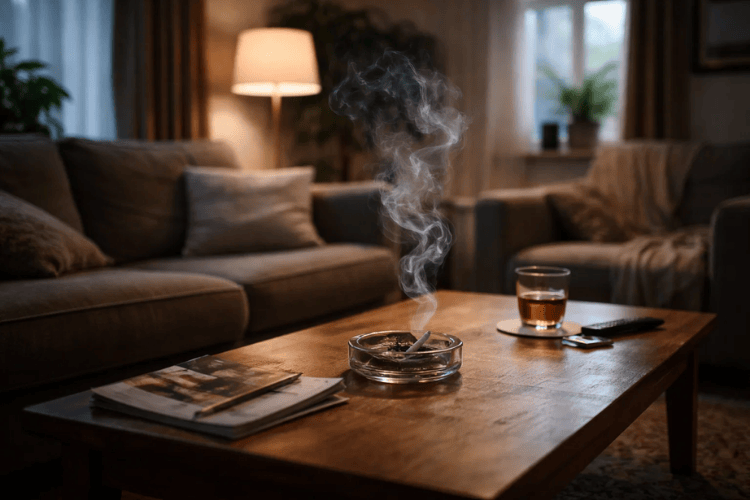
Smoke indoors is more than just an unpleasant smell. Cigarette smoke, fireplace smoke, or smoke from restaurants contain a wide range of substances harmful to health and significantly worsen indoor air quality. That's why many people turn to so-called smoke eaters.
What are smoke eaters?
Smoke eaters are technical devices meant to reduce smoke and odors in the air. They're often used in smoking rooms, bars, restaurants, or private homes. The goal is to make the air seem more pleasant.
Depending on their design, smoke eaters use different methods. These include mechanical filters like activated carbon or particulate filters, electrostatic systems for separating particles, and odor-neutralization methods, such as ionization or ozone.
The name suggests that smoke is completely removed or rendered harmless. That, however, is usually not the case.
Do smoke eaters really help?
Smoke eaters can partially reduce visible smoke and odors. That doesn't mean, however, that the air is automatically clean or harmless to health.
Cigarette smoke consists of thousands of chemical compounds. These include particulate matter, volatile organic compounds, and harmful gases like carbon monoxide. Many smoke eaters filter individual particles or mask odors, but don't capture all relevant pollutants.
Some of the methods used should also be viewed critically. Ozone can itself be harmful to health at higher concentrations and irritate the airways. Odors are often just masked, not removed. Ultrafine particles and gaseous pollutants often remain in room air.
The result is a subjectively better perception of the air, while the actual exposure remains.
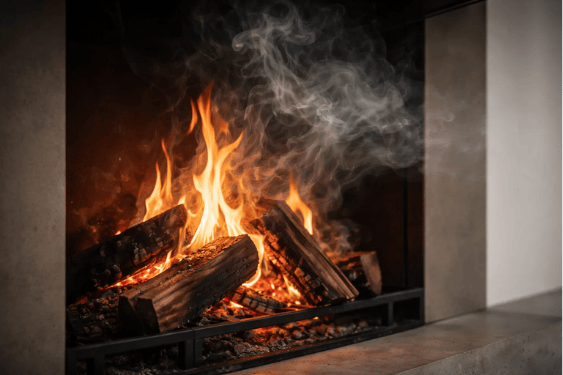
Smoke eaters and room air quality
A key drawback of smoke eaters is that they generally don't measure what's actually happening in the air. Without measurement, it stays unclear how heavily the air is exposed, which pollutants are present, and whether the measures used are even working.
Smoke exposure varies widely, depending on room size, ventilation, and smoke intensity. A device that's simply running provides no reliable indication of whether air quality is acceptable.
What alternatives exist against smoke?
Anyone who really wants to reduce smoke indoors should rely on a combination of avoidance, ventilation, and measurement.
- The most effective measure is, and remains, not letting smoke form in the first place. Smoke-free indoor spaces are always the best solution from a health perspective.
- Regular and sufficient ventilation: this "dilutes" pollutants and significantly lowers exposure. Quick cross-ventilation is more effective than tilted windows.
- An objective assessment of room air: air quality monitors like the air-Q reliably detect smoke exposure based on various parameters.
The air-Q measures, among other things, particulate matter, volatile organic compounds, and CO levels. This lets the air-Q detect not just cigarette smoke, but also other smoke, such as from candles, wood stoves, or burnt food. Changes in air quality become visible in real time and can be tracked.
Instead of relying on smell or gut feeling, a measurement provides clear data as the basis for sensible measures.
Smoke eaters can reduce odors and visible smoke, but they don't fully solve the underlying problem. They replace neither good ventilation nor an objective assessment of room air quality.
Anyone who seriously wants to reduce smoke exposure should know when and how heavily the air is exposed. Continuous measurement with an air quality monitor like the air-Q creates transparency, reliably detects smoke, and helps you respond specifically.
Clean room air doesn't begin with masking smoke, but with understanding what's actually in the air.