
Sahara Dust Over Germany: How Desert Dust and Seasonal Influences Change Our Air Quality
Sahara dust, stirred up by winds from the Sahara, reaches Europe several times a year and affects air quality in Germany. These fine mineral dust particles, averaging five to ten micrometers in size, rise up to five kilometers into the atmosphere and can remain there, in calm winds, for up to six months.
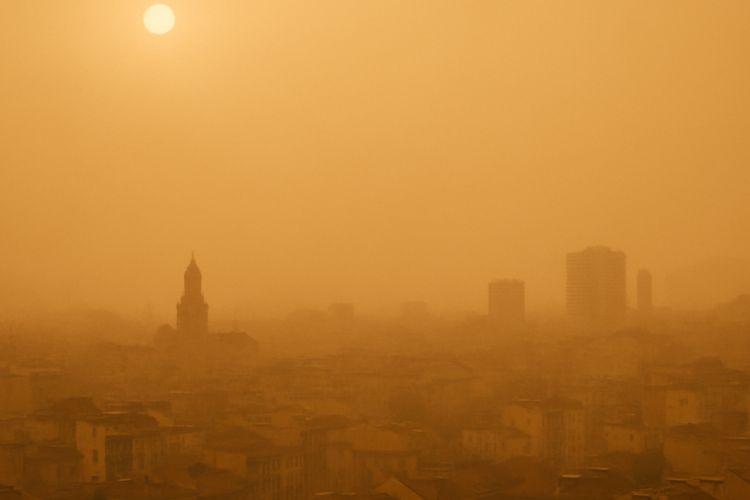
Sahara dust, a phenomenon in which fine particles from the Sahara are carried all the way to Europe through atmospheric conditions, regularly affects air quality in Germany. These particles mainly consist of quartz, aluminosilicates, and iron oxide.
Calima – the Sahara dust phenomenon in the Canary Islands
A well-known example of extreme Sahara dust events is the Calima in the Canary Islands. This is a hot, dry desert wind that carries large amounts of Sahara dust with it. During a Calima, temperatures rise sharply while humidity drops. Reduced visibility and massive particulate matter pollution are typical consequences. Especially sensitive people should stay indoors as much as possible during a Calima and avoid physical exertion. A Calima usually lasts between three and five days, with intensity strongest in the first days before gradually easing. This phenomenon can occur up to ten times a year, especially in the months from December to February, when episodes of suspended dust are most intense.
Impact on air quality
Sahara dust often reaches Europe in higher air layers, but under certain weather conditions can reach ground level and increase particulate matter concentration. In regions like the Black Forest and the Alps, concentrations of up to 150 micrograms per cubic meter have been measured, which is three times the daily average limit value for particulate matter in Germany.
Health effects
For healthy people, Sahara dust usually isn't a problem. However, sensitive people, such as those with respiratory diseases or allergies, can experience symptoms like irritated mucous membranes or breathing difficulties. Studies have shown that Sahara dust can trigger inflammatory processes and oxidative stress in cells, with the NLRP3 inflammasome complex playing a role.
Recommendations for at-risk groups
People with respiratory diseases or allergies are advised to keep doors and windows closed during heavy Sahara dust episodes, reduce outdoor physical activity, and wear protective masks if necessary. Air purifiers with HEPA filters can help minimize dust exposure indoors.
-(300-x-250-px)-(1500-x-1300-px).jpg)
Seasonal influences on air quality
Besides Sahara dust, other seasonal factors affect air quality in Germany:
- Pollen dispersal in spring and summer: high pollen concentrations can trigger or worsen allergies.
- Heating season in winter: increased use of heating raises particulate matter and nitrogen dioxide levels in the air.
- Agricultural activities in spring: fertilizers and pesticides can impair air quality.
It's important to take these seasonal influences into account and take appropriate precautions to protect health.
What can you do against the health effects of Sahara dust and other seasonal changes?
These seasonal changes show how diverse the factors affecting air quality are. Monitoring room air is therefore recommended to detect any health effects and take effective measures to keep the air clean. To minimize the effects of Sahara dust and other seasonal influences on air quality in German homes, the following measures can be taken:
- Regular ventilation to renew indoor air and reduce particle concentration.
- Air analysis using an air quality monitor like air-Q.
- Using air filters or air purification devices to reduce particle exposure indoors.
- Regularly cleaning surfaces to minimize dust buildup.
Sensitive people should take special precautions during periods of elevated Sahara dust levels, such as closing windows and using air filters. Constant air analysis with the help of an air quality monitor is advisable here. If the monitor shows an increase in particulate matter and issues a warning, you can respond and close the windows. This reduces exposure.