
Regulating Humidity in Homes Correctly in Winter
Winter brings particular challenges for our indoor climate: temperature, heating, and properly regulating humidity. Because too much humidity can lead to dangerous mold growth, while air that's too dry impairs health. Find out here what to watch for and which mistakes to avoid.
In this article you will find the following content:
- Why is the right humidity so important in winter?
- The dangers of excessive humidity in homes
- The risks of air that's too dry
- How to correctly regulate humidity in homes in winter
- Ventilate regularly
- Heat correctly
- Measure humidity
- Use a dehumidifier
- Use a humidifier
- Smart home for an optimal indoor climate
- Avoid common mistakes in regulating indoor climate
- How to ensure optimal humidity in homes in winter
Why is the right humidity so important in winter?
Indoor humidity plays a crucial role for our health, our well-being, and the fabric of the building. In winter it's cold and we heat our rooms. This can mean we ventilate less than in other seasons, which can lead to problems:
- Humidity too high: promotes mold growth and mite proliferation
- Humidity too low: irritates mucous membranes and increases susceptibility to colds
The ideal relative humidity in living and working spaces is between 40% and 60%. This is the range where we feel most comfortable and minimize health risks.
The dangers of excessive humidity in homes
Excessive moisture in homes can have serious consequences — the risk of mold growth in particular is elevated in winter. That's because mold forms especially well at high humidity and high temperatures. The humidity level at which mold starts to form depends on various factors, but as a general rule: at a relative humidity above 70%, the risk increases drastically. Mold is harmful to health and can, among other things, trigger allergies and irritate the airways. But mold is also harmful to the fabric of the building and can cause moisture damage to walls, floors, and furniture. Dust mites also love humid environments — they can worsen allergies and asthma.
The risks of air that's too dry
On the other hand, air that's too dry due to excessive heating in winter can also be problematic. Overly dry heating air can irritate the mucous membranes, lead to dry, itchy skin, and increase susceptibility to infections. Dry heating air can also trigger headaches and fatigue.
How to correctly regulate humidity in homes in winter
To keep humidity within the optimal range, you can take the following measures:
1. Ventilate regularly
Air out rooms fully several times a day for 5–10 minutes, especially after showering or cooking. Airing out helps remove excess moisture and prevents high humidity. Brief, full ventilation keeps rooms from cooling down too much. It's best to create a cross-draft by opening several windows fully along with all doors.
2. Heat correctly
Keep all rooms at a constant temperature of at least 16°C. Avoid large temperature fluctuations, as these promote condensation and can lead to mold growth at certain humidity levels. Bedrooms too should be kept at a constant temperature, since cold surfaces cause moisture in the air to condense.
3. Measure humidity
Use a hygrometer, or even better, a smart air quality meter like the air-Q to continuously monitor humidity. This lets you identify early on at what humidity level mold risk threatens and counteract it. Modern air quality sensors monitor the indoor air and continuously measure various air parameters, including particulate matter, humidity, CO₂ levels, and VOCs.
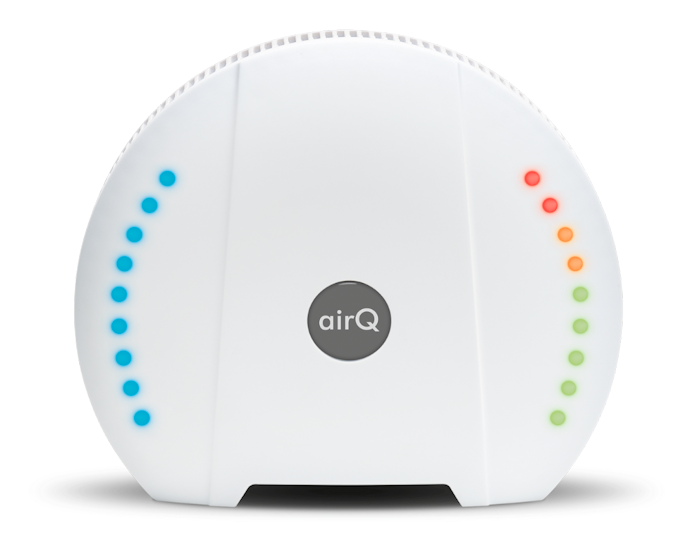
The data collected in real time is analyzed. This allows critical values and patterns that favor mold risk or poor air quality to be identified. If the set limit values for these air parameters are exceeded, the air quality meter automatically sends warnings, e.g. via the app, push notification, or on the device itself via the colored LED traffic-light display. This tells you when it's time to exchange the air and lets you react before problems arise.
4. Use a dehumidifier
If humidity remains persistently high or rooms are difficult to ventilate, a dehumidifier can help reduce moisture and control indoor humidity with respect to mold formation. Paired with a smart home system like the air-Q, you can activate the device only when needed and save energy.
5. Use a humidifier
If the air is too dry, especially in the bedroom, a humidifier can provide relief. This is especially important if you suffer from symptoms caused by dry heating air. Houseplants can help with this too.
6. Smart home for an optimal indoor climate
Modern technology like the air-Q monitors air quality and warns you in good time when humidity moves out of the optimal range. This lets you act proactively and avoid mold formation or overly dry air.
Avoid common mistakes in regulating indoor climate
To ensure an optimal indoor climate, you should avoid the following common mistakes:
- Leaving windows permanently tilted instead of airing out fully
- Heating rooms unevenly
- Drying laundry indoors without adequate ventilation
- Neglecting regular humidity measurements
- Placing furniture directly against exterior walls, which hinders air circulation
- Ignoring condensation on windows or walls
- Excessive use of humidifiers
- Placing water-loving & large-leaved plants in humid rooms
- Neglecting maintenance of ventilation systems or air conditioning units
By avoiding these mistakes, you can create a healthy and balanced indoor climate and effectively prevent both mold growth and overly dry air.
How to ensure optimal humidity in homes in winter
Regulating humidity indoors is crucial for a healthy living environment, especially in winter. Through regular ventilation, appropriate heating, and the use of measuring devices such as the air-Q, you can keep humidity consistently within the optimal range. This not only creates a pleasant indoor climate but also protects your health, your furniture, and the fabric of the building from the negative effects of air that's too humid or too dry.