
Refrigerants in Focus: R32, R454B & R454C – How They Affect Our Air and How air-Q Detects Them
Refrigerants control heat in air conditioning, heating, and cooling systems, but pose risks when they leak. The air-Q detects air quality changes early and protects health and the environment.
Invisible, but crucial: refrigerants in everyday life
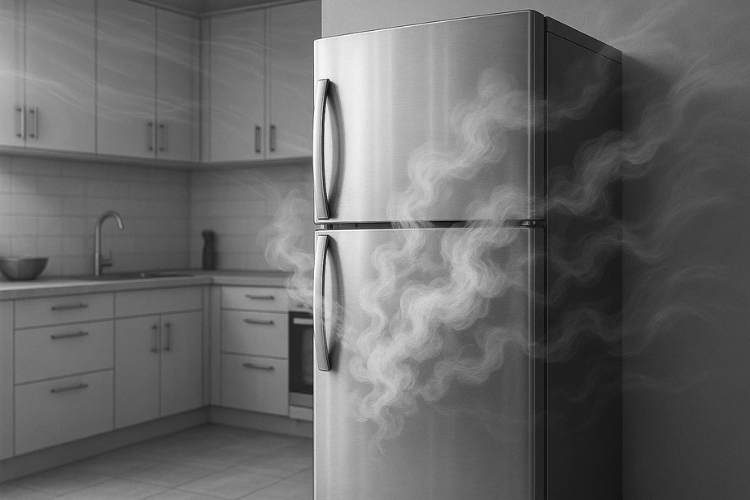
Refrigerants are central components of modern air conditioning and heating systems. Whether in a heat pump, an office air conditioner, or a home refrigerator — without them, no heat transport would be possible. Though they usually remain invisible, they play a crucial role in energy efficiency, safety, and also the quality of the air we breathe.
-(300-x-250-px)-(1500-x-1300-px).jpg)
What are refrigerants like R32, R454B, and R454C?
Refrigerants are chemical substances that absorb, transport, and release heat again. They're thus the foundation for all devices that cool or heat.
Typical everyday applications:
- Air conditioners: refrigerants cool rooms or vehicle cabins to a comfortable temperature (for example at home, in the car, or at the office)
- Heat pumps: they extract heat from the environment to heat buildings. Here too, the refrigerant transports energy between the indoor and outdoor unit.
- Refrigerators and freezers: refrigerants keep food consistently cooled.
- Industrial facilities: large cooling circuits, data centers, or production facilities use special refrigerants for process cooling.
How they work:
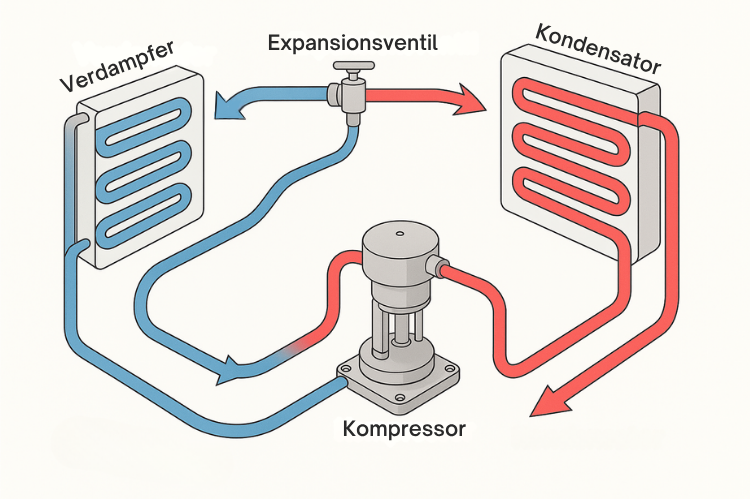
Refrigerants circulate in a closed loop consisting of an evaporator, compressor, condenser, and expansion valve.
In the evaporator, the refrigerant absorbs heat from the surroundings and evaporates in the process. The compressor then compresses the gas, raising its temperature. In the condenser, the refrigerant releases the absorbed heat again and liquefies before the cycle begins anew.
This cycle repeats continuously and enables cooling or heating. Without refrigerant, such devices simply wouldn't function.
Modern refrigerants: R32, R454B, and R454C
Since older refrigerants like R134a, R410A (so-called HFCs, i.e. fluorinated greenhouse gases with high climate impact), or R22 carry a very high global warming potential, refrigeration and heating technology is increasingly turning to new, more eco-friendly refrigerants like R32, R454B, and R454C. These so-called A2L refrigerants stand out for their low global warming potential (GWP), but are also mildly flammable. This makes reliable gas monitoring more important.
R32 (Difluoromethane, CH2F2)
- Use: air conditioners and heat pumps
- Benefits: low GWP (Global Warming Potential), high energy efficiency
- Note: mildly flammable (requires safety measures)
R454B (68.9% CH2F2; 31.1% C3H2F4)
- Use: replacement for older HFC blends like R410A
- Benefits: significantly lower GWP, similarly efficient to its predecessor
- Note: mildly flammable (requires safety measures)
R454C (78.5% CH2F2; 21.5% C3H2F4)
- Use: air conditioning units and heat pumps, especially in industry
- Benefits: low GWP, energy-efficient
- Note: also mildly flammable
What happens if refrigerants get into the air?
As long as the system is sealed, the refrigerant stays in the closed circuit. If a leak occurs, though, it escapes into the environment, usually in gaseous form. This, combined with the fact that refrigerants are usually colorless and odorless, makes a leak hard to detect. Even small leaks can lead to significant emissions over a longer period.
Health risks:
- Airway irritation
- Headaches, dizziness, or lightheadedness (from oxygen displacement)
- At very high doses, effects on the central nervous system
- Cold burns from contact with liquid refrigerant
- In enclosed spaces, a flammable gas-air mixture can form.
Environmental consequences:
Many refrigerants contribute significantly to the greenhouse effect, especially HFCs like R410A or R134a. They have a global warming potential up to 2,000 times higher than CO₂.
Older substances like R22 also harm the ozone layer and are therefore now banned or strictly regulated.
Newer alternatives like R32, R454B, or natural refrigerants (propane, isobutane, CO₂) are significantly more climate-friendly, but require higher safety standards.
Leaks in cooling circuits therefore lead not just to performance losses and costly repairs, but also to avoidable emissions that burden the climate and environment.
Detecting refrigerants: safely monitor R32, R454B & R454C with air-Q
The air-Q's new sensors can directly detect R32, R454B, and R454C, offering:
- Early leak detection
- Real-time alerts via app, dashboard, or API
- Visualization and data logging
This helps ensure modern refrigerants are used efficiently and without risk.
Refrigerants are indispensable for operating modern climate technology, yet their properties also make them sensitive substances. Escaping gases can burden both health and the environment.
The air-Q helps detect such changes in the air early. With the new sensor options, the system expands its range of applications and helps operate modern, eco-friendly refrigeration technology safely. This keeps air quality, safety, and system efficiency permanently in view.