
Recognizing Mold Risk With the Mold-Free Index
The air-Q Mold-Free Index rates the potential mold risk based on humidity over a period of time. A high value indicates low risk, a low value warns of elevated mold risk. This way, the index helps keep living spaces safe and healthy
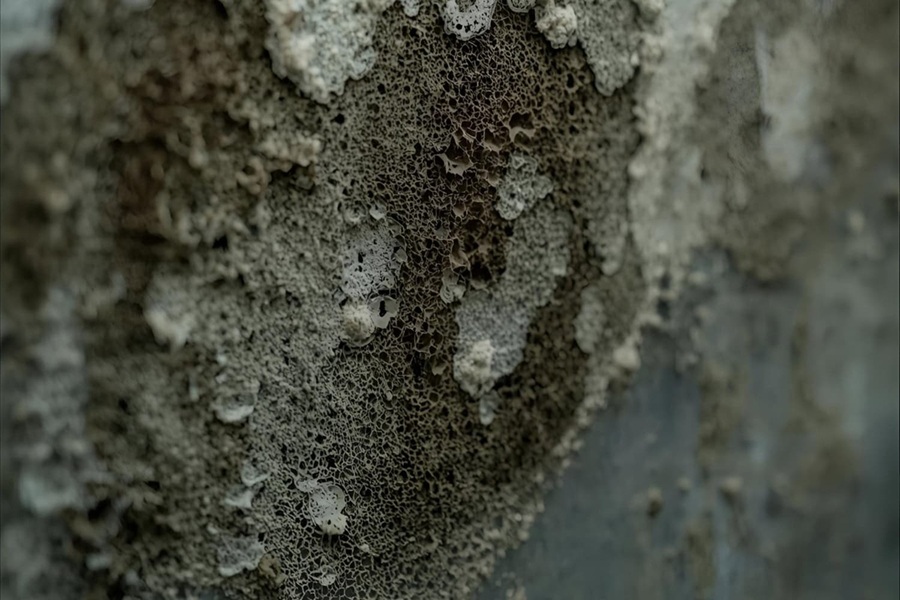
Understanding and minimizing mold risk indoors
Mold growth in living spaces is a widespread problem that concerns many homeowners, tenants, and property managers. Mold is ubiquitous in our environment and usually harmless at low concentrations. However, under certain conditions, especially due to moisture, an elevated mold risk can develop quickly, which not only attacks the building structure but can also affect occupants' health. In this post, you'll learn how mold forms, what risks it poses, and how you can effectively assess and reduce your mold risk, with a special focus on air-Q's practical Mold-Free Index.
How does mold form?
Mold needs moisture as its most important requirement for growth. This moisture can enter indoor spaces in various ways. One of the most common causes is condensation: when warm, humid air meets cold surfaces, water droplets form, providing the perfect breeding ground for mold. Construction defects like leaky roofs, cracks in the masonry, or defective water pipes also promote moisture entry.
Improper occupant behavior also promotes mold growth. Inadequate ventilation, improper heating behavior, or excessive humidity from cooking, showering, or many houseplants can increase moisture in a room. Corners, window reveals, or exterior walls, where temperature differences are greatest, are especially at risk.
Why is mold risk so important?
Mold infestation can lead to unsightly damage to walls, wallpaper, or wood, not only permanently weakening the building structure but also causing health damage. Many people react allergically to mold spores; some developments can even trigger chronic respiratory diseases, headaches, or a weakened immune system. It's therefore essential to detect the risk early and counteract it.
Measuring and understanding mold risk status
Assessing mold risk in your own home is a challenge for many people. This is where air-Q's Mold-Free Index helps. This index is based on continuous measurement of humidity and temperature indoors and calculates the risk of mold growth from this.
Using the Mold-Free Index, problem areas can be identified even before visible mold forms. This lets you take targeted measures, like proper ventilation or avoiding moisture buildup at critical spots, to prevent long-term damage.
Rooms where mold often develops
- Rooms with cold exterior walls
- Rooms with poor insulation
- Rooms with poor ventilation
- Basement
- Attic
- Bathroom
- Garage
- Camper/RV
Where mold can develop
- Joints
- Cracks in the masonry
- Leaky roof
- Behind furniture
- Wallpaper, wood, drywall, plastics, and dust
Why the air-Q Mold-Free Index is unique
The Mold-Free Index is more than just a simple moisture meter. Through its ongoing analysis, it provides a well-founded value that reliably assesses and visualizes the risk of mold growth over a longer period. It integrates important factors of room air quality that go beyond simple moisture measurement.
The practical implementation is done through air-Q devices, controlled via an intuitive app. Users get clear warnings and can flexibly adjust their ventilation and heating behavior to permanently prevent mold.
Mold risk in living spaces mainly arises from moisture, which can be traced back to various causes — from construction defects to occupant behavior to unfavorable climate conditions within a room. Mold infestation can have significant consequences for health and buildings.
It's therefore important to detect the risk early and effectively control it. The air-Q Mold-Free Index offers a modern and reliable solution to continuously monitor the risk and minimize it through targeted measures. With this index, occupants and owners can actively prevent mold growth and secure their living quality.
Anyone wanting to better protect their home should pay attention to regular checks, ventilate correctly, optimize heating behavior, and, when in doubt, seek professional help for structural problems. This keeps your home a safe and healthy place to feel comfortable.
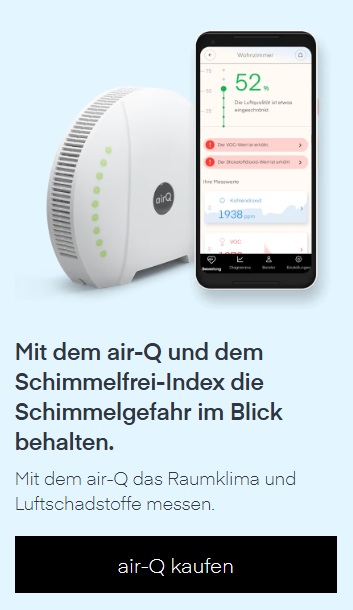
air-Q's mold risk calculator
Mold can cause serious health damage, since the spores are inhaled and can trigger allergic or toxic reactions. Besides the health risk, mold also attacks the building structure and furniture, often leading to costly remediation. That's why it's important to prevent mold as early and effectively as possible.
With the air-Q mold risk calculator, the risk of one of the main causes of mold — condensation on poorly insulated interior walls — can be precisely determined. The calculator determines the relative humidity at the interior wall of a house. If this is too high and the dew point is close to the interior wall temperature, condensation can form, making the wall damp and creating a high likelihood of mold developing.
This tool helps identify critical areas early and enables targeted measures before visible mold forms. It thus complements the Mold-Free Index and offers an effective way to actively control mold risk in your own home.
How the air-Q Mold-Free Index works
The Mold-Free Index is based on an algorithm that continuously evaluates the readings from temperature and humidity sensors. From this, it's calculated how quickly mold could grow under the given indoor climate conditions. In doing so, air-Q also takes into account the susceptibility of various materials, especially wood and textiles, since these are particularly prone to mold. For example, a bathroom with tile flooring might show a lower mold risk value, since conditions for mold are less favorable there.
What can and can't the air-Q Mold-Free Index do?
The Mold-Free Index doesn't detect mold spores in the air. Instead, it shows whether the current conditions in a room favor mold development. This makes the air-Q device a valuable tool for preventing mold growth early and proactively drawing attention to risks. Should visible mold have already formed, it's recommended to remove it immediately. If there's uncertainty about whether it's actually mold, special test kits can be used or experts consulted.
Measures to reduce mold risk
Anyone wanting to protect their home from mold should follow a few basic tips:
- Ventilate regularly and correctly: do quick cross-ventilation several times a day for a few minutes to exchange humid air.
- Heat evenly: avoid large temperature fluctuations to minimize condensation.
- Keep an eye on critical spots: regularly check corners, exterior walls, and windows for moisture.
- Reduce sources of moisture: ensure adequate ventilation while cooking, showering, or drying laundry.
- Fix construction defects: have leaks, defective gutters, or water pipes repaired quickly.
To protect health and the building structure, it's essential to detect mold risk early and actively reduce it. With the air-Q Mold-Free Index and tools like the mold risk calculator, occupants and owners have modern ways to effectively prevent mold growth. Through regular ventilation, conscious humidity control, and targeted measures, a healthy indoor climate can be created that gives mold no chance. This way, your home stays safe and comfortable, a place where you can truly feel at ease.