
QNG & Indoor Air Quality: Why Sustainable Buildings Need More Than Certificates
The QNG assesses sustainable buildings holistically and according to clear requirements. But true building quality only shows in everyday use. QNG, QNG-Plus, and indoor air hygiene are the focus here. Indoor air monitoring with air-Q is becoming increasingly important for making healthy and comfortable buildings measurable during operation.
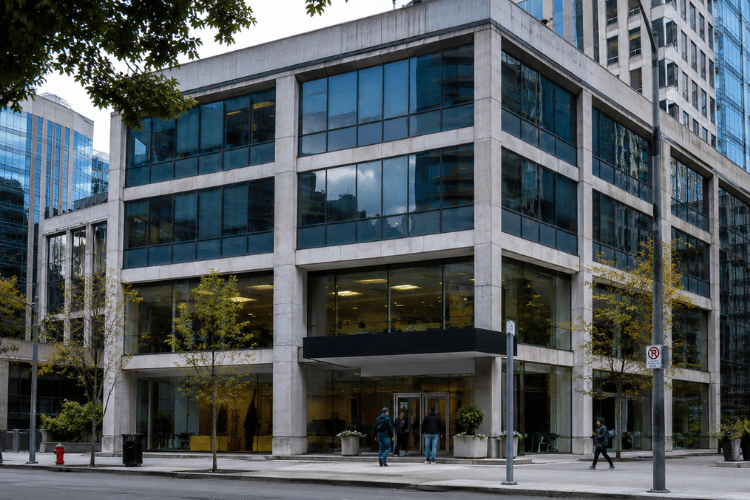
Sustainable buildings are supposed to be efficient, resource-conserving, and durable. But in everyday life, something else determines how a building is really perceived: the indoor climate.
People don't experience buildings through certificates or technical documentation, but through temperature, humidity, CO₂ levels, odors, particulate matter, and general air quality. Since people spend up to 90% of their time indoors, this factor is becoming increasingly important. A building can be perfect on paper and still feel permanently "not good."
The Sustainable Building Quality Seal (QNG) plays a central role here. It defines requirements for sustainable construction and serves as guidance for developers, planners, and certification experts. At the same time, interest is growing in solutions that show how buildings actually perform later during real operation.
That's because there's often a gap between sustainable planning and a healthy indoor climate.
Sustainable Building Quality Seal: what QNG requirements apply?
The QNG seal doesn't just assess buildings as individual products or technical components, but as an overall system across the entire life cycle. The goal is to make sustainable quality measurable, comparable, and traceable.
The QNG takes various quality areas into account:
- ecological quality
- economic quality
- technical quality
- process quality
- sociocultural and functional quality
Sociocultural and functional quality is especially relevant for a building's later use. This covers, among other things, user comfort, health, accessibility, and indoor hygiene.
In addition, the QNG defines so-called special requirements. These address socially important topics and strengthen the sustainability impact of buildings. These include, among others:
- climate protection and resource conservation
- pollutant avoidance in building products and materials
- space efficiency
- comfort and quality of stay
- indoor spaces that are safe for health
This makes it clear: sustainability in the sense of the QNG doesn't end with energy metrics or building materials, but also touches on very concrete aspects of later use.
Indoor air hygiene as part of the QNG requirements
An especially practice-relevant area within the QNG requirements is indoor air hygiene.
Even with sustainable planning and high-quality materials, air quality can change during later operation. The cause isn't just building materials, but above all usage, occupancy, and technical conditions in everyday life.
Typical influencing factors are:
- CO₂ concentration from high occupancy
- inadequate or improperly configured ventilation
- emissions from furniture and interior fit-out (VOC)
- particulate matter and particle exposure
- moisture and dry air
- odors from use and cleaning
These factors are crucial for users' comfort, health, and performance. This is exactly why indoor air, in the context of sustainable buildings, is increasingly understood as measurable quality, not just a planning target value.

QNG Plus seal and QNG Premium: what's the difference?
Besides the classic QNG, there are different requirement levels, including QNG-Plus and QNG-Premium.
These levels differ in the level of requirements and the depth of the sustainability criteria considered. Simply put, requirements for quality, sustainability, and overall building performance increase with each level.
While QNG serves as the basic standard, QNG-Plus and QNG-Premium set higher standards especially with regard to:
- energy efficiency and resource use
- material and health aspects
- overall building quality
This also increases the importance of actual building use. The higher the sustainability requirements, the more important it becomes how a building performs in everyday life.
QNG assesses the building. The air-Q measures the actual indoor air quality
The QNG assesses a building's sustainable quality as an overall system. Individual products or sensors aren't separately certified in this process.
The air-Q is therefore not an official part of QNG certification and doesn't replace formal evidence in the certification process.
However, this isn't a contradiction, but a clear division of tasks.
QNG answers the question: does the building meet defined sustainability and quality requirements?
air-Q answers the question: how good is the indoor air actually in real operation?
In practice, it turns out that even certified and well-planned buildings can develop challenges during operation. Typical problems include:
- elevated CO₂ levels in densely occupied rooms
- inadequate air exchange
- dry or too-humid air
- VOC exposure after fit-out or furnishing
- particulate matter and particle exposure
- odors and stagnant air
These effects don't arise during planning, but during operation. This is exactly where continuous measurement comes in.
From planning to building operation: why monitoring is crucial
Sustainability doesn't end when a building is completed. The real value emerges during ongoing operation.
Only when people use a building daily does it become clear whether comfort, health, and function actually fit together.
air-Q supports exactly this transition:
- continuous measurement of indoor air quality
- real-time analysis of CO₂, VOC, particulate matter, and other parameters
- data-based assessment of ventilation concepts
- early detection of indoor air problems
- optimization of comfort and indoor quality
This makes indoor air data an important building block for sustainable building operation.
Relevance for WELL, DGNB, LEED, and RESET
Besides QNG, other standards also play an important role in assessing sustainable and healthy buildings.
In the WELL Building Standard, user health is the focus. The DGNB integrates indoor quality as an important part of building certification. LEED also considers ventilation, air quality, and monitoring as relevant assessment criteria. RESET places special focus on continuous data on indoor air quality.
In all these systems, a building's real performance is becoming increasingly important. This is exactly where indoor air data provides the necessary transparency.
Sustainable buildings need more than certificates
Certificates like the QNG create standards, guidance, and comparability. They're an important part of modern construction and planning processes.
The decisive difference, however, emerges in everyday life.
Only then does it become clear whether buildings weren't just sustainably planned, but are also healthy, comfortable, and functional.
The air-Q supports this transition from planning to reality. Not as a replacement for certificates, but as a tool for better decisions during operation.
Because sustainable buildings shouldn't just be convincing on paper — they should also feel good in everyday life.