
Does Poor Air Weaken the Immune System? How Room Air Affects Your Defenses
The air we breathe every day directly affects our immune system. Poor air quality can weaken our defenses, while clean room air strengthens the immune system and reduces the risk of infection. Learn how pollutants in the air act and how you can actively support a healthy indoor climate.
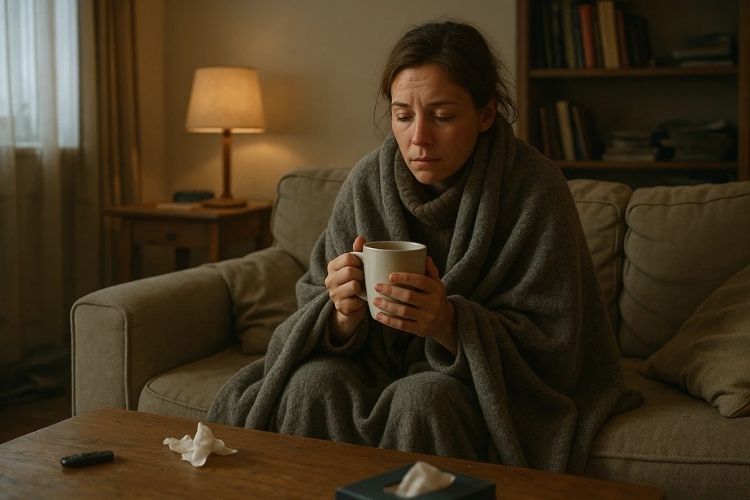
Clean air is a central building block for a strong immune system. Anyone who reduces pollutant exposure indoors supports the body's natural defenses and lowers the long-term risk of respiratory infections and chronic diseases.
Pollutants in the air and their effect on the immune system
The air we breathe is often laden with particulate matter, pollen, mold spores, nitrogen oxides, or elevated CO₂. These substances irritate the mucous membranes in the nose, throat, and lungs, which actually serve as the immune system's first line of defense.
Anyone permanently exposed to polluted air can develop mucous membranes that dry out, become inflamed, and defend against pathogens less effectively. This increases susceptibility to respiratory infections, and existing conditions like allergies or asthma can worsen.
-(300-x-250-px)-(1500-x-1300-px).jpg)
Consequences of poor air quality
Poor room air rarely comes without consequences. Typical results are:
- Inflammatory reactions
Pollutants can promote chronic inflammation in the airways, permanently taxing and weakening the immune system. - Higher infection risk
Colds, flu, or other respiratory infections occur more often in polluted air, since pathogens can more easily enter and multiply. - Long-term impairments
Over time, poor air quality can promote the development or worsening of allergies, asthma, and other chronic respiratory diseases.
How clean air strengthens the immune system
Good room air relieves the immune system instead of constantly keeping it "on alert."
- The mucous membranes can better fulfill their protective function and effectively intercept pathogens.
- Allergic reactions to pollen, house dust, or mold spores are reduced when exposure in the air decreases.
- Stable lung function supports the body's oxygen supply, which in turn positively affects all defense processes.
Anyone who pays attention to clean air thereby creates an important foundation for a resilient immune system — at home, in the office, and everywhere people spend a lot of time.
Practical tips for a healthy indoor climate
With just a few, consistently applied measures, air quality can be noticeably improved:
- Ventilate regularly
Do quick cross-ventilation several times a day, especially when many people are in the room or CO₂ and humidity rise. - Keep an eye on humidity
About 40 to 60 percent is ideal. Air that's too dry irritates the mucous membranes, air that's too humid promotes mold growth. - Heat correctly
Constant, moderate temperatures between about 18 and 22 degrees help avoid mold and prevent the mucous membranes from drying out. - Measure air quality
Without measurement, it often goes unnoticed when CO₂ or particulate matter actually become critical. An air quality monitor makes invisible problems visible and enables targeted countermeasures.
How the air-Q helps protect your health
The air-Q was developed precisely to make air quality transparent and thereby actively support health. The device measures, among other things, CO₂, particulate matter, volatile organic compounds, and other relevant indoor air parameters in real time.
In the associated app or dashboard, users immediately see when air quality worsens, for example due to rising CO₂ values, elevated particulate matter exposure, or everyday pollutant sources. This lets you take specific measures, for example ventilating in time, using an air purifier, or avoiding certain emission sources.
Through continuous monitoring, the air-Q helps establish a permanently healthy indoor climate in which the mucous membranes, airways, and immune system are burdened as little as possible. This way, air quality turns from a hard-to-grasp topic into an actively controllable health factor, in your own home just as much as in the office, in your home office, or in sensitive areas like children's rooms and workspaces. A conscious approach to the air we breathe every day is thus not a luxury, but a solid investment in strong defenses and long-term health.