
Poor Air Quality at Oktoberfest — These Readings Were Deficient at the 2023 Wiesn
Munich's Oktoberfest is known for its atmosphere and beer specialties. Beyond all the fun, one issue comes to the forefront: the poor air quality on the festival grounds and in the beer tents. Air measurements reveal alarming values — especially regarding the climate gas methane. We take a closer look at the air readings and their origin.

Air quality at the 2023 Wiesn – an overview
Air quality at Oktoberfest is affected by various factors, including the following.
Crowds at Oktoberfest reduce air quality
Oktoberfest attracts millions of visitors from around the world. The high number of people in a confined space contributes to a deterioration in air quality. Exhaling releases carbon dioxide (CO₂) and moisture into the air, reducing oxygen content. If the air people breathe contains a lot of CO₂, this is a sign of insufficient air exchange. As CO₂ concentration rises, the proportion of pathogens can also be higher. Infection risk increases rapidly.
Elevated CO₂ levels can cause headaches, fatigue, and concentration difficulties.
Wastewater at Munich's 2023 Oktoberfest
The numerous sanitary facilities as well as the food service generate large amounts of wastewater. Although strict regulations apply to wastewater disposal, contamination can still occur, affecting water quality and polluting the air with unpleasant odors.
Gas grills & patio heaters burden the air at the Wiesn
Numerous gas grills and patio heaters burn in the festival tents and on the grounds, keeping guests warm. This releases nitrogen oxides (NO₂), which contribute to air pollution. These pollutants can also cause respiratory problems and are especially dangerous for people with asthma or other respiratory diseases.
How can air quality at Oktoberfest be improved?
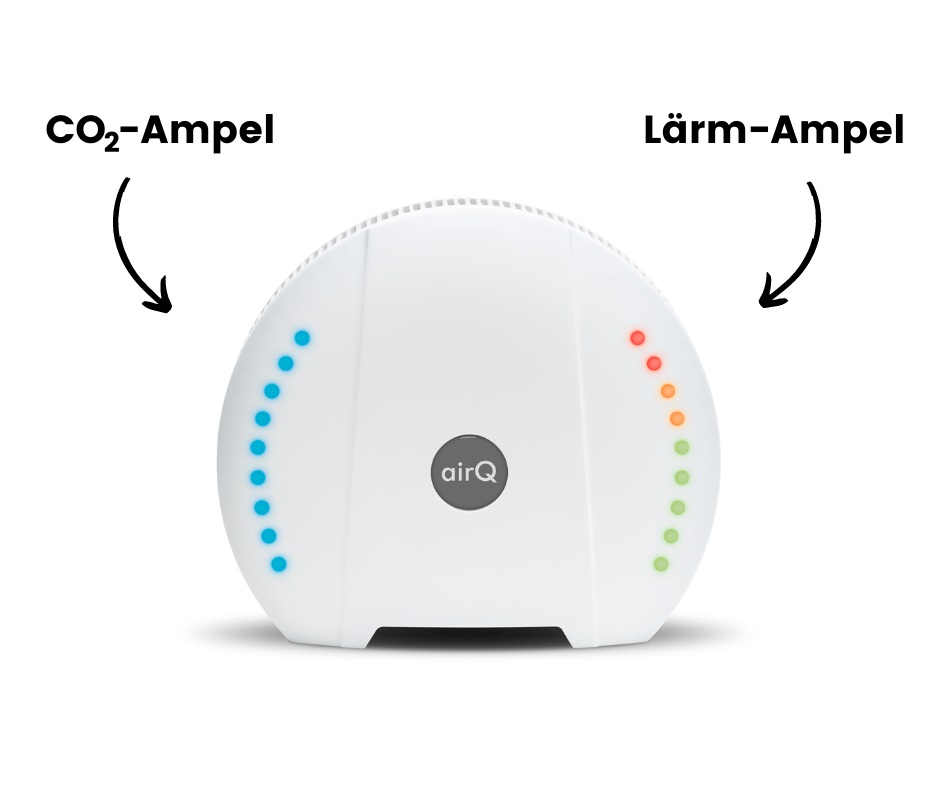
To improve air quality at Oktoberfest, various measures should be taken. For example, air quality in the festival tents could be monitored and improved through situational ventilation, for example using air purifiers. For residents, air quality monitors like the air-Q are suitable, detecting elevated pollutant exposure during Oktoberfest. In real time, the air-Q measures air components and warns when relevant readings, such as oxygen level, carbon dioxide, or methane gases, exceed recommended limit values. As an alert, the monitor works via an intuitive LED display and also sends warning notifications as push messages and emails. This lets you quickly recognize when action might be needed and take steps to exchange the air. Thanks to smart connectivity, the air quality monitor is also compatible with other devices like air purifiers, so air exchange can even be triggered automatically.
Furthermore, alternative heating methods instead of the patio heaters used would be worth considering. After all, more eco-friendly heating methods release fewer pollutants and thus noticeably reduce methane emissions.
Oktoberfest is a great tradition that should continue to be celebrated. But it's also time to seriously think about the effects on the environment and the health of visitors. Through targeted measures, air quality at the Wiesn can be improved in 2023 and in the years to come, making the festival even more pleasant for everyone involved.