
Poor Air in Classrooms Leads to Concentration Problems
To test the qualities of our air-Q in practice, we conducted test measurements in an elementary school in June 2018. During the measurement period from June 18 to 19, 2018, the air-Q accompanied classroom instruction on those hot summer days, out of reach of children's hands.

Our goal was to measure air quality in classrooms, analyze its consequences, and investigate possible performance limitations, such as concentration problems, in students. To this end, we used the air-Q air analyzer to record all changes in the classroom's air between 7 a.m. and 1:30 p.m. This measurement particularly focused on substances like carbon dioxide (CO₂), oxygen (O₂), and volatile organic substances (VOC gases). But temperature and potential noise were also examined more closely.
Ventilating correctly and boosting learning motivation
CO₂ concentration in the air showed a similar pattern on both days, which can be explained by the identical distribution of lessons and breaks. The first rise in CO₂ level in the morning is explained by the classroom filling up and the start of the first class. A big difference on both days appeared at 8:30 a.m., at the time of the first break. On June 18, the windows were then opened and the classroom properly ventilated. This let fresh air flow into the room, and carbon dioxide decreased. On June 19, on the other hand, the windows stayed closed. Due to the children breathing, the CO₂ share of the air rose rapidly.
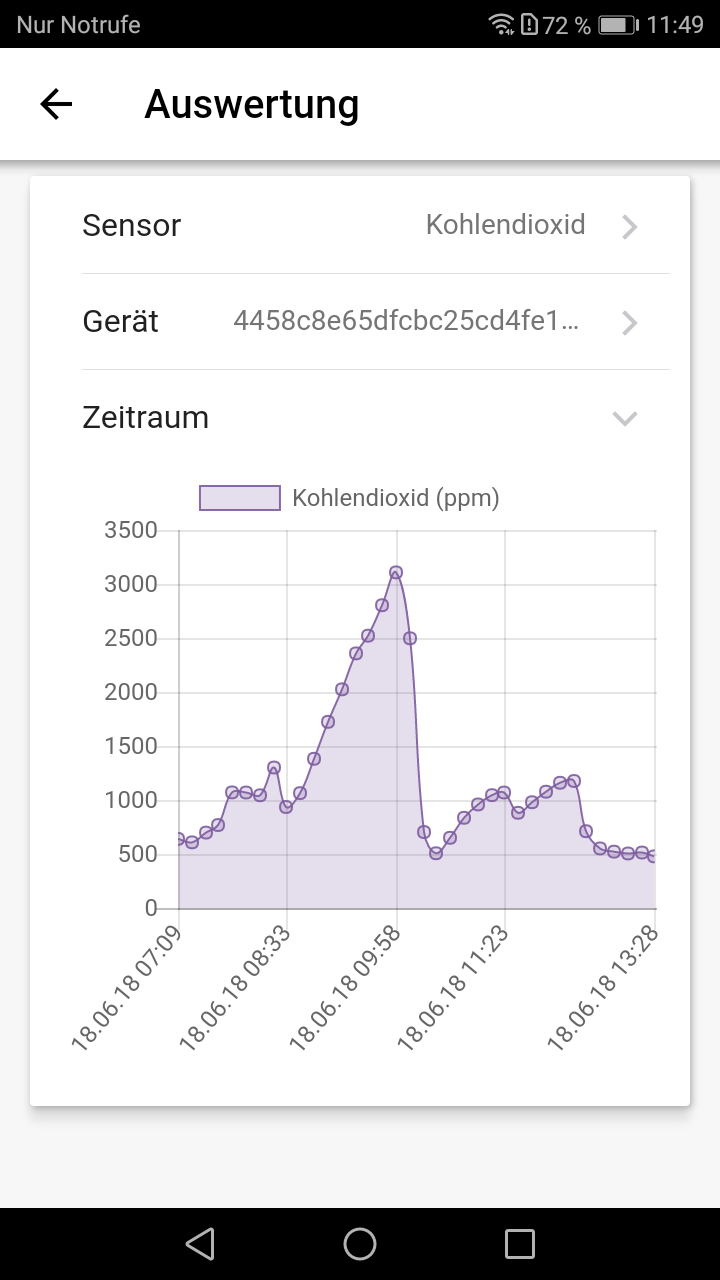
Since noise from outside would disrupt the lesson, the windows were closed again. This led to a dramatic rise in carbon dioxide level. According to studies, performance deficits can already occur at a CO₂ concentration of 1,000 ppm (parts per million). In the classroom, however, over 2,000 ppm was measured. On the first measurement day, the value of 3,000 ppm was even exceeded around 10 a.m.
This suggested a noticeable concentration impairment among the students. This impairment showed up not only as a lack of focus, but also as increased fatigue in the children. This can reduce or even completely eliminate motivation to learn. Spelling and math errors can also increase.
Only through ventilation during the long break could the classroom be supplied with sufficient fresh air again. On both days, the windows therefore stayed open after the recess break.
The development of oxygen level in the classroom moved in the opposite direction to that of carbon dioxide, since inhaled O₂ is exhaled again as CO₂. Through ventilation, the room's oxygen supply could be replenished.
At least the classroom was large enough that suffocation of the students could be ruled out even over a longer period without ventilation. An oxygen concentration between 18% and 21% is generally considered safe. Corresponding to the highest CO₂ concentration, the lowest O2 value was measured on June 18 around 10 a.m. At that point, oxygen level in the classroom dropped to almost 20%.
Students' breathing and skin release VOC gases. If the room isn't ventilated, the concentration of volatile organic substances rises — similar to carbon dioxide. Here too, the curves on both measurement days rose considerably around 10 a.m. At about 430 ppb (parts per billion), though, the highest spike was observed on June 19 shortly before 8:30 a.m. This is likely related to the fact that ventilation was skipped after the first class that day. The release of these gases also contributes to a reduced ability to concentrate. However, a precise assessment isn't clearly possible in this case, since VOC gases are very diverse in nature and accordingly have different effects.
If VOC concentration in a room rises even with the window closed and no people present, this is a strong indication of chemical exposure from, for example, laminate flooring, wall paint, textiles, or mold. To investigate this, the air-Q continued recording various VOC values even after classes ended. No increase in these was found.
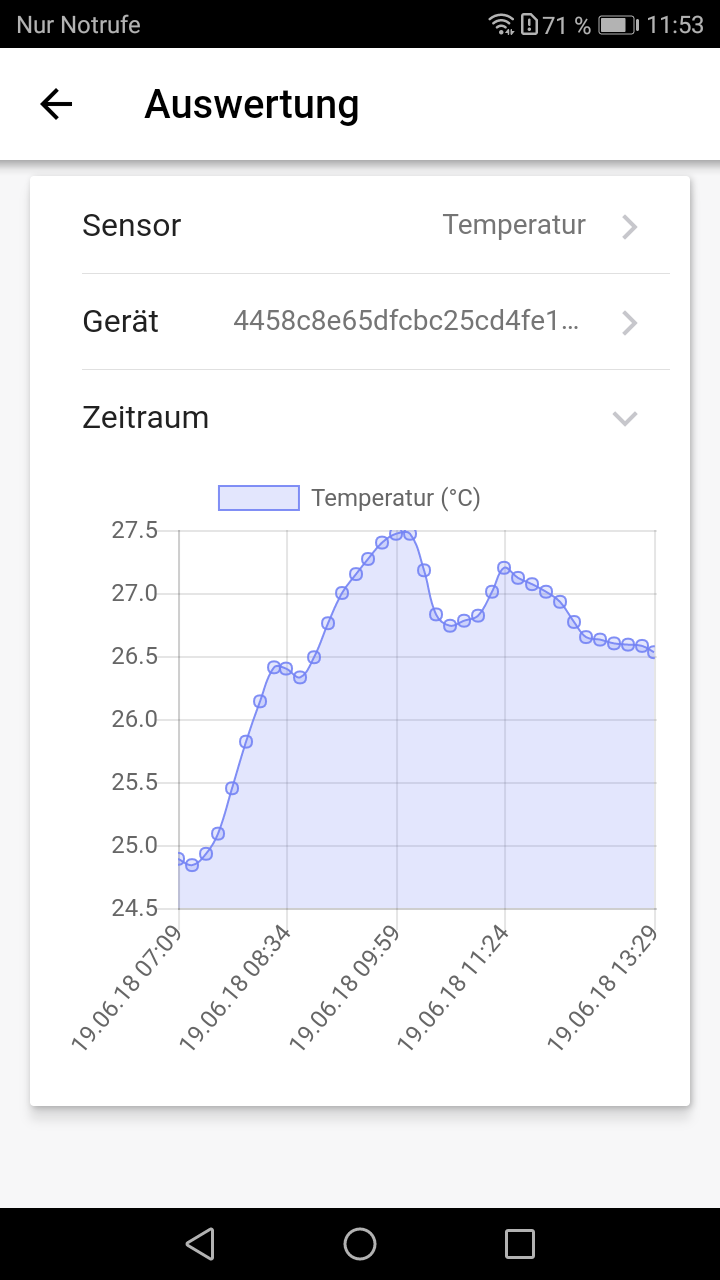
On both measurement days, the room temperature was very high, at times exceeding 27°C. A circumstance that further reduced the students' ability to concentrate. Opening the windows only produced a cooling effect of 1°C. Relief for the children on such hot summer days could only be achieved by setting up a quiet, gentle fan.
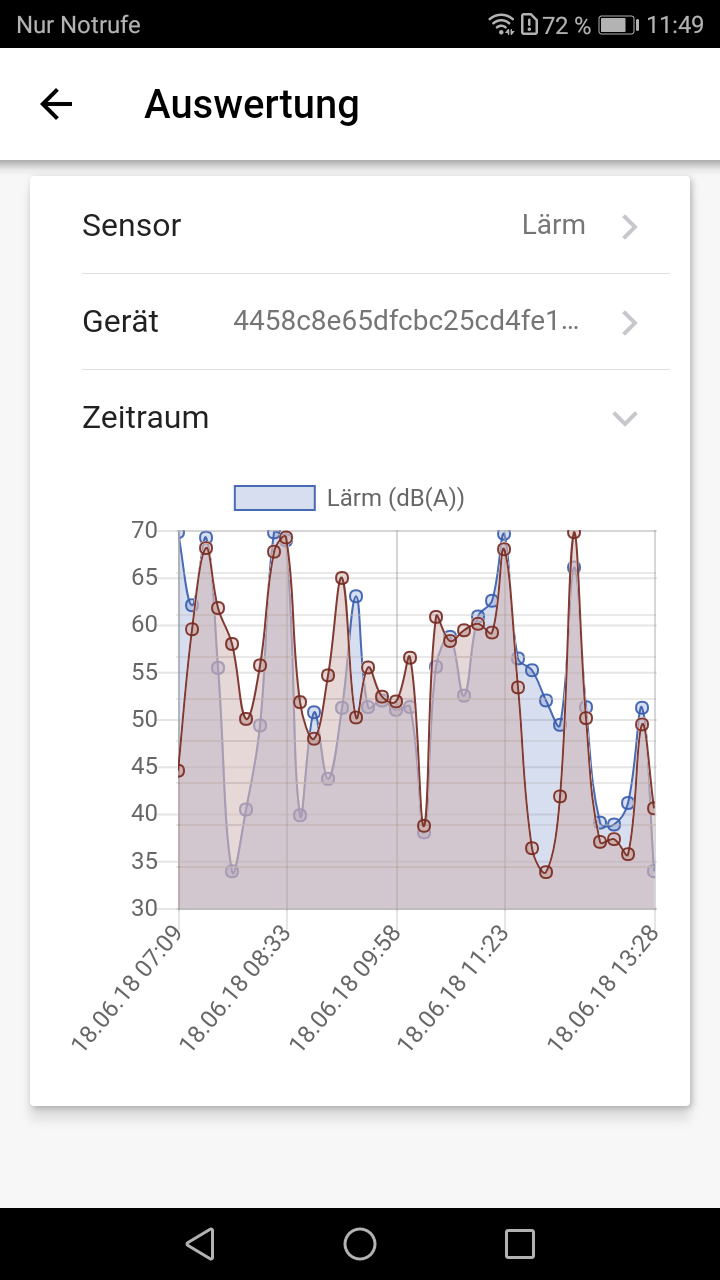
The measured noise level of the classroom showed no particularly high values during the measurement period. The sound pressure level patterns very clearly reflected the alternation between lessons and breaks, since quiet and loud phases occurred at the same times and in the same rhythm on both days. Since no outside noise entered during class time, the maximum values of up to 70 dB(A) (decibels) recorded on both days still remained below the health-hazardous threshold of 80 dB(A).
Furthermore, humidity in the classroom was measured. Here too, the highest concentration of over 43% was recorded around 10 a.m. on both days. For well-being and thus performance, a humidity of 40 to 60% is recommended. While these guide values could largely be maintained on June 19, air humidity on the first measurement day permanently dropped to values below 40% from around 10:15 a.m. onward. Dry air can not only dry out the airways and promote the spread of pathogens. It's also perceived as unpleasant and can thereby impair performance.
Our conclusion: avoiding concentration problems and boosting motivation to learn through air quality analysis
Like the classroom examined, most German school buildings have no built-in ventilation system. It can therefore be considered representative of many German classrooms. Particularly striking in our measurements were the rapid rises in carbon dioxide and VOC gases with the windows closed. As long as no disruptive noise enters the room from outside, ventilation can be maintained for long periods during the warm season. In the cold season, however, this is rarely an option. It can be assumed that during these times, the levels of both CO₂ and volatile organic substances in the air reach a far higher level. This has a significant impact on students' ability to concentrate and thus their capacity to learn.
We therefore recommend that teachers regularly open the windows and properly ventilate the room. But even with proper ventilation between lessons — as in this case — carbon dioxide and VOC levels can still reach performance-limiting values. General impairments to children's learning ability from poor air therefore can't be ruled out.
For a more precise assessment of the classroom's air quality, however, continuous measurement over a longer period would be needed.
(Cover image: Freepik)