
Pollen Calendar: Current Pollen Calendar for Allergy Sufferers and How air-Q Can Help
A pollen calendar helps allergy sufferers recognize exposure and plan activities. The air-Q complements it by measuring particles indoors, showing trends, and indicating when ventilating or air filters make sense to ease symptoms.

What is a pollen calendar
A pollen calendar shows when various pollens are in the air. For people with pollen allergies, a pollen calendar is indispensable for planning around and easing symptoms. A typical pollen calendar provides information on the seasons of the most important pollen types. Hazel and alder fly as early as February and March, birch pollen in April, grasses in May and June, and ragweed in late summer.
A current pollen calendar takes seasonal fluctuations into account and can even show today's exposure. Anyone who regularly uses a pollen calendar can better plan their outdoor activities and take targeted preventive action.
Why a pollen calendar is important
Pollen are tiny particles that plants use for reproduction. In allergy sufferers, they trigger hay fever. Typical symptoms of a pollen allergy are sneezing, a runny nose, itching in the eyes and nose, as well as fatigue and head pressure.
A current pollen calendar shows when which pollens are flying. This lets allergy sufferers take early measures, for example keeping windows closed, timing ventilation to low-pollen periods, or using air filters.
Pollen dispersal by season
A rough overview of pollen dispersal times shows:
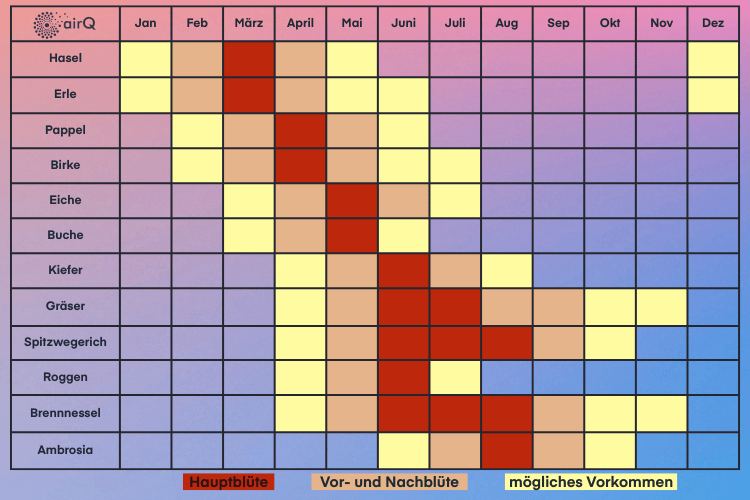
These figures are guide values. A current pollen calendar shows the actual exposure in real time and is thus especially helpful for allergy sufferers.
Using a pollen calendar
Many allergy sufferers rely on daily updated, sometimes digital pollen calendars to see the current situation in their region. Digital pollen calendars provide:
- forecasts for the coming days
- information on the intensity of pollen exposure
- information about the pollen types currently flying
This lets you better plan everyday life and reduce symptoms. A pollen calendar is therefore not just informative, but also practical.
How the air-Q supports allergy management
The air-Q doesn't directly measure the various pollen types, but it does detect particles in the air, which includes pollen. This lets trends and exposure indoors be recognized.
air-Q helps allergy sufferers in several ways:
- The particulate matter sensor captures particles and shows when pollen is coming in from outside.
- Combined with other sensors, air-Q detects changes in the air and shows weak points.
- With warnings about particulate matter, VOC, or CO₂, you can determine when ventilating makes sense and when outdoor exposure is high.
Practical example
On a sunny spring day, the air-Q shows an increase in particles after ventilating. This can indicate pollen in the air. In that case, it's worth keeping windows closed or using an air filter. This lets allergy sufferers keep their indoor spaces low in pollen and reduce symptoms.
A pollen calendar is an important tool for allergy sufferers to know their exposure and act preventively. Anyone who also checks a current pollen calendar always stays informed. The air-Q ideally complements the pollen calendar by monitoring indoor air quality and helping take targeted measures against pollen exposure.