
Outdoor Air vs. Indoor Air: Which Is Dirtier?
Many people assume the air outside is automatically dirtier than in their own four walls. But often the opposite is true: indoor air is frequently more polluted than outdoor air. Especially in well-insulated homes and offices, pollutants build up quickly without being visible or noticeable by smell.
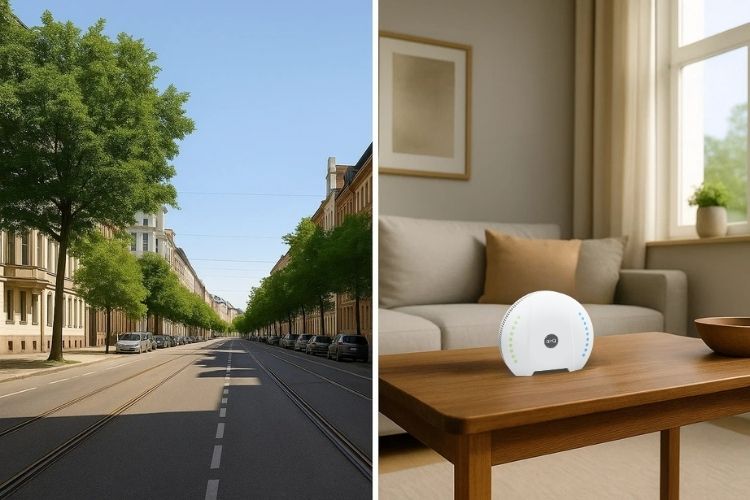
Why indoor air is often more polluted than outdoor air
Whether at home, in the office, in the classroom, or in the car: people today spend roughly 80 to 90 percent of their time indoors. This makes indoor air quality all the more important, since it directly affects health, well-being, and performance. Yet indoor air is often more polluted than outdoor air.
One major reason for this is building materials and furnishings. New furniture, carpets, paints, or varnishes can release volatile organic compounds (VOCs) into room air, which build up over time in enclosed spaces. In addition, everyday activities like cooking, heating, burning candles, or using cleaning products produce further pollutants and particulate matter.
The people present themselves also affect air quality. Breathing releases CO₂, and humidity rises at the same time. In poorly ventilated rooms, this can foster the development of microorganisms and mold. This problem is exacerbated especially in modern, energy-efficient rooms, since they're built very airtight.
-(300-x-250-px)-(1500-x-1300-px).jpg)
When is outdoor air dirtier?
Of course, pollution exists outdoors too: traffic, industry, heating, or natural sources like pollen or dust contribute to particulate matter, nitrogen dioxide (NO₂), and other pollutants.
Near busy roads or industrial facilities, outdoor air can even be more polluted than indoor air in the short term, especially if the rooms are ventilated regularly.
Still, most people are exposed to indoor air more often and for longer, making its quality more decisive for health.
What are the causes of indoor air pollution?
Indoor air pollution arises from many different sources and mechanisms:
- Everyday activities: cooking, heating, cleaning, or candles spread pollutants and particulate matter.
- Moisture and mold: high humidity can promote mold growth, further polluting the air.
- Airtight construction / insufficient air exchange: in modern, well-insulated buildings, fresh air can barely circulate.
- Building materials, furniture, textiles: furniture, carpets, paints, or varnishes release pollutants over years.
- External sources: pollutants from outdoor air enter through windows, doors, or ventilation systems.
What are the effects of poor air quality?
Poor indoor air quality can have wide-ranging health effects: short-term, headaches, fatigue, and eye and throat irritation; long-term, respiratory disease, allergies, and cardiovascular problems. Children, older people, or people with pre-existing conditions are especially at risk.
Since we spend so much time indoors, clean indoor air is crucial for our health and well-being.
Measures for better air quality
There are simple strategies to improve air quality:
- Ventilate regularly: several times a day, briefly and intensively: burst ventilation brings in fresh air, provided outdoor air isn't too polluted.
- Reduce pollutant sources: use low-emission furniture, paints, and materials; use fewer scented candles, and avoid harsh cleaning products and solvents.
- Control moisture: measure humidity, dry laundry properly, ventilate after showering or cooking.
- Air purification / filtration: HEPA filters or air purifiers can additionally remove particles and pollutants from the air.
- Monitor air quality: keep an eye on indoor air quality with suitable air quality monitors, so you can act as quickly as possible.
-(2).jpg)
How air-Q can help
The air-Q is a smart air quality monitor that helps you specifically monitor and sustainably improve air quality indoors. The device continuously and in real time measures important parameters such as pollutants, particulate matter, CO₂ concentration, humidity, and other relevant factors of room air. Based on this data, the air-Q provides recommendations and shows you when it makes sense to ventilate, to effectively improve indoor air. At the same time, it becomes transparent how effective measures such as regular ventilation or using an air purifier actually are, since changes in air quality can be tracked immediately. This way, users always stay in control of their room air and can actively contribute to protecting health, well-being, and performance in living and working spaces.
Indoor spaces are often secret pollutant hotspots, while outdoor air isn't automatically "dirtier." With a bit of attention, the right measures, and an air quality monitor like the air-Q, air quality can be significantly improved.
Because clean air means not just well-being, but also more health for you and your family.