Nitrogen Oxides: How They Form and What Makes Them So Dangerous
The ongoing discussion about traffic-related air pollution has put nitrogen oxides on everyone's lips. But high concentrations of nitrogen dioxide can also occur indoors, which can additionally lead to serious health problems.

For many weeks now, the debate about the dangers of diesel engines and impending diesel driving bans in Germany hasn't let up. In February of this year, some pulmonologists reignited the already heated discussion with their doubts about the existing limit values. Although this criticism has since proven untenable, public interest in nitrogen oxides hasn't waned. Comedian Mario Barth, for example, repeated the skepticism about internationally set limit values in his most recent show "Mario Barth deckt auf" — in which our air-Q was also used. Just a day earlier, the satire show "Die Anstalt" also addressed the topic of nitrogen oxide limit values and refuted the limit-value skeptics.
While many diesel drivers now fear having their individual mobility restricted, health experts see steadily increasing air pollution as a growing danger to everyone's well-being. In mid-February 2019, the World Health Organization (WHO) invited experts to Geneva to discuss the health risks of air pollution and possible countermeasures with them. In this discourse, the focus has long since expanded beyond outdoor air pollution alone. Indoor air quality is dangerous and is gaining more and more attention in this context. Besides particulate matter and volatile organic substances, nitrogen oxides in particular offer a concrete reason for deeper examination here.
What are nitrogen oxides?

There are up to seven different nitrogen oxides in outdoor air. Compounds of nitrogen and oxygen form nitrogen oxide compounds exclusively through endothermic reactions, meaning only with an external supply of energy. As a mostly unwanted byproduct of a wide range of combustion processes, the formation of nitrogen oxides can be traced back to both natural and human-caused (anthropogenic) sources.
The natural occurrence of nitrogen oxides in the Earth's atmosphere can primarily be traced back to lightning. Lightning frequency as well as lightning length are decisive for nitrogen concentration in the middle and upper troposphere. According to various studies, lightning is responsible for up to 90% of nitrogen oxides in this part of the atmosphere.
Besides fuel combustion in road traffic, the largest emitters of nitrogen oxides in the lower troposphere are considered to be combustion plants for fossil energy sources like coal, petroleum, natural gas, and wood, as well as for waste. Indoors, it's not just air entering from outside that causes nitrogen oxide exposure. Nitrogen oxide concentration in the air you breathe also rises from burning fossil fuels, for example while cooking or heating fireplaces and coal stoves. The formation of the greenhouse gas nitrous oxide, also known as laughing gas, is also traced back to anthropogenic causes. Nitrous oxide doesn't just form from burning fossil raw materials. Fertilizing with nitrogen-containing fertilizers in agriculture in particular contributes decisively to the formation of nitrous oxide (N₂O). However, the nitrogen oxides that matter most for air quality are nitrogen monoxide (NO) and nitrogen dioxide (NO₂). In densely populated urban regions, the combined concentration of the two gases can often exceed a value of 500 µg/m³, with nitrogen monoxide in the air oxidizing to nitrogen dioxide. Furthermore, the reaction of NO₂ with water can form nitrous acid (HNO₂), which is also among the ambient pollutants. In addition, nitrogen dioxide is considered a precursor for numerous secondary pollutants, such as nitric acid or inorganic aerosols and photooxidants (e.g. ozone).
Why do we need limit values for nitrogen oxides?
This human-caused nitrogen oxide exposure carries serious consequences for the ecosystem. Nitrogen oxides are involved in the formation of ozone and smog in the atmosphere. In addition, the nitric acid formed from the reaction of nitrogen oxides, for example, contributes significantly to the formation of acid rain. Nitrogen dioxide in particular is partly responsible for over-fertilization and acidification of soils, and in some cases also of bodies of water. Nitrogen dioxide can also cause stunted growth, premature aging, and necrosis (meaning local tissue death) in plants.

Since 2004, numerous studies have been published documenting a connection between daily fluctuations in nitrogen dioxide concentration and changes in the occurrence of respiratory complaints, hospital admissions, and even mortality. Further studies also show a connection between disease and mortality rates and long-term exposure to nitrogen dioxide. All short-term and long-term studies published so far confirm these harmful effects of nitrogen dioxide even at concentrations at the edge of, or even below, EU limit values. This limit value is based on the recommendations of the WHO, which has set an annual limit of 40 µg/m³ and a 1-hour limit of 200 µg/m³. Findings from toxicological studies and studies in enclosed spaces suggest a causal interpretation between nitrogen dioxide and effects on the airways. The World Health Organization is therefore considering adjusting its recommended limit values for nitrogen dioxide accordingly. As part of this, the WHO is calling, on one hand, for a short-term, epidemiologically grounded guideline. On the other hand, it's demanding a guideline for annual average values based on current findings.
Some of the studies were conducted indoors, where nitrogen dioxide is specifically generated by unventilated combustion devices. Other studies focused on outdoor air, where nitrogen dioxide forms just one component of the air mixture. This complex interrelationship of individual air components complicates the interpretation of these studies, since the causes of demonstrable health effects can't be clearly attributed to NO₂. For this reason, most conclusions about the health-damaging effects of nitrogen dioxide are drawn from toxicological studies and observational studies conducted indoors.
Nevertheless, studies on ambient air quality can also make statements about the health-damaging effects of nitrogen oxides. For example, harmful effects of nitrogen dioxide could be demonstrated at set exposure rates of other pollutants. A change in the effects of particulate matter due to nitrogen dioxide could also be documented.
Health-damaging effects of nitrogen dioxide
Exposure to nitrogen dioxide can have various physical consequences. These include, among others:
- Damage to mucous membrane tissue
- Eye irritation
- Damage to the entire respiratory tract
- Elevated risk of cardiovascular disease
- Elevated risk of type II diabetes
- Increase in mortality as well as cause-specific hospital admissions in the general population
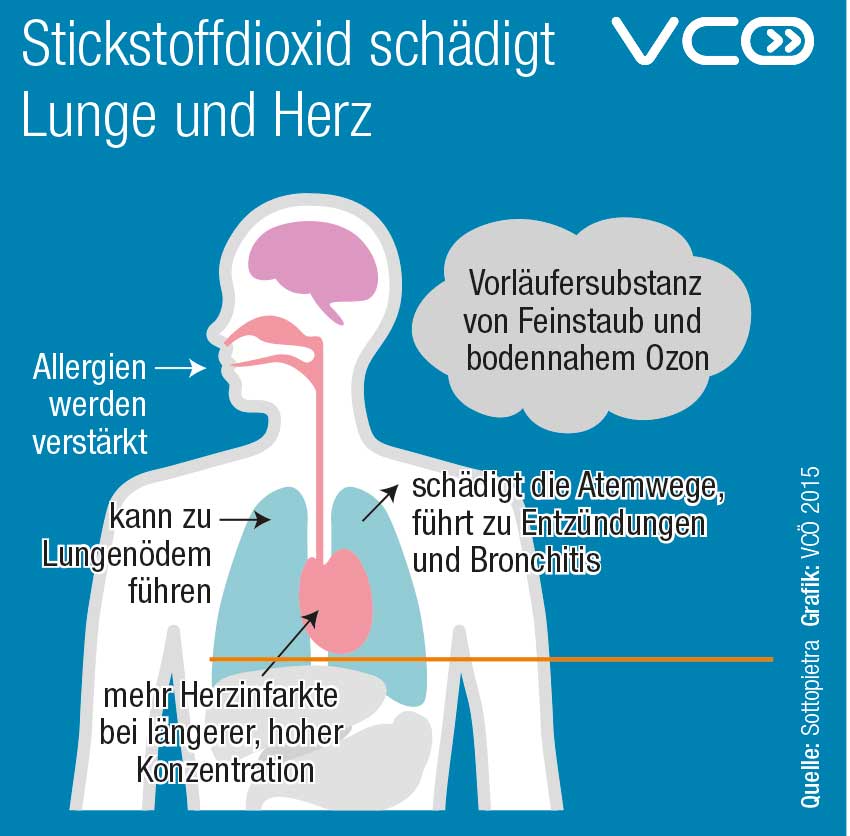
Since nitrogen dioxide has comparatively low water solubility, it isn't bound in the upper airways, meaning the mouth and throat as well as the nose and sinuses. As a result, the pollutant reaches the lower airways like the bronchi and alveoli, where it can cause inflammation and cell tissue damage. In the bronchi, NO₂ can cause hypersensitivity, which promotes the development of allergic respiratory diseases.
The steady increase in allergic complaints, especially in pollutant-heavy urban areas, suggests a connection between nitrogen oxide exposure and allergy-related immune reactions. Several studies have now concluded that nitrogen oxides present in the air you breathe attach to allergenic proteins. These nitrated allergens presumably promote the production of antibodies that release histamine and histamine-like substances for immune defense, thereby triggering allergic reactions. Especially due to air pollution in traffic-heavy urban areas, nitrogen oxides can increase the allergenic potential of pollen and particulate matter. Humid summer smog can further increase the nitration rate, so that proteins present in the air become enriched with nitrogen within just a few hours. There's therefore a legitimate suspicion that nitrogen oxide exposure in the air promotes the development of allergies and intensifies reactions in allergy patients. Typical associated disease manifestations include, besides allergic rhinitis (hay fever), bronchial asthma, atopic eczema (atopic dermatitis), and anaphylactic shock, as well as hives and sinusitis.
Between 2014 and 2016, the World Health Organization, the Swiss Tropical and Public Health Institute (Swiss TPH), as well as the health authorities of Canada (Canada Health) and the US (U.S. EPA) were all able to uncover, in short-term studies, connections between nitrogen dioxide exposure and an increase in overall mortality and mortality caused by cardiovascular and respiratory diseases. For the year 2014, at a lower quantification limit of 10 µg/m³ NO₂ over an extended period, a total of 5,966 premature deaths were attributed to nitrogen dioxide exposure. In this context, years of life lost worldwide were estimated at a total of 49,726.
The rise in cardiopulmonary emergencies, meaning those affecting both the heart and lungs, as well as the increase in hospital stays due to cardiovascular and respiratory complaints, were also associated with an increase in nitrogen dioxide values.
There's now moderate evidence for the risk of developing diabetes mellitus from long-term nitrogen dioxide exposure. In this context, evidence refers to findings that appear consistently across studies, allowing a connection between the occurrence of certain diseases and nitrogen dioxide to be inferred. Whether this evidence is moderate or strong depends on the number of studies conducted. The studies published so far include, in their observations of diabetes-typical physical impairments, only diabetes-related nerve conditions and so-called "diabetic foot." Other conditions caused by diabetes, like cardiomyopathy and nephropathy, weren't taken into account. It can therefore even be assumed that NO₂-related impairments are underestimated.
Besides type 2 diabetes, further consistently observed health consequences of nitrogen dioxide exposure appear. These include, among others, the disease rate (morbidity) from high blood pressure, but also the mortality rate from heart failure and ischemic heart disease (IHD) as well as strokes.
Due to its irritating and asphyxiating properties, the gas NO₂ damages the respiratory tract in particular. Consistent findings from numerous studies now provide strong evidence that nitrogen dioxide promotes the development of chronic obstructive pulmonary disease (COPD). Further studies document a connection between nitrogen dioxide exposure and numerous types of damage to the respiratory organs. Depending on the duration of exposure and the amount of pollutant absorbed, these include acute pulmonary edema, inflammation of the bronchioles, or even asthma-like reactive airway disease. In addition, NO₂ is partly responsible for elevated bronchial reactivity and thus for the development of bronchial asthma, as well as for narrowing of the bronchi and an overall elevated susceptibility to respiratory infections. Especially when viewed over an extended period of several years, nitrogen dioxide exposure carries the risk of impaired lung function in adults and impaired lung growth in children. In addition, the risk of lung cancer as well as the risk of reduced birth weight in newborns increase.
Measures against nitrogen dioxide exposure
According to the WHO, 91% of the world's population now lives in places where air pollutants exceed recommended limit values. Worldwide, 4.2 million deaths are attributed to outdoor air pollution, and a further 3.8 million deaths to indoor air pollutant exposure. These dramatic figures reveal an urgent need for action to reduce air pollutants in general and nitrogen dioxide in particular. The necessary measures to improve air quality require political regulations as well as individual solution approaches.
Political measures:
- Extensive changes in municipal and national transport planning: expanding alternative drive systems, like electric motors and liquid gas refueling, introducing environmental zones to limit pollutants in heavily affected areas, expanding local public transport as well as bicycle infrastructure, etc.
- Gradual phase-out of energy supply based on fossil fuels and simultaneous expansion of renewable energy away from combustion processes
- Implementing sustainable agriculture and forestry
- A further, quite controversial measure is the use of so-called cloud seeding, in which aircraft release special chemicals that accelerate cloud formation and bind air pollutants through precipitation
Individual measures:
- Extensive and precise real-time measurements with specific sensors to prevent misclassification of pollutants, to better identify the main pollutant sources as well as their peak values and long-term exposures
- Avoid combustion processes indoors where possible, e.g. smoking, cooking on gas stoves, or grilling in the immediate vicinity, etc.
- Use air purifiers, making sure that other pollutants, like ozone, aren't used when filtering out pollutants.
- Reconsider your own mobility and consumption behavior: shop as seasonally and regionally as possible, make or repair products yourself, shop in retail stores instead of having goods delivered home, switch to biking and public transport, etc.