
How Meteorological Conditions Affect Indoor Radon Concentration
Radon is an odorless, invisible noble gas that escapes from the ground and can be harmful to health at high concentrations. Besides geological factors, weather conditions also play a central role in radon concentration. But how exactly do factors like air pressure, temperature, and humidity affect radon distribution?
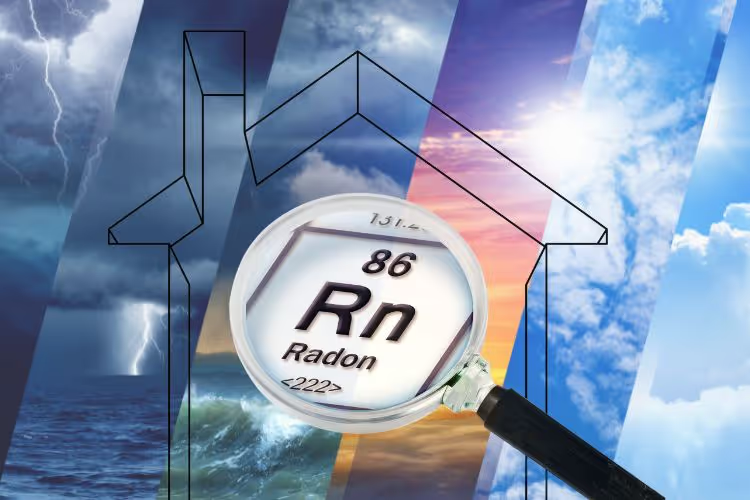
This article covers the following topics:
- Air pressure: the effect of high- & low-pressure systems on radon concentrations
- Temperature and humidity: effect on radon diffusion & buildup
- Wind & air exchange: natural dilution effects
- Soil composition & precipitation: geological conditions as a barrier or amplifier
- Times of day & seasons: temperature differences and seasonal fluctuations
- Geological activity: earthquakes & their effect on radon release
- Measuring indoor radon concentration
1. Air pressure: the effect of high- & low-pressure systems on radon concentrations
Changes in air pressure significantly affect the release and concentration of radon. When atmospheric air pressure drops, a suction effect is created that pulls radon more strongly out of the ground. The radon concentration in soil air rises and can more easily penetrate buildings through cracks and joints. In contrast, rising air pressure reduces this suction effect, decreasing but not completely stopping radon flow.
Conclusion: Falling air pressure promotes radon release, while rising air pressure reduces it. In areas with frequent pressure fluctuations, this can lead to strongly varying radon levels.
2. Temperature and humidity: effect on radon diffusion & buildup
Temperature and humidity are also decisive factors for the movement and buildup of radon indoors:
Temperature
High outdoor temperatures warm the soil, which favors the diffusion of radon from deeper layers. This upward movement of the gas is especially pronounced during the summer months. With sharply falling temperatures, however, radon can remain near the ground and reach higher concentrations there. In addition, in winter, the so-called stack effect (rising warm indoor air) creates negative pressure that can draw radon from the ground into buildings.
Humidity
High humidity can increase indoor radon concentration, since moisture acts like a barrier layer and impedes air exchange. This means less radon escapes to the outside. This can especially lead to long-term radon buildup in poorly ventilated rooms. Studies suggest that damp basement areas can be especially affected.
3. Wind & air exchange: natural dilution effects
Wind movements play an important role in diluting radon, since they can quickly disperse the gas at the Earth's surface and lower its concentration. In calm periods, on the other hand, radon can accumulate near the ground and, under unfavorable conditions, penetrate buildings. In poorly sealed buildings, wind can also increase air exchange, making it easier for radon to be drawn out of the ground.
Conclusion: Windy days often reduce radon, since the gas is quickly diluted through air exchange. In wind-protected or poorly ventilated buildings, on the other hand, higher radon levels can occur.
4. Soil composition & precipitation: geological conditions as a barrier or amplifier
Soil composition and moisture play a decisive role in radon release:
- Soil types: In loose, well-permeable soils, radon diffuses upward more easily. Moist soils like clay, which retain water well, on the other hand, form a natural barrier that prevents radon from rising.
- Precipitation: During rain, water can penetrate the soil and push radon trapped in the pores upward. Heavy rain, however, can clog soil pores and slow radon diffusion. Long-term saturated soils can therefore act as a barrier.
5. Times of day & seasons: temperature differences and seasonal fluctuations
Radon concentration can change depending on the time of day and season. During the warmer months, when the ground is heated by sunlight, more radon often escapes from the soil. At night or in the colder months, the gas more often remains near the ground, since temperature differences are smaller and diffusion is slowed. At the same time, the stack effect mentioned above can lead to increased radon being drawn into buildings in winter, especially in basements.
Conclusion: In summer and during the day, higher outdoor radon levels are possible, while at night or in winter, indoor radon concentration can rise due to structural effects.
6. Geological activity: earthquakes & their effect on radon release
Besides weather conditions, geological activity like earthquakes can affect radon concentration. Tremors in the ground can create cracks and fissures that increase radon release. A sudden rise in radon levels can therefore also indicate underground shifts and is studied in research as a potential indicator of seismic activity.
7. Measuring indoor radon concentration
Measuring radon concentration indoors is a crucial step for detecting and minimizing potential health risks early. Radon is invisible and odorless, which is why only special measuring devices allow for reliable monitoring. Regular radon measurements are especially important in basements or in older buildings with cracks in the foundation, since these areas are especially prone to radon entry. But elevated radon concentration can also occur on higher floors, depending on the building. With a high-quality radon meter like the air-Q radon, you precisely capture radon levels in indoor air while also providing data on other air quality parameters. This enables a comprehensive analysis of the indoor climate and provides valuable information for effective countermeasures.
.jpeg)
Summary
Radon is an invisible risk that's affected by various meteorological, geological, and structural factors. Residents should be especially aware of the possibility of elevated radon concentrations in regions with high natural radon levels and rapidly changing weather conditions.
Practical tips for reducing indoor radon concentration:
- Regular intensive ventilation on windy days.
- Keep damp walls and floors dry to improve diffusion.
- Seal cracks in the foundation and other entry points.
- Use radon meters, like the air-Q, to monitor changes in concentration.
- In heavily affected regions, structural measures like radon drainage or active ventilation systems may be necessary.
Knowledge of how the environment affects radon can contribute to better assessment and prevention. Anyone who takes these factors into account protects their health long-term and minimizes possible risks from elevated radon exposure.