
Measuring Radon: air-Q Radon or Dosimeter?
Radon is a radioactive noble gas that can enter buildings from the ground. Because it's neither visible nor detectable by smell, special monitors are needed to determine exposure. Besides modern digital monitors like the air-Q Radon, there are also classic radon dosimeters. But which method suits which purpose?
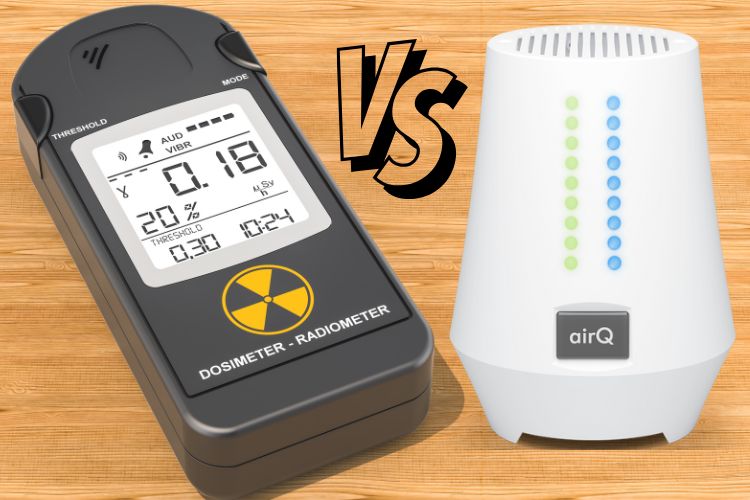
Radon is invisible, odorless, and dangerous — but how do you measure it reliably? Two methods stand out: radon dosimeters, which provide average values over months and are often used for official proof, and the air-Q Radon, which measures concentration in real time and reacts to changes immediately. This post shows how the two approaches differ — and when each method is worthwhile.
What is a radon dosimeter?
A radon dosimeter is a passive monitor, often a small plastic case equipped with a special film or track detectors. These register the alpha radiation produced when radon decays.
- Measurement duration: typically 3 months to 1 year (long-term measurement).
- Evaluation: after the exposure period ends, the dosimeter is sent to a laboratory, where the radiation tracks are evaluated.
- Use case: authorities and institutions often recommend dosimeters for an official long-term assessment, since radon levels can fluctuate strongly by season.
Benefits:
✔ very reliable for long-term measurements
✔ recognized for official proof
✔ easy to use
Drawbacks:
✘ no real-time results
✘ results only available after lab analysis
✘ single-use only
air-Q Radon: modern technology for real-time control
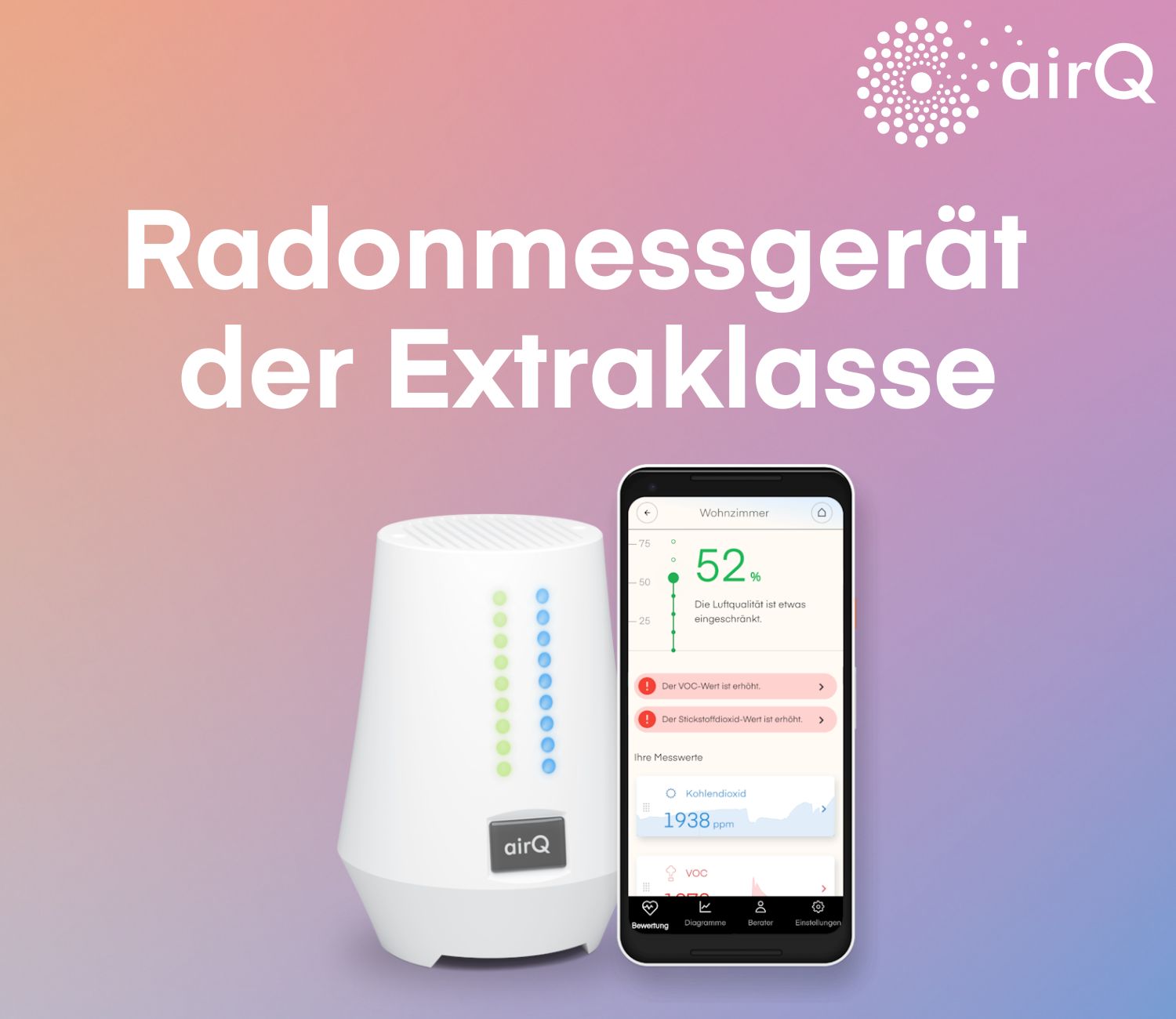
The air-Q Radon uses its own sensor module that measures alpha radiation directly in real time. Radon levels are captured every 1.8 seconds and immediately evaluated digitally.
- Measurement duration: continuous, for as long as you like.
- Evaluation: visible directly in the air-Q app or web app, supplemented by alert notifications when limit values are exceeded.
- Use case: ideal for private users, companies, or institutions who want to understand fluctuations, check ventilation strategies, or integrate into smart home solutions.
Benefits:
✔ real-time measurement, trends visible immediately
✔ smart home integration and export functions
✔ reusable indefinitely
✔ additional air parameters (CO₂, VOC, humidity, etc.)
Drawbacks:
✘ higher purchase cost than a dosimeter
✘ for official, legally required long-term proof, a dosimeter is usually mandated
Comparison at a glance
| Feature | air-Q Radon | Radon dosimeter |
| Measurement principle | Active, real-time, alpha radiation | Passive, track detector / film |
| Measurement interval | every 1.8 seconds | 3-12 months |
| Result | immediate, digital | after lab analysis |
| Reusability | yes | no |
| Official recognition | not official for long-term requirements | yes, standard for official requirements |
| Price | higher purchase cost, usable long-term | cheaper, but single-use |
Conclusion
- A radon dosimeter is the right choice when it comes to officially recognized long-term measurements. It provides reliable average values over several months — though only after lab analysis.
- The air-Q Radon is suited for anyone who wants active control, immediate results, and transparency. It makes fluctuations visible, shows the effectiveness of ventilation measures, and can be integrated into a smart home.
The most sensible approach is often combining both methods: a dosimeter for official proof — and the air-Q Radon for everyday use, to be able to respond immediately to changes.